Author Archives: celtic

HAPPY BIRTHDAY FERGUS McCANN – THE MAN WHO SAVED CELTIC


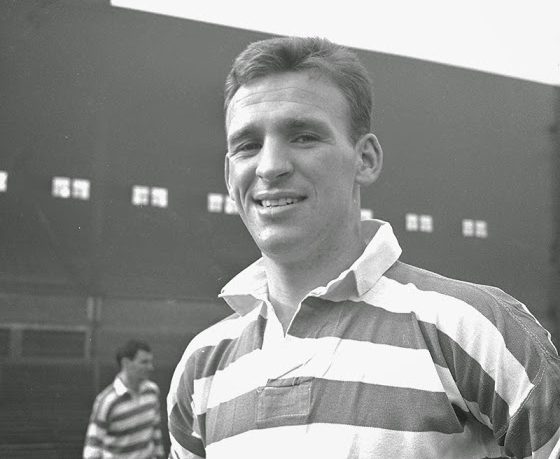
Fergus McCann was a bhoy from Croy. Born on February 26 1941 he grew up following the team and travelling on the local supporters’ bus. He saw some terrible Celtic teams, but he also saw the great days of the 1950’s as well – the Coronation Cup and the 7-1 and other splendid moments with fine players like Fernie, Collins, Peacock, Evans and of course the irrepressible Charlie Tully.

More than 90 Minutes Issue 113 Print Edition

The son of a Headmaster (Fergus himself had a magisterial look about him and had a distinct resemblance to the first Headmaster that I ever worked for), he went to Canada in the early 1960s and made his money there. He was a millionaire, but never lost interest in the club that he had grown up to love, the love that was under severe pressure in the early 1990s thanks to chronic maladministration and gross under-investment.

Stories about the Club being “half an hour away from extinction” in March 1994 are possibly a little rhetorical, but there can be little doubt that the position was serious, and it was Fergus McCann who saved the club in a breath taking coup which deposed the old Board, took over the club and immediately set about rebuilding the ground.

It was all carried out with grim determination. The stadium rose to be one of the best in Europe, success on the field was not immediate but it was real by 1998, crowds rose and a sleeping giant was awakened. The whole reconstruction of the ground was in total contrast to Hampden Park which took about 20 years to redevelop and is still not always loved and admired in the way that Celtic Park is. The determination of Fergus McCann (including a share issue to help finance the project) was the key factor.

Thousands Are Sailing T-Shirt (Pre-Order Includes FREE Badge)

A conversation has to take place now with Scottish Rugby about incoming CEO, Dominic McKay to get him in before July when he officially takes over from the departing Peter Lawell. The clear out should also include members of the board, our head of recruitment and some of the coaching staff along with a large chunk of the current playing squad who have failed miserably this season to even challenge for the title.

But all this upheaval will not help during the summer with European campaigns kicking off mid-summer with a backdrop of uncertainty of how and when fans will return and the whole season book sales issue and the clear out may take longer than we like for the stability of the club. We may also have to wait till after the Euros for the announcement of a manager, coaching team or director of football which seems to be the in word at the moment.

Celtic’s PR and Media team have been poor this season in communicating with fans about the failures on and off the park, now is the time to reverse that and start meaningful communication with the Celtic support to tell us what the plan is to rebuild our great club and the rebuild time scale to insure Celtic become the most dominate club again in Scotland and set out a blueprint for progression in Europe and a plan for the development of young players which has always been at the heart of Celtic’s core structure since Jock Stein’s rebuilding of the club in the sixties.

Annual Magazine Subscription


Without McCann, one shudders to think where Celtic would be now. If Maley was the man who MADE Celtic, McCann was the man who SAVED Celtic. Incredibly on one occasion when he was unfurling the League flag of 1998, he was booed by some idiots in the support. It was at that point that I understood the crucifixion of Jesus Christ in the sense that humans will try to destroy the thing that has saved them!

But such hatred and jealousy of McCann was not universal, and most people appreciated what he had done. As the years have passed, more or less every Celtic supporter has come to realise just what a debt of gratitude we owe to the unpretentious man who enjoyed the nickname of “The Bunnet”. Like another “Bhoy from Croy” ninety years previously, Fergus McCann was “just an ordinary man”.

As he said he would, he stayed five years and returned across the Atlantic in 1999. He had done his job, and Celtic fans must be grateful to him for what he has done. He is now 80. Many Happy Returns of the day to Fergus McCann.

Celtic Target T-Shirt / White

Born in 1948, David Potter first saw Celtic at Dens Park, Dundee in March 29. It was a 3-5 defeat, which equipped him admirably for the horrors of the early 1960’s. He had “followed” Celtic for a few years before that and recalls having been called upon to impersonate Jock Stein and receive the family silver teapot which had to do for the Scottish Cup as it was presented on April 24 1954, after he and his father had spent a nerve wracking afternoon listening to the radio!  Since then, he has “followed” every Celtic game with bated breath, and has written extensively about the club in magazines and books. His favorite team was that of 1969 (which he rates marginally better than 1967) and his favorite player was Henrik Larsson.

His ambition for Celtic is for them to keep on winning silver in Scotland and to be something in Europe once again. His other interests are cricket and drama. He is 70, a retired teacher of Classical Languages, married with three children and five grandchildren. He now travels on the Joseph Rafferty bus from Kirkcaldy. He also loves Forfar Athletic.


https://celticfanzine.com/join-us/

https://celticfanzine.com/product-category/monthly-print-subscription

https://celticfanzine.com/shop/

https://celticfanzine.com/donations-page/

Glasgow Celtic Hoodie / Green

Celtic Soul Polo-Top | Black

k/

Rebuilding Needs to Start Now at Celtic – July may be too Late


Its been over 24 hours since the news officially broke that Neil Lennon had resigned as Celtic Manager. After the story was leaked to the tabloids the night before. Yesterday there was wall to wall coverage of his departure within the MSM, Click sites and genuine Celtic Fan Media outlets. Sky Sports News lined up a number of ex players and podcast hosts to discuss Lennon’s departure while John Hartson was a guest on the football show to give his thoughts on his former team mates departure.

More than 90 Minutes Issue 113 Print Edition

By now all if not most websites will have written about the departure and the debate has started on who should replace him, which might make good chit chat conversation but will have little substance. The new management vacancy at Celtic will get plenty of tabloid inch columns between now and when the position is filled but until then we will have to put up with constant rumours and half-truths a bit like when players are linked in and out of the club during the transfer windows.

Social media is where most fans turned to yesterday and even in his departure Lennon managed to split the supporters opinion. Many wished him well and remembered the massive amount of success he has had at the club as player and manager but for others being in charge during this season and failing to win 10IAR remains unforgivable.

The club now needs a complete rebuild from top to bottom. Still drunk on success of 9 league title winning seasons and a quadruple treble, the Rangers borrowed and once again put the new club on the brink of bankruptcy to stop the 10 and it has worked and it gives me no pleasure to say they have improved both domestically and in Europe while we have gone into reverse at high speed.

Thousands Are Sailing T-Shirt (Pre-Order Includes FREE Badge)

A conversation has to take place now with Scottish Rugby about incoming CEO, Dominic McKay to get him in before July when he officially takes over from the departing Peter Lawell. The clear out should also include members of the board, our head of recruitment and some of the coaching staff along with a large chunk of the current playing squad who have failed miserably this season to even challenge for the title.

But all this upheaval will not help during the summer with European campaigns kicking off mid-summer with a backdrop of uncertainty of how and when fans will return and the whole season book sales issue and the clear out may take longer than we like for the stability of the club. We may also have to wait till after the Euros for the announcement of a manager, coaching team or director of football which seems to be the in word at the moment.

Celtic’s PR and Media team have been poor this season in communicating with fans about the failures on and off the park, now is the time to reverse that and start meaningful communication with the Celtic support to tell us what the plan is to rebuild our great club and the rebuild time scale to insure Celtic become the most dominate club again in Scotland and set out a blueprint for progression in Europe and a plan for the development of young players which has always been at the heart of Celtic’s core structure since Jock Stein’s rebuilding of the club in the sixties.

Annual Magazine Subscription


Covid 19 vaccinations may now be the game changer that finally gets fans back into stadiums, we now need Dermot Desmond to return from his exile and show that he has the clubs future at the forefront of his thoughts starting by getting the new CEO in now and let Peter go on gardening leave till he officially retires from the Celtic hot seat. The clock is ticking and time is not on our side.

Andrew Milne started More than 90 Minutes in 2001. He has written for numerous publications and online about Celtic.  He is a former newspaper columnist with the Daily Ireland and the man behind celticfanzine.com. He is host of the Celtic Soul Podcast & Celtic AM pre-match events at Malone’s in Glasgow on match days and follows Celtic Home & Away. He is a season ticket holder for Celtic FC and the Republic of Ireland. He is also P.R.O. of St. Margaret’s CSC, a member of the Celtic Trust and the Celtic Graves Association. When not following Celtic he spends his time DJing.

Celtic Target T-Shirt / White


If you would like to support our Independent Celtic Fan Media Platform you can become a Member, Subscribe, Buy or Donate for the Price of a Pint. Your Support helps us continue to produce Daily News & Articles, Weekly Newsletter, Weekly Podcasts, Monthly Fanzine, Video Content & Live Shows.

https://celticfanzine.com/join-us/

https://celticfanzine.com/product-category/monthly-print-subscription

https://celticfanzine.com/shop/

https://celticfanzine.com/donations-page/

Glasgow Celtic Hoodie / Green

Celtic Soul Polo-Top | Black

k/

NEIL LENNON’S TIME IS UP BUT HE DESERVES RESPECT


There’s only one Neil Lennon’, the words that reverberated around Paradise on many occasions over the past two decades, they could be accompanied by the moving tribute, ‘Something Inside so strong’, especially after the many violent assaults on him on and off the field, Neil Lennon is an enigma of sorts, the wee red-headed guy from Lurgan, a former minor Gaelic player with Armagh, a teenage prodigy as a soccer player, an established footballer in the English Premier League and then a move which was his destiny, as player and manager with Celtic, there are only a few things that are certain in life and the match between Neil Lennon and Celtic was one of them.


More than 90 Minutes Issue 113 Print Edition

Lennon was born in June ‘71 in the midst of street turmoil and just 6 weeks before Internment was introduced, there were daily riots in the republican Kilwilkie Estate near where Lennon grew up, like everywhere in the 6 counties Lurgan is a divided town with a population of 25,000, both Celtic and Rangers have supporters clubs in the town with strong travelling support to games in Glasgow, Neil would have grown up in that environment, he came from an ordinary working-class family and never got involved in any of the ‘extracurricular activity’ that was going on all around him.

He loved football, both soccer and GAA, at 15 word was out that a talented young prospect was playing for the local Lurgan Celtic Boys club, Lennon was signed for Glenavon who were based in the town but he only made 2 appearances for the Irish league club before being picked up by Manchester City, it was a dream move for a 16-year-old but like many a young Irish footballer with stars in their eyes heading across to England it was a difficult time at City and he only made one appearance before moving to Crewe Alexandra in 1990, there he found his feet under Dario O Grady, played over 180 games scoring 15 goals, he was now established in English football! Coincidentally Lennon was still playing Gaelic football and played in the ‘89 All Ireland Minor final as Armagh lost to Derry.

After 6 years at Crewe, he was transferred to Leicester where he struck up a relationship which would define his football career, his mentor and fellow ‘nordie’ Martin O’Neill would propel Lennon to become his main man for the next decade. In their 4 years at Leicester O’Neill and Lennon brought them back to the Premier, won 2 League cups and finished 4th in the league in their final season.

Thousands Are Sailing T-Shirt (Pre-Order Includes FREE Badge)


Lennon played over 170 times for Leicester scoring 6 goals having morphed into a tough-tackling holding midfielder, he also started playing for the North of Ireland International team, playing 40 times before serious controversy curtailed his time at Windsor Park. In the summer of 2000 at the start of the new Millennium events would overtake both O’Neill and Lennon and spark off the most dramatic period of their careers.

Leicester City were now a top 6 team in the Premier, they had been bought over by foreign hedge fund merchants like most English clubs, there was serious money being pumped into the club and they rebuilt the stadium to embrace the modern era, Sky were pouring billions into the EPL which attracted every mercenary in football across Europe, it was the place to be, but there was one place that held an attraction which all the money in the EPL could not compete with, 300 miles from Leicester via the A50 the attraction of Glasgow Celtic was to prove a tantalising  ‘offer they couldn’t refuse’ as Marlon Brando (Don Corleone) mumbled in the Godfather, firstly Martin O’Neill left Leicester to take over at Celtic.

The Directors at Leicester couldn’t believe that O’Neill would leave a Premier club for a team in Scotland, they thought the nonsense which exists in English football re Scotland would prevail, they didn’t understand the attraction of Celtic especially to an Irishman, the size of the club, the history, 61,000 stadium, the worldwide support of the Irish and Scottish diaspora, when O’Neill tipped his glasses back on his forehead and declared, ‘my Dad told me if Celtic ever came calling I should walk to Parkhead to take up the offer’, Leicester, a relatively small club in the East Midlands, understood then they had no chance of keeping O’Neill!

Annual Magazine Subscription

Almost immediately O’Neill starting building a new team, Sutton, Myalby, Thompson, Bobo Balde, Hartson, add in a fit-again Henrik Larrson after a horrific injury, and he gave debuts to a young Liam Miller and Aiden McGeady, it was the makings of a great team but there was one player vital to O’Neill’s plans, the wee ginger midfielder he had left behind at Leicester, Neil Lennon was the final piece in the jigsaw, Leicester again proved difficult to deal with but O’Neill persisted and Lennon told Leicester he was going to Celtic, ‘it’s a dream come true’, Celtic paid almost £6m for the fiery redhead, it was worth every penny for what Lennon gave to Celtic over the last 20 years.

Celtic at the time were going through one of the worst periods in their long and illustrious history, they had only won a handful of league titles since 1974 and just one in the previous 12 sons as Rangers ruled the roost, European campaigns usually consisted of early round exits and at a club like Celtic with a massive European tradition it was difficult times, in fact in the early 90’s the club almost went to the wall, just an hour from bankruptcy before Scottish Canadian Celtic fan Fergus McCann bailed out the club to the tune of £7m and raised a further £14m in the most successful share issue in British football, he then rebuilt the new 61,000 stadium and sold 53,000 Season tickets, the highest in Britain.

He also brought in billionaire Irish financier Dermot Desmond, DD ploughed in another £4m, on and off the field the club were in good hands, in the technical area the prowling Martin O’Neill exuded the feeling of a Midas touch and then the arrival of Lennon, possibly a poor man’s Keano, but still an inspired addition, and the jigsaw was complete, the Glasgow goldfish bowl was just about to welcome a piranha and there was only room for one predator.

Celtic Target T-Shirt / White

In September 2000 Celtic hosted champions Rangers at Parkhead in Martin O’Neill’s first ‘Old Firm’ game, Celtic fans weren’t overly confident, Rangers had dominated for over a decade, 11 titles in 12 seasons, no matter how good Celtic were, and they had some great teams over the years, Di Canio, Cadette & Van Hooijdonk, but they just couldn’t break the Rangers vice-like grip, alright we all know now the Ibrox club financed the era through cheating, financial impropriety, tax scams, all allowed them to sign the best players, Laudrup, Gazza, Butcher, De Boer etc, it was all a sham which came back to haunt them but at the time their dominance was demoralising to Celtic.

That day in September was the beginning of the end for Rangers, Celtic won 6-2 and things would never be the same again, the image of O’Neill almost leaping over the dugout celebrating personified the moment, Paradise was in heaven, over the first two decades of the new Millennium Celtic would lift 15 out of 20 titles and throw in 10 Scottish cups and a great journey to the UEFA final in Seville in ‘03, it’s been a magical time to be a Celtic fan, there are 21-year-old’s now who don’t know anything else but success and therein lies part of the problem for Lennon.

Martin O’Neill had five great years at Celtic before leaving to look after his wife who had succumbed to cancer but survived, he was followed by Gordon Strachan who made Lennon his Captain and the success continued, league titles and extended runs in the Champions League, great victories over Liverpool, Man U, Juve, Ajax, Lyon, AC Milan et al in Europe as Paradise became a fortress, Neil Lennon had become the pivotal figure in the Celtic team but it would come at a price.

Celtic Soul Polo-Top | Black

k/

The first sign of bigotry and hatred for the Lurgan man was a few years after signing for Celtic, it wasn’t in Glasgow but nearer home in Belfast, as he prepared to play in an international game he received death threats from NI fans who in reality were Linfield and Rangers supporters, Lennon who was Captain of NI immediately decided to quit and never played for them again.

A year later in ‘03 two Rangers supporting students attacked him in the West End which is the Ballsbridge of Glasgow, their time in academia didn’t cure their bigotry! That soon followed with a road rage attack on the M8, FFS, a motorway through Glasgow and some bigoted headbanger tried to ram him.

Five years later he was beaten unconscious after leaving a club, both the sectarian bigots who attacked him were later jailed. On another occasion Lennon turned the tables on would-be attackers, he was stopped at traffic lights in Partick when the occupants of another car started shouting sectarian obscenities at him, with the lights still red Lennon jumped out and battered two of the foul-mouthed scum, they brought Lennon to court but the judge threw it out, poetic justice!

More than 90 Minutes Issue 113 Digital Edition

Worse was to come, in the meantime, Lennon had hung up his boots and returned to Celtic as Manager, the bigots found this even harder to stomach. In March 2011 Glasgow ‘polis’ put Lennon’s house under 24 hour protection after threats to his life, FB warriors went into overdrive threatening him with disgusting sectarian vitriol, bullets were sent to his office at Parkhead and then primed explosive devices destined for Lennon and two prominent businessmen and Celtic fans were intercepted by the ‘polis’, it was beyond comprehension, and not finished yet.

In May the same year Lennon was attacked in the technical area by a Hearts fan during a match in Edinburgh, Lennon paradoxically handed out a bit of community justice and suggesting his attacker was treated leniently, it went to court but the bigoted hoodie thug was found not guilty despite 16,000 in the stadium witnessing the incident and millions on Sky, it suggests that there is something fundamentally wrong in Scottish society, an undercurrent of sectarian bigotry even worse than Belfast, and excused by the establishment and media who not surprisingly have suggested that Lennon brought a lot of the trouble on himself?

Amidst all the aggro Lennon received, he had one wonderful night in Glasgow when Celtic defeated the greatest team in world football, Barcelona, 2-1 in a night of unimaginable atmosphere and tension on the 125th anniversary of the founding of the club by Sligo’s Brother Walfrid in the Calton, as George Hamilton said in commentary, ‘there’s just nowhere like it, Celtic have come a long way’!

But the crux of the problem in Scotland is an official denial of a sectarian problem, the Irish are the largest ethnic community there but the Scottish Government refuse to recognise that fact, everyone and his dog know that when Lennon is attacked it’s because he is an Irish catholic from Armagh and proud of that and doesn’t take any prisoners if under attack, physically and literally, but the media will portray the attacks as him being that fiery redhead who gets up people’s noses, it’s a mentality which allows the singing at Ibrox of anti-Irish xenophobic diatribes like ‘the Famine is over why don’t you go home’, or the symbolic throwing of spuds onto the pitch or referring to someone as a ‘fenian bastard’, if that’s acceptable in society then it’s not difficult to understand what Lennon has faced over two decades.

If he was black or gay it would be racist or homophobic but an Irish catholic from Armagh was fair game, Lennon played in England for years and it never happened, he played for NI for years and it never happened until he signed for Celtic, and it didn’t just happen at Ibrox and Windsor, at most grounds in Scotland he came under attack as did Aiden McGeady after he declared for the Republic, it wasn’t football banter as the media would have us believe, it was pure sectarian xenophobic anti Irish bigotry and incredibly it still happens in the 21st century.

Neil Lennon is a Celtic icon, he has won 10 league titles and Scottish cups as a player and manager, he has also suffered depression, attacks both physical and verbal in almost 20 years involved with Celtic, as he approached the end game, the unfortunate thing was that some Celtic fans turned against him because he has failed to deliver the iconic 10 in a row, it’s very unfair for a man who has delivered so much for the club, but it’s just football, nothing lasts forever as Rangers found out in ‘98, Liverpool in the ‘80’s, Man U in the noughties or indeed as the Dubs will find out in the next few years, Russian communism, Hitler’s Reich, Stormont, the Roman, Habsburg, Ottoman and British empires, Stalin, Thatcher and the Donald, everything comes to an end just as the covid virus will someday!

Celtic Soul / Soul Bhoys Scarf


The vultures circled over Parkhead as the final chapter in the Lennon and Celtic story concluded, suggestions that Rafa Benitez the former Real Madrid, Milan and Liverpool manager will take over from Lennon, whether the Celtic job will mean the same to Rafa as it did to Neil is debatable but if successful that won’t be a problem.

Lennon deserves respect for everything he has achieved at Celtic, it’s a special club, part of the Irish-Scottish social history of the last 150 years since famine times, the Derry overnight boat to the Broomielaw in Glasgow brought thousands of Donegal people to a new life in a different country, like most Donegal people I had Aunts, Uncles and cousins domiciled throughout greater Glasgow and Bute, the Irish diaspora created Celtic, Neil Lennon followed Willie Maley, Patsy Gallacher, Sean Fallon, Charlie Tully, big Packie, Martin O’Neill, Aiden McGeady, Dermot Desmond, all part of the Celtic story, none literally bled for the club like Lennon.

Back in ‘03 after Seville we met Neil at a Celtic dinner and golf classic in Galway, it was just after the first physical attacks on him, I said to him, ‘you’re getting a hard time in Glasgow’, his reply while maybe with a little hyperbole was classic Lennon, ‘doesn’t bother me, if they cut me in half I’ll bleed green’, that’s Neil Lennon, thanks for the memories!

Quarterly Magazine Subscriptions

Paddy McMenamin was born in Belfast with Donegal and Tyrone parents. He spent the 70’s in Long Kesh. He has been going to Paradise since the Benfica game in Nov. 1969. He lived in Donegal for 30 years but now lives in Galway. He returned to University at 50 and became a secondary school teacher of history and English.

If you would like to support our Independent Celtic Fan Media Platform you can become a Member, Subscribe, Buy or Donate for the Price of a Pint. Your Support helps us continue to produce Daily News & Articles, Weekly Newsletter, Weekly Podcasts, Monthly Fanzine, Video Content & Live Shows.

https://celticfanzine.com/join-us/

https://celticfanzine.com/product-category/monthly-print-subscription

https://celticfanzine.com/shop/

https://celticfanzine.com/donations-page/

Glasgow Celtic Hoodie / Green


Neil Lennon Resigns – John Kennedy and Gavin’s Laptop now in Charge


The news filtered through last night that Neil Lennon was about to leave Celtic as manager just as Celtic fans were sitting down to watch a documentary about the club on TV. A nice way to finish an evening after the announcement of the lockdown extension till after Easter which will add to the mental strain that so many people are struggling with.

More than 90 Minutes Issue 113 Print Edition

Once again the news was leaked to the tabloids first, with Chris Sutton taking to twitter as the Sun and the Record broke the story. The club’s media department has been very quiet since the Autumn only breaking their silence to wish players a Happy Birthday while the Celtic View and the clubs official Podcast have been put in cold storage until some good news stories surface.

The search for a new manager may take some time to be confirmed in the tabloids but I’m sure they will get the exclusive but in the the meantime they will have plenty of empty headlines to keep fans clicking into their websites and peeling open tomorrow’s chip wrappers. Maybe the next manager will be announced after the Euros or maybe after a game of golf with Dermot Desmond who will have the final say on whoever is named Lennon’s replacement as a plan is put in place to sell season books!

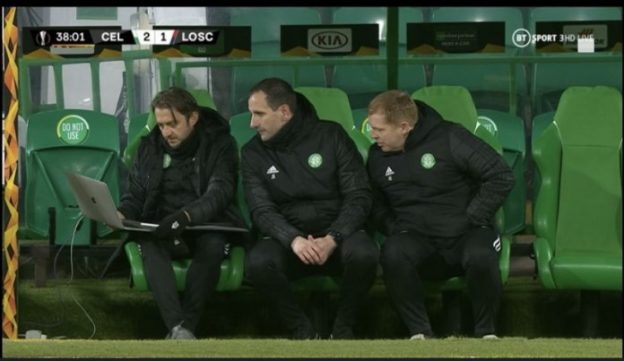
In the meantime fans favourite, John Kennedy and Gavin’s Laptop, will take interim charge of the team. Best of luck to Lenny for the future his time was up at Celtic a while back but he deserves Respect for what he achieved as a player, coach and manager and for the shit he put up with since he arrived in Glasgow.

Thousands Are Sailing T-Shirt (Pre-Order Includes FREE Badge)

Andrew Milne started More than 90 Minutes in 2001. He has written for numerous publications and online about Celtic.  He is a former newspaper columnist with the Daily Ireland and the man behind celticfanzine.com. He is host of the Celtic Soul Podcast & Celtic AM pre-match events at Malone’s in Glasgow on match days and follows Celtic Home & Away. He is a season ticket holder for Celtic FC and the Republic of Ireland. He is also P.R.O. of St. Margaret’s CSC, a member of the Celtic Trust and the Celtic Graves Association. When not following Celtic he spends his time DJing.

Annual Magazine Subscription

If you would like to support our Independent Celtic Fan Media Platform you can become a Member, Subscribe, Buy or Donate for the Price of a Pint. Your Support helps us continue to produce Daily News & Articles, Weekly Newsletter, Weekly Podcasts, Monthly Fanzine, Video Content & Live Shows.

https://celticfanzine.com/join-us/

https://celticfanzine.com/product-category/monthly-print-subscription

https://celticfanzine.com/shop/

https://celticfanzine.com/donations-page/

Glasgow Celtic Hoodie / Green

n/


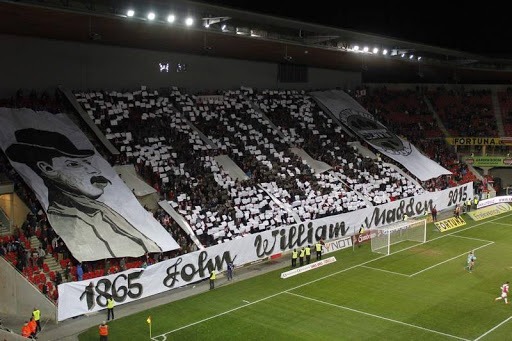
John Madden – The Father of Czech Football


In the middle of WWII, the Scottish newspapers told of Palmerston Park being used to host football matches between troops from allied countries. The armies of Belgium and Norway faced off in January 1941, whilst the Czechs were set to play against the Norwegians on 8 March. Queen of the South put out an appeal for Celtic fans to attend the exhibition match by printing the following letter in the Daily Record on 19 February 1941: “Now they come among us. Down Dumfries way there is a big Celtic support. When they see the Czechs play, they can tell themselves they are watching the results of the coaching of a very famous Celt of other days – Johnny Madden, who lived in Czechoslovakia and taught football there for over 30 years.”

More than 90 Minutes Issue 113 Print Edition

Johnny Madden was born in Dumbarton in 1865. He began his football career with his hometown club, before signing for Gainsborough Trinity and then Grimsby Town. Returning to Scotland, working as a riveter in the Glasgow shipyards, Madden re-joined Dumbarton, where he caught the eye of Celtic’s founding fathers.

Madden was convinced to join the Celtic venture and played in the club’s first ever match; a 5-2 win over Rangers. He soon agreed to sign on a permanent basis and became known as “The Rooter” because his shot was said to be so powerful that it could uproot the goalposts.

The forward impressed beyond Scotland, attracting the attention of professional clubs in England again. He went to Sheffield on trial at the same time as Celtic were on a tour down south. However, Madden was spotted by Willie Maley and John Glass, who persuaded him to link up with the Celts for the rest of their tour and not to leave the club. For agreeing to the request, he found himself with a few extra shillings in his pocket.

Thousands Are Sailing T-Shirt (Pre-Order Includes FREE Badge)

John left Celtic in 1897 having played 118 league and cup games, scoring 49 goals. He won three league titles and a Scottish Cup, making him a very well-respected Celt. Therefore, Madden was handed a Benefit Match on 7 September 1897, in which Celtic lost 5-1 against Rangers.

After leaving Parkhead, he went to Dundee for brief spell. He then signed for Tottenham Hotspur, where he retired after a few matches in 1898.

As much as his career merits respect in Celtic circles, Johnny’s real story begins when he retired from the game. It was then that he emigrated to Prague to become Manager of Slavia Prague on 15 February 1905. His arrival in Eastern Europe would change the future of Czech football.

Annual Magazine Subscription

By taking his ideas from Britain, Madden was the first man to act as a manager at Slavia Prague and in the country itself. Prior to his arrival, there was only a system whereby team captains selected the teams. Tactics, formations, and training were unheard of. Madden brought new ideas and was said to be ahead of his time in terms of prohibiting players from smoking or drinking either side of matches. He also introduced fitness training and gymnastic exercises. Czech football was revolutionised and would never be the same again.

These methods and proper managership were introduced across the nation as everything Madden implemented turned into success. Indeed, his arrival heralded a golden era for Slavia over the next 25 years. He was regarded as “the Father of Czech football,” and won the Berlin Britz Manager of the Decade award (1910s).

Overall, Madden guided Slavia to three local cups and three Czechoslovakian League titles (the Czech League was only founded in 1925). He is estimated to have managed Slavia to victory in 134 out of 169 domestic matches, and 304 out of 429 matches when international cups and friendlies are taken into account.

Glasgow 3 Stripe T-Shirt / Black

Celtic linked up with Johnny Madden again, when the Hoops toured Czechoslovakia in 1922. A match was organised against Slavia Prague and it was the hosts who ran out 3-2 winners in an aggressive game.

In 1930, Slavia Prague, still under Madden’s guidance, reached the Coupe Des Nations Final. The competition was a precursor to the European Cup but did not include any clubs from the UK. Following defeat in the Final, Madden retired from football at the age of 66.

Despite calling time on his managerial career, John remained in Prague with his Czech wife, Francesca Chekhov, for the rest of his life.

Glasgow Celtic Hoodie / Green

The performance of the Czechoslovakian national side in the 1934 World Cup stood as testament to everything Madden had introduced to football in the Bohemia region. The team, which featured eight Slavia players, lost in the Final of the tournament against Italy. This inspired Madden to keep coaching at an amateur level, which he did from his wheelchair until the age of 73.

He passed away in April 1948 and, in tribute, Slavia players laid flowers at his grave after every trophy success for many years. Meanwhile, a group of the club’s supporters still visit his grave each year to pay their respects.

A stand at Slavia’s Eden Arena stadium is named after Madden. He remains a legend of the club and Czech football as a whole. It goes without saying that his story should be better known and regaled across Scotland.

More than 90 Minutes Issue 113 Digital Edition

*John Madden’s grave is one of the landmarks that appears in The Holy Grounds of Glasgow Celtic: A Guide To Celtic Landmarks & Sites of Interest. To read his full story, the book can be purchased at the following link. www.amazon.co.uk/HOLY-GROUNDS-GLASGOW-CELTIC-LANDMARKS/dp/B08QSG86YN/

All proceeds go to Celtic FC Foundation

Hailing from an Irish background,Liam Kelly was born in Bournemouth in 1996, with the good fortune of watching Celtic during the Martin O’Neill era. Still living on the south coast,He has a season ticket in the Lisbon Lions Stand and travels to European away matches when possible.
At the age of 19, he published his first Celtic book (Our Stories & Our Songs: The Celtic Support), which focuses exclusively on the Celtic faithful throughout the club’s history. Last year he published his second book (Take Me To Your Paradise: A History Of Celtic-Related Incidents & Events), which has now sold out in Waterstones and Official Celtic stores. His third book (Walfrid & Bould Bhoys), which he co-authored with Matt Corr and David Potter, was published in September 2020 and is stocked in all official Celtic stores.

If you would like to support our Independent Celtic Fan Media Platform you can become a Member, Subscribe, Buy or Donate for the Price of a Pint. Your Support helps us continue to produce Daily News & Articles, Weekly Newsletter, Weekly Podcasts, Monthly Fanzine, Video Content & Live Shows.

https://celticfanzine.com/join-us/

https://celticfanzine.com/product-category/monthly-print-subscription

https://celticfanzine.com/shop/

https://celticfanzine.com/donations-page/

Celtic Soul / Soul Bhoys Scarf

Thousands Are Sailing

Our latest T-Shirt offering now available to PRE-ORDER

Thousands are sailing
Across the western ocean
To a land of opportunity
That some of them will never see
Fortune prevailing
Across the western ocean
Their bellies full
Their spirits free
They’ll break the chains of poverty
And they’ll dance
The Pogues 


More than 90 Minutes Celtic Soul T-Shirts

Thousands Are Sailing T-Shirt (Pre-Order Includes FREE Badge)

19.99

THOUSANDS ARE SAILING SCREEN PRINTED T-SHIRT.

All Prices Include Worldwide Postage and Packaging

No Hidden Charges

Thousands Are Sailing T-Shirt (Pre-Order Includes FREE Badge)


If you would like to support our Independent Celtic Fan Media Platform you can become a Member, Subscribe, Buy or Donate for the Price of a Pint. Your Support helps us continue to produce Daily News & Articles, Weekly Newsletter, Weekly Podcasts, Monthly Fanzine, Video Content & Live Shows.

https://celticfanzine.com/join-us/

https://celticfanzine.com/product-category/monthly-print-subscription

https://celticfanzine.com/shop/

https://celticfanzine.com/donations-page/

Celtic Soul / Soul Bhoys Scarf
 

Happy Birthday PAT CRERAND – The Weekend Long Read


It is generally agreed that the early 1960s were good times. The Welfare State was now kicking in, as it were; slums were being demolished, unemployment was minimal and prosperity was visibly a factor of life. On the football field, things were good and there was now the luxury of being able to watch the highlights of a game on television; occasionally (very occasionally) a live match was offered. Attendances were still high, and the interest, the obsession even, with football in Scotland had not abated.

More than 90 Minutes Issue 113 Print Edition

But it was not the same for Celtic. Still in the grip of the Kelly dictatorship, with Jimmy McGrory as the nominal manager, Celtic were going nowhere. But there was a youth policy. As long as Jock Stein was there as a coach for the youngsters, there was a chance, but Stein left to become manager of Dunfermline Athletic in the spring of 1960 and things stagnated.

But Stein had left behind some good youngsters. One of them was Pat Crerand. He was a Gorbals boy, born at the start of 1939, and had cut his teeth with Duntocher Hibs before being called up to join the club that he had always supported. His love of the club would become a matter of some doubt and dispute in years to come, but the Gorbals was a Celtic-mad area where there had been widespread dancing in the streets on that never-to-be-forgotten night in 1953 when Celtic beat Hibs to win the Coronation Cup.

It was immediately apparent that Pat Crerand was blessed with wonderful talent. He was a right-half with a superb ability to pass a ball, knowing exactly the right kind of weight to put on his delivery so that it reached its destination. He thrived under the coaching and direction of Jock Stein, and made his debut for the first team in October 1958 in a game against Queen of the South, which Celtic won comfortably. His first-game nerves were barely visible and the general consensus in the press was that he was worth another chance.

Thousands Are Sailing T-Shirt (Pre-Order Includes FREE Badge)

Seasons 1958/59 and 1959/60 were chaotic at Celtic Park, as various youngsters were tried. The team was never really in contention for any honours, losing in consecutive years in the semi-finals of the Scottish Cup by heavy margins to St Mirren in 1959 and Rangers in a terrible replay after a respectable first game in 1960. Celtic’s right-half was a journeyman by the name of Eric Smith. Those who watched Crerand in the reserves thought that he was better, but it was not until the start of the 1960/61 season that Pat made the right-half position his own.

At 5 feet 8 inches he was not particularly tall, but he was sturdy and well built; he was no greyhound but quick enough to the ball at need; he was a good team man, but not without the ability to snarl at team-mates who, he felt, were not pulling their weight. He had a good understanding with his friend, Billy McNeill, who had quickly developed into the best centre-half in the country. Pat was about to do likewise with the right-half position.

But the key word with this young Celtic team was inexperience. Young John Hughes had broken into the team as well, and he was gloriously productive on some occasions, but as yet he lacked the required consistency. It was at this point that the folly of not promoting Jock Stein to be manager and allowing him to leave to join Dunfermline began to be apparent. It would hit Celtic hard at the end of the season.

The team was picked by chairman Bob Kelly, a tough man with a laudable desire to see Celtic at the top and for them to play good and sporting football. Many a time the players would hear homilies about how the game should be played, but very little instruction in how to actually set about doing this. Training sessions were badly organised and dull, consisting of endless running round the track, and such tactical instructions as were given were left in the hands of Jimmy McGrory and Sean Fallon.

Lisbon 67 T-Shirt / Black

McGrory was a Celtic legend, but he was never really cut out for management. In particular, he had little understanding of the modern footballer’s mindset, and although he knew more than anyone what Celtic meant to the fans, he had little ability to impart his knowledge or to understand the modern game, in which the players were all better fed, fitter, faster and more athletic than ever before. Or at least they ought to have been. Certainly there was no lack of enthusiasm about the players, but there was often a lack of tactical nous or ability to pace themselves.

Sean Fallon had been a good reliable full-back for Celtic. Once again, he was a man who knew what Celtic meant to everyone, but he was a man who lacked any great flair, either as a player or as a coach/manager. He was very much a Bob Kelly protÈgÈ, and would conscientiously carry out his duties, but what was required was someone with presence and with charisma. He would in time become an excellent assistant manager to Jock Stein, but at this point Sean’s influence was steady rather than inspirational.

Captain Bertie Peacock had been a fine player, but at this stage of his career, the likeable 32-year-old Irishman was beginning to struggle with his own form. The other veteran of the team, Neil Mochan (not always persona grata with the establishment), could not always be guaranteed a place and went to Dundee United halfway through the season. By October of that year, Willie Fernie had been brought back from Middlesbrough with the idea of calming down the “eager beaver youngsters” as they were frequently called by the press. But with all these youngsters about to ripen at the same time, the outlook seemed bright for Celtic, and the supporters, ever-optimistic and loyal, picked up on this enthusiasm. Very soon the sheer talent of Pat Crerand would become apparent, and the supporters would have a new hero.

The team’s lack of experience was immediately apparent in the League Cup campaign of 1960/61. Most unusually it was an all-Glasgow section of Rangers, Partick Thistle and Third Lanark. Crerand started at right-half in the first game of the season as Celtic beat Third Lanark, drew with Partick Thistle and then achieved their best result for some time when they beat Rangers at Ibrox (this was their second defeat of Rangers this season, as they had already knocked them out of the Glasgow Cup).The fans began to appreciate this young side and questions were now asked about whether we were on the brink of a great Celtic team. Certainly everyone was impressed by young Crerand, whose powerful play, command of the midfield and visionary passing were a revelation. When they beat Third Lanark again, confidence and euphoria rose astronomically, such was the tangible desire for success.

Annual Magazine Subscription

Came the dawn . . . Celtic went down to Partick Thistle on the Wednesday and then Rangers at Parkhead on Saturday after having scored an early goal. This particular game was the start of the Rangers complex, and Pat would never again be on a winning side against Rangers in a national competition. The first League game of the season, for example, saw a dismal 5-1 thrashing, and New Year’s Day threw up similar distress. The Glasgow Cup final against Partick Thistle was also a disappointment.

It was soon obvious that there was to be no Celtic challenge for the League that season, because the form was so inconsistent. The problem was that although Crerand was learning the game fast, others, particularly the youngsters in the forward line, were not making similar progress. In particular, they found it difficult to “read” him and be in the proper place for a pass. This is where a good manager might have worked on the problem and solved it by assiduous training and advice, but guidance came there none.

Still, after the turn of the year it began to look as if there might be a chance of winning the Scottish Cup. It was often considered to be Celtic’s favourite competition, with 17 wins against Rangers’ 14. It had last been won in 1954, seven years previously, and (allowing for wartime) this equalled their longest gap between Scottish Cup wins in the 20th century. Supporters began to feel that this might just be the year, with Pat Crerand on board, to lift the trophy again.

The feeling of optimism grew when Rangers went out at an early stage to Motherwell, and Celtic had good wins against Falkirk, Montrose and Raith Rovers. But then Hibs came to Parkhead on 11 March in the quarter-final. Some 56,000 were there in good voice, singing the praises of Pat Crerand, but for a long time it looked as if Hibs, with goalkeeper Ronnie Simpson in inspirational form, would win the day. They also had Joe Baker playing for them, and after scoring early in the second half, they began to look comfortable.

But this Celtic team, who might have given up, now had Crerand urging them on, cajoling, gesturing and making space. They kept on pressing and gradually they wore down the Hibs defence. The Edinburgh men had looked as if they had weathered the storm until Steve Chalmers equalised within the last five minutes. Such were the scenes of ecstasy behind the goal that in the BBC highlights programme that night, the cameras did something most unusual for 1961 – they turned and captured those scenes, which “beggared description”.

Crerand was also well to the fore as Celtic beat Hibs the following Wednesday night at a dangerously overcrowded Easter Road. It was a thrilling Cup tie with Celtic’s goal coming in injury time from the young John Clark, who was playing in one of his first games for the club. The feeling now grew that this was to be Celtic’s year; all that stood between them and their 18th Scottish Cup were Airdrie in the semi-final and the winners of the St Mirren and Dunfermline Athletic encounter in the final. On 1 April Airdrie were comprehensively put to the sword in a devastating first half-display organised by Celtic’s “veteran and novice”, Willie Fernie and Pat Crerand.

The Bhoys Are Back In Town


By this time people were beginning to talk about the possibility of a Scotland cap for the prodigiously talented 22-year-old, even against England at Wembley. He did not make that (just as well as it turned out, as 1961 was the year of the 9-3 hammering!) although he had been awarded a cap for the Scottish League against the English League on 22 March at Ibrox. That day the Scots beat their counterparts 3-2, and Crerand once again impressed.

The Scottish Cup final was fast approaching. Dunfermline Athletic had absolutely no pedigree in this (or any other) competition, and it was confidently expected (far too confidently) that Celtic merely had to turn up to win. The Pars, however, had one great asset. He was called Jock Stein.

What a catalogue of woe must now be recalled by the Celtic chronicler as he details these two dreadful Cup finals of 1961! Virgil’s Aeneid tells the story of the Trojan hero Aeneas, who reaches the shores of Carthage and meets Queen Dido. She asks him to tell her about how the Trojans came to North Africa after the Greeks had captured their city by means of the wooden horse. Aeneas pauses and says:

Infandum, regina, iubes renovare dolorem

translated as: “Oh queen, you order me to renew unspeakable grief”. Unspeakable grief is hardly an exaggeration as we deal with 1961.

The first game, watched by 113,000, was a goalless draw in which according to the Glasgow Herald: “Left winger Byrne was the recipient time and again of magnificent passes from Crerand, but rarely turned the defence”. It was a frustrating experience for the fans and even more so for Crerand, one feels. Dunfermline, the country cousins, had done well and earned the respect of the Glasgow public, but the replay on Wednesday night would be different.

It was a dull spring evening and there was a 6.15pm kick-off in the days before Hampden had floodlights. It was 26 April 1961, about the same time as the extent of the USA disaster in Cuba was becoming known. Events had unfolded dramatically on the world stage the previous week as the USA had launched an appallingly botched and half-hearted invasion of Cuba at the Bay of Pigs. There would be repercussions about this high-handed and incompetent behaviour, but for the moment the world laughed at the useless Americans  – but no more than Celtic’s enemies laughed at Celtic that night!

Oh what agonies and torture were endured by those who loved the Celtic. Pat Crerand was once again superb, by some distance the man of the match, but the Celtic forward line were “much too individualistic” according to the Glasgow Herald – a tactful way of saying they were useless. Celtic fans in the 87,000 crowd and many more listening to the radio commentary on the BBC Scottish Home Service groaned when Dunfermline went ahead halfway through the second half, and the Scottish Cup now seemed as if it were slipping away.

Quarterly Magazine Subscriptions

Crerand now became even more dominant as Celtic pushed towards that Mount Florida goal in that melancholy second half. Sleeves rolled up, his pants rolled at the waist, he took charge, spraying passes to both wings and down the centre – then enduring the frustration of chances going a-begging. The Pars goalkeeper Eddie Connachan, himself a great Celtic fan, ironically enough, had an inspired and lucky night, but feckless finishing was the main cause of the Celtic downfall. In the final minute with Celtic now over-committed, a goalkeeping error allowed Dunfermline a second goal and the cause was lost.

One felt, from the top of that King’s Road terracing, that Crerand was going to punch his goalkeeper Frank Haffey. It was a sign of his exasperation and chagrin, shared sadly by some of the Celtic support who began to throw empty beer bottles to express their anger. Dunfermline collecting the Cup that should have been Celtic’s, Jock Stein watching in his white raincoat, Pat Crerand and some others collapsing in grief at the full-time whistle – these are sights that remain with one all one’s life. Almost 50 years later, the wounds have not yet healed.

The press, while clearly enjoying Celtic’s debacle and lauding Dunfermline’s one and only night of glory in a hitherto barren history, nevertheless praised Crerand, who was so far above everyone else. It was about this time, too, that the first hints began to appear that Pat might one day go to England, a sure sign that Celtic had a class player, sadly in the midst of so many others who had not yet done so well.

More tangibly, Pat was rewarded with his first cap for Scotland. He had done well to avoid the 9-3 Wembley cataclysm of April 1961, but such had been his form in the two high-profile Scottish Cup finals that he could not be ignored by the selectors for the World Cup qualifying fixtures. There was a double header against the Irish Republic in which Crerand played brilliantly and Scotland won both games with a degree of comfort, but then came the encounter with Czechoslovakia in Bratislava on 14 May.

Down 2-0 to a couple of early goals, Scotland were becoming frustrated. They had talent but things were not going well on a difficult pitch with the referee and the crowd against them. Nearing half-time Andrej Kvasnak and Pat had what the papers euphemistically called a “clash”. Pat was fouled, but retaliated and the two of them were ordered off. Pat could not believe this was happening to him, for in these days before the use of red cards, the referee pointed the wrong way, having lost his sense of direction.

Incredibly, Pat’s summer of 1961 began with a sending-off, and it ended with a sending-off. Equally incredibly, the second dismissal was in a five-a-side pre-season tournament at Falkirk. He was suspended for this, and even after his suspension was finished, chairman Bob Kelly imposed a further club suspension as he felt that Celtic’s good name had been tarnished by Crerand’s conduct. Supporters, at this point, began to feel that Kelly did not like Crerand.

Glasgow Celtic Hoodie / Green

It was a costly suspension, as by the time that Crerand returned, Celtic were already out of the Scottish League Cup, thanks to an inability to beat St Johnstone on two occasions on which Crerand’s presence was sadly missed. But his return in September coincided with his best form for Celtic, and the team started to impress.

At the same time, Rangers had unearthed a great left-half in Jim Baxter. Crerand and Baxter were therefore seen by the media as a great counter-balance for each other – they both, for example, “wrote” a ghosted column in the Evening Citizen and they were looked upon as symbols of the new age, as footballers began to be personality figures in the same sense as pop stars were. It was part of the new affluent society, and as more and more people began to aspire to a better lifestyle, who better to symbolise it than the two young lions of Scottish football, who fortunately happened to be one on each side of the Glasgow divide?

These were heady days for Crerand. Playing well for Celtic, even winning some reluctant admiration from the stern Bob Kelly, and then being on the winning side in three consecutive Scotland games, Crerand was not slow to play along with this adulation, and even seemed capable of coping with it. The Scotland wins were against Czechoslovakia at Hampden (revenge for Bratislava and enough to earn Scotland a play-off for a World Cup place), Northern Ireland and Wales.

The Northern Irish game was played in Belfast and was won 6-1 by a rampant Scottish team. Rangers players scored all the goals, and although the Evening Citizen raised not a few hackles by having “Ireland 1 Rangers 6” as its headline, it also indicated that Pat Crerand was the star man. The Sunday Post the following day remarked that it must have been galling for the Irish supporters to realise that the architect of their destruction was a “callant with the illustrious name of Pat”.

One of Scotland’s pivotal games in the early 1960s came on 29 November 1961, when they lost their play-off to Czechoslovakia in the neutral venue of Brussels. Scotland were ahead but conceded a late goal. They then went down in extra time after an extraordinary incident at the end of 90 minutes, when Crerand and Baxter were seen to be grabbing the water bottle for the first use of it. This defeat meant that Scotland and Crerand would be absent from the 1962 World Cup, an occasion which they would certainly have graced.

Midwinter 1961/62 saw the best of Crerand in a Celtic jersey. Three good wins in December lifted Celtic to the crest of the wave, but unfortunately bad weather descended and knocked out a few fixtures, including Rangers visit to Parkhead on New Year’s Day. Celtic never really recovered from that, but finished a respectable third in the League behind Dundee and Rangers, from both of whom they took points in the run-in.

But it was the Scottish Cup once again that would determine Celtic. Crerand was heavily involved in two epic ties, a 4-3 win at Tynecastle in which he scored the winning penalty, then a game against Third Lanark at a full Parkhead when Celtic recovered from being 1-3 down to go 4-3 up before losing a late equaliser. The replay had to be held at Hampden rather than Cathkin for safety reasons and Celtic swept the Thirds aside to win 4-0.

Glasgow 3 Stripe T-Shirt / Black

Pat was quite clearly the “blue-eyed bhoy” in all this. He played blatantly to the gallery in his pre-match loosening up exercises, and made a point of talking to supporters, giving autographs and letting everyone know that he was one of them. Some supporters made up a parody of the Rangers “No Surrender” anthem in which “with heart and hand and Ralphie Brand (Rangers inside-left), we’ll guard old Derry’s Walls” became on Celtic buses “with heart and hand and Pat Crerand, we’ll cut off King William’s balls”.

But if there was one game that changed all this, it was the Scottish Cup semi-final against St Mirren. Once again “unspeakable grief” is renewed when one recalls this occasion. Celtic were very firm favourites for this game. They had beaten St Mirren 7-1 at Parkhead in November, and then 5-0 at Love Street on the Monday night before the semi.

This result, however, was an ambush. St Mirren, who now had Willie Fernie in their ranks, had deliberately held back on the Monday, lulling the young Celts into a false sense of security, and allowing the feelings of euphoria, over-confidence and carelessness to take over Celtic’s approach to the big game. All the while, St Mirren themselves concentrated on spotting a few Celtic weaknesses.

One such weakness was the self-destruct tendency of the Celtic youngsters to argue among themselves. Incredibly this happened before kick-off at Ibrox on that fateful day of 31 March 1962. It may have been because some disagreed with captain Dunky McKay’s decision of what way to play after he won the toss, or it may have had some other genesis, but the Celtic fans were treated to the bizarre sight of their players shouting at one another before the game started.

Celtic never really did get started, and by half-time, to the astonishment of all of Scotland, St Mirren, playing with the wind, were 3-0 up against a lethargic Celtic side. The Celtic fans were aghast at all this, but cheered themselves up by saying that there had to be some recovery and that “Paddy” would rally the troops in the second half now that the wind was on their side. There was some kind of improvement, but no goals as the second period wore on, and fans became even more despondent and nasty. Bottles were thrown, the pitch was invaded and the referee had to withdraw the players to the safety of the pavilion. By the time the players were back and Alec Byrne scored a late and irrelevant goal for Celtic, the club’s directors had conceded the game.

This whole episode was one of the saddest in Celtic’s long history, and may well have been the beginning of Crerand’s reckoning that his beloved Celtic was not necessarily the best option for his career. In truth, the team, talented and enthusiastic, lacked any kind of guidance or control, something that could only have been imparted by someone like Jock Stein. Pat had a low opinion of some of his team-mates, a factor that would soon be leaked to the press, and he must often have wondered if Celtic were ever going to win anything again.

Annual Digital Subscription

Two contrasting weekends in April must have rammed home this point. On 21 April, while Celtic were losing pathetically to Raith Rovers at Parkhead before an angry crowd which was only marginally over 10,000, ten times that number were less than a mile away at Hampden to see Rangers win the Scottish Cup by beating St Mirren 2-0. This was yet another low point for Celtic and Crerand, yet only a week earlier the famous Scottish half-back line of Crerand, McNeill and Baxter had orchestrated a famous 2-0 win for Scotland over England. Pat had been outstanding in all that, and must have wondered why his career was being retarded at Parkhead in such a shambles of an organisation when he himself was openly being described as world-class in so many newspapers.

Yet he had such a strong emotional pull for Glasgow Celtic. Ironically, so too did one of his admirers, Matt Busby, the manager of Manchester United, now patiently rebuilding a great side to replace the one which had perished in the Munich air crash of 1958. The newspapers screeched about the interest from Old Trafford and many other English teams, but Pat, for all his hot-headedness, remained committed to Celtic. He must, however, have begun to think.

The heartbreaks would continue in the 1962/63 season. The League Cup section was a difficult one with Hearts and the two Dundee teams. Celtic beat all three comfortably at home, lost narrowly and unluckily at Dens Park and Tynecastle, then broke their supporters’ hearts at Tannadice Park on the last day of the section. Any sort of win would have ensured qualification, but it was the re-run of so many occasions in the early 1960s in which Celtic dominated and played brilliantly but simply could not score. Pat Crerand was immense, but chance after chance was missed by an inept forward line, and the game petered out into a 0-0 draw. Life might have been different if just one of those chances had gone in, or if the referee had seen that the ball was a good foot over the line on one occasion in the first half, but it was another major disappointment to Pat.

The following week in the Old Firm derby at Celtic Park, the gods were once again not on Pat’s side as he missed a penalty after a piece of gamesmanship from Jim Baxter, and Celtic had the mortifying experience of dominating the game, but losing 0-1 to a deflection. On the following Monday, Real Madrid came to Parkhead for a friendly, and although Celtic lost, Crerand found himself waking up the following morning to all sorts of headlines about how he was the best right-half in the world.

It was thus a crazy, rollercoaster sort of life for Pat in late 1962. Round about the time of the Cuban missile crisis in October, the team hit a purple patch, putting Airdrie and St Mirren to the sword, but then unaccountably lost to Queen of the South at Parkhead, and the season disintegrated into a series of lacklustre draws and further defeats.

Crerand was now in despair. In autumn 1962 he had produced another two fine international performances against Wales and Northern Ireland, and there was no shortage of neutral observers who were in no doubt that he deserved to be called world-class. However, the unpalatable truth was that he was being held back at an under-performing club. He loved Celtic, but had little respect for the chairman and was openly critical about some of the forwards. There did not seem to be any great desire to win trophies if that meant spending money for a classy striker.

Celtic Multi Pack Stickers includes FREE Badge

The fans, though still loyal, were severely tested. A win over Rangers, admittedly in a Glasgow Cup match on a foggy Wednesday afternoon, lifted them, but then the team collapsed against Partick Thistle on the Saturday. Pat, being a supporter himself, understood what they felt. He, however, was a young professional footballer whose ambitions were being thwarted. He had an escape route to get away from the repressive, stifling and depressing atmosphere that was Celtic Park in 1962.

New Year’s Day 1963 was the end of the road for Pat and Celtic. The scene was Ibrox on a cold, frosty day. Celtic were 0-1 down at half-time, a position from which recovery was still possible. The Celtic dressing room, however, was downcast, and when Sean Fallon, the assistant manager, took Crerand to task for a few mistakes, all the frustration and anger than had been boiling within Pat for many months erupted. Stories emerged about Celtic jerseys being thrown, about impossible biological suggestions being made, and how it took all the diplomacy of Billy McNeill and a few calmer members of the team to persuade Pat to go out for the second half.

Throughout Celtic history, dressing room disharmony has always led to disaster. One thinks of the events at Arthurlie in 1897, at Airdrie in the League Cup in 1998, and at Parkhead against Inverness Caledonian Thistle in 2000. On this occasion in 1963 the team went out for the second half and collapsed to lose 0-4 in circumstances which had the press and the supporters on the freezing terracings puzzled about the lack of effort. Pat would never play for Celtic again.

He was dropped for the trip to Aberdeen the following Saturday – ironically Celtic won 5-1 in brilliant fashion – and then the big freeze of 1963 descended. What happened in early February 1963 depends on what spin one reads. We are asked to believe that Pat came home from Mass one Sunday to discover that everything had been agreed with Manchester United. What is more likely is that the persuasive Matt Busby held out the attractions of more money, a chance of playing for a successful team and even (as a Celtic-lover himself) holding out the possibility of some “Celtic in exile” situation in England, quoting the precedent of Jimmy Delaney, who had joined Manchester United from Celtic in remarkably similar circumstances in 1946.

Celtic fans everywhere were devastated. With a ferocity which astounded his mother, this author tore down the pictures of Pat which adorned his bedroom. Older fans shook their heads and thought that Celtic were finished. A few more perspicacious ones remarked that things would have been different if Jock Stein had not been allowed to go to Dunfermline in 1960.

The loss of a cult hero is always a bad blow. Celtic fans do not cope well with anyone not wanting to play for the club, no matter what the circumstances were. Pat would actually win an English Cup medal that year with Manchester United, but that was little consolation for the broken green-and-white army.

Quarterly Digital Subscription

All that frustration was expressed tellingly at the bottom of the terracing steps at the Celtic End of Hampden on 15 May 1963. The occasion was the Scottish Cup final replay, and Celtic supporters were vanishing as fast as snow off a dyke after Rangers had scored their third goal against a dysfunctional Celtic team. In an almost unprecedented sight, 60,000 had turned their backs on Celtic. “Unspeakable grief” did not even begin to describe things. A sullen mob was heading home, too numb to say anything until this man at the bottom of the terracing steps, a middle-aged, respectable, sober man, suddenly dissolved in tears and shouted: “Pat Crerand! Pat Crerand! I hope you’re f***in’ proud o’ yourself!”

Born in 1948, David Potter first saw Celtic at Dens Park, Dundee in March 29. It was a 3-5 defeat, which equipped him admirably for the horrors of the early 1960’s. He had “followed” Celtic for a few years before that and recalls having been called upon to impersonate Jock Stein and receive the family silver teapot which had to do for the Scottish Cup as it was presented on April 24 1954, after he and his father had spent a nerve wracking afternoon listening to the radio!  Since then, he has “followed” every Celtic game with bated breath, and has written extensively about the club in magazines and books. His favorite team was that of 1969 (which he rates marginally better than 1967) and his favorite player was Henrik Larsson.

His ambition for Celtic is for them to keep on winning silver in Scotland and to be something in Europe once again. His other interests are cricket and drama. He is 70, a retired teacher of Classical Languages, married with three children and five grandchildren. He now travels on the Joseph Rafferty bus from Kirkcaldy. He also loves Forfar Athletic.


If you would like to support our Independent Celtic Fan Media Platform you can become a Member, Subscribe, Buy or Donate for the Price of a Pint. Your Support helps us continue to produce Daily News & Articles, Weekly Newsletter, Weekly Podcasts, Monthly Fanzine, Video Content & Live Shows.

https://celticfanzine.com/join-us/

https://celticfanzine.com/product-category/monthly-print-subscription

https://celticfanzine.com/shop/

https://celticfanzine.com/donations-page/

Celtic Soul / Soul Bhoys Scarf
 

Working Class Heroes – When Saturday Comes


Celtic Soul Podcast Episode 54 with More than 90 Minutes, Editor Andrew Milne chatting to Jonny Owen

Jonny Owen is a writer, producer, actor, musician and radio show host. In his younger days he was an amateur boxer. His CV makes impressive reading including the Three Kings documentary film about Jock Stein, Bill Shankly and Matt Busby which he directed.

More than 90 Minutes Issue 113 Print Edition

Jonny and Andrew chat about The Three Kings Film, the legendary managers of Celtic, Liverpool and Manchester United Busby, Stein and Shankly the teams they built and the impact they had on each club. A minors son Jonny’s Dad would tell him when he was growing up about all three iconic football figures and their connections to the mines whenever they would come onto the television.

Both Jonny and Andrew grew up in working class areas with the same political and social landscape backdrop and a wonderful musical soundtrack to life. They share their experiences from boxing gyms, watching football, the odd all night party, trips to Glasgow and music from childhood, through the teenage years to manhood.

Jonny supports Cardiff City and the conversation takes in all of football culture and names crop up from time to time like Martin O ‘Neill and John Robertson from his connections with Nottingham Forest.

Lisbon 67 T-Shirt / Black


There is plenty of chat about Busby, football culture as the conversation flows in and out about Stein, Shankly and Busby all three working class heroes who would not only conquer the World of Football but the hearts of the communities they represented.

Modern Football, Football without Fans, Football on TV, all gets examined as does the late eighties and nineties culture when weekends were all about football, fanzines, music and staying up all night with no filters or Instagram to spoil the party. Life was more real then when teeth were yellow.

Jonny jumps in the Tim Time Machine and heads back to 1967 and into the heat of Lisbon while stopping off on the way back to relive some of his favourite times in Glasgow including a great session in the Gorbals.

The Three Kings is available to watch on Amazon and don’t forget to listen in to Jonny’s Football Culture show on Talk Sport every Sunday

Play Out Song, You’ll Never Walk Alone performed by the Rebel Roots

Annual Magazine Subscription

Andrew Milne started More than 90 Minutes in 2001. He has written for numerous publications and online about Celtic.  He is a former newspaper columnist with the Daily Ireland and the man behind celticfanzine.com. He is host of the Celtic Soul Podcast & Celtic AM pre-match events at Malone’s in Glasgow on match days and follows Celtic Home & Away. He is a season ticket holder for Celtic FC and the Republic of Ireland. He is also P.R.O. of St. Margaret’s CSC, a member of the Celtic Trust and the Celtic Graves Association. When not following Celtic he spends his time DJing.

If you would like to support our Independent Celtic Fan Media Platform you can become a Member, Subscribe, Buy or Donate for the Price of a Pint. Your Support helps us continue to produce Daily News & Articles, Weekly Newsletter, Weekly Podcasts, Monthly Fanzine, Video Content & Live Shows.

https://celticfanzine.com/join-us/

https://celticfanzine.com/product-category/monthly-print-subscription

https://celticfanzine.com/shop/

https://celticfanzine.com/donations-page/

Celtic Soul / Soul Bhoys Scarf


Potters Players – Tommy Docherty


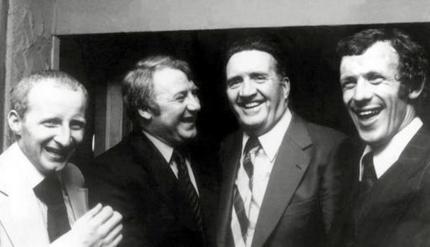
The remarkable footballing life of Tommy Docherty came to an end on Hogmanay 2020. He was 92, and he had been ill for some considerable time.

The funny thing about Tommy Docherty was that he was Celtic through and through. From a tough, but loving Gorbals background, Thomas Henderson Docherty was born in 1928 and joined the club in 1948 after he had finished his National Service in Palestine (not the easiest nor safest of locations) but he played only 9 games for Celtic before departing some 15 months later for Preston North End.

More than 90 Minutes Issue 113 Print Edition


Things might have been different for Tommy with the team that he loved and would continue to love all his long life, but life was absolutely chaotic at Parkhead in the late 1940s and to be honest, he was never really given a chance. But he was a good enough player for Preston North End, earning a loser’s medal in the 1954 English Cup final (under Manager Scot Symon!) after they had regained their position in the First Division. He also played for Arsenal, and 25 times for Scotland where he must have learned in the 1950s a great deal about how NOT to run a football club.

His lengthy managerial career with countless clubs began with Chelsea and it was with them that he had the most success, winning the English League Cup in 1965, and he might have been better to stay with them. Another team that he might have been better to stay with (and he admits this himself) was Scotland, for things were beginning to happen with Scotland in 1972, but he chose to go to Manchester United instead, and was honest enough to admit that it was for the money.

There in 1974, he ,managed to get them relegated but actually kept his job, brought them back up again and in 1977 won his only major triumph – the FA Cup. Sex then reared its ugly head, and he was sacked for having an affair with the physiotherapist’s wife.


The Bhoys Are Back in Town T-Shirt |Black

It looked like another classic case of Scottish self-destruction, but this was a steady relationship rather than the somewhat undignified affair that it was described as in the media, and their marriage lasted until death separated them.

He made no bones about hating Manchester United after that, but his subsequent managerial career with many clubs in England and Australia brought him no great success or happiness. He was a great character, however, and it was a pity that he did not stay longer with Celtic. He might have made a difference. He was a great comedian with many quips and one liners, on one occasion saying that corporal punishment for football hooligans would “halve the problem by two thirds”. He might have been a great Manager for Scotland as well.

Annual Magazine Subscription


Born in 1948, David Potter first saw Celtic at Dens Park, Dundee in March 29. It was a 3-5 defeat, which equipped him admirably for the horrors of the early 1960’s. He had “followed” Celtic for a few years before that and recalls having been called upon to impersonate Jock Stein and receive the family silver teapot which had to do for the Scottish Cup as it was presented on April 24 1954, after he and his father had spent a nerve wracking afternoon listening to the radio!  Since then, he has “followed” every Celtic game with bated breath, and has written extensively about the club in magazines and books. His favorite team was that of 1969 (which he rates marginally better than 1967) and his favorite player was Henrik Larsson.

His ambition for Celtic is for them to keep on winning silver in Scotland and to be something in Europe once again. His other interests are cricket and drama. He is 70, a retired teacher of Classical Languages, married with three children and five grandchildren. He now travels on the Joseph Rafferty bus from Kirkcaldy. He also loves Forfar Athletic.


More than 90 Minutes Issue 113 Digital Edition

y/


If you would like to support our Independent Celtic Fan Media Platform you can become a Member, Subscribe, Buy or Donate for the Price of a Pint. Your Support helps us continue to produce Daily News & Articles, Weekly Newsletter, Two Weekly Podcasts, Monthly Fanzine, Video Content & Live Shows.

https://celticfanzine.com/product-category/monthly-print-subscription/

https://celticfanzine.com/shop/

Support Us for the Price of a Pint

Join Us

https://celticfanzine.com/donations-page/

Celtic Soul Polo-Top | Black

Potters Players – Alec Thomson


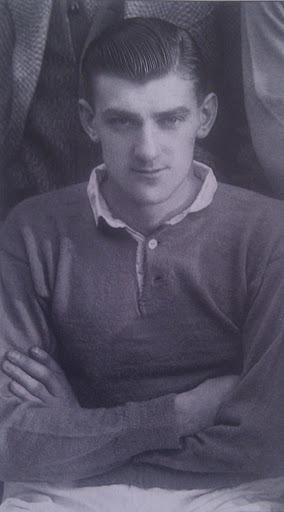
Alec Thomson is one of the most under-rated Celts of them all, but those who saw him will aver firmly that he was one of the best of them all. McGrory was of course something special. But who made McGrory? Who was the “fetch and carry man”? Who was the silky passer? Who was the forager in chief? McGrory was fortunate in that he had loads of such people in his career – Jean McFarlane, Peter Wilson, Peter Scarff, Frank O’Donnell, Johnny Crum, Willie Buchan (and that is without mentioning Patsy Gallacher and Tommy McInally who were superstars in their own right) but none of these men did more for McGrory than the slightly built, frail looking and unassuming bhoy from Buckhaven with the ordinary name of Alec Thomson.

More than 90 Minutes Issue 113 Print Edition

Born in 1902, “Eckie Tamson”, as he was known in Fife, was, fortunately for him, just too young for the 1st World War but he would have left school at any early age and worked down the pits working in slavish conditions for the detested Wemyss family of East Fife. He started playing for Glencraig Celtic, then Wellesley Juniors before he was invited to join Glasgow Celtic in October 1922. His strong point was his passing ability. In this respect he was perhaps considered to be a potential successor to Jimmy McMenemy, but that was a big “ask” for the shy young man with the Fife accent, the jet black hair and the consumptive looking features which characterised those who worked in the mines of Fife. He made his debut in November 1922, but that was not a great Celtic team to be part of, and le lost two of his first three games. It was the following year before he became a regular at inside left – but when the occasion demanded, he was equally at home at inside right.

Success, of course, has to be worked for, but Alec was not afraid of hard work. He was in awe of Patsy Gallacher (wasn’t everyone?) but he soon became a respected member of the side with the personality to encourage, quietly and gently, others not least his contemporaries Peter Wilson and Jimmy McGrory with whom he soon established solid friendships. The 1925 Scottish Cup semi final and the final (5-0 v Rangers and 2-1 v Dundee) have of course been immortalised by “King James and Patsy” but he would be a fool who would neglect the contribution of the others in that side, not least the tireless Thomson who had already earned for himself the nickname “Eveready”  after the electric batteries of that name. It was his first Scottish Cup medal.

It was the following season 1925/26 that was his best, as the immortal forward line of Connolly, Thomson, McGrory, McInally and McLean swept all before them to win the Scottish League and (more importantly perhaps) earn a mention in the same breath as Bennett, McMenemy, Quinn, Somers and Hamilton of two decades previously. They played fast breathtaking football with the two inside forwards – Thomson and McInally, totally different kinds of players and totally different personalities as well – complementing each other and provided the ammunition for McGrory. The League was won, the Cup was narrowly lost that year, and Thomson won his first Scottish cap as Scotland beat England 1-0 at Old Trafford. It tells you all you need to know about Scotland selectors that “Eckie” was not chosen again until years later when he was well past his best.

The Bhoys Are Back in Town T-Shirt |Black

1927 was less successful but he did win his second Scottish Cup medal, this time against many of his old friends from Buckhaven and Methil who were playing for East Fife, and having now made good friends with another Thomson from Fife (indeed from the same junior football team in Wellesley) the outstanding young goalkeeper John. Indeed by 1931 when the club were back among the honours, yet another Thomson, Bertie was with them as well.

The intervening years between 1927 and 1931 had not been easy for all sorts of reasons, not least the economic depression. But 1931 was a superb year for the club with a breathtaking Scottish Cup win and a tour of America. September 5 changed all that, though, and Alec was as devastated by his friend and namesake’s tragic death as anyone. But he fought back to win another two Scottish caps and his fourth Scottish Cup medal in 1933.

He played for the club until the end of the 1933/34 season and finished his career with Dunfermline Athletic. He was one of the best passers of the ball that Celtic have had. He was not particularly fast but he worked hard. His slight figure encouraged opponents to think that he could be bullied off the ball. Not so! He had a great deal more strength than it appeared. He also had the ability to dribble, his slight figure drifting past opponents at speed without his feet appearing even to be on the ground! He was not known as a goalscorer, yet he managed to score 98 goals for the club in the eleven years that he played for Celtic. But he was basically a quiet, modest man who loved the club he played for. After his retirement from the game in 1937, he moved through from Fife to the West and died in November 1975 at, of all places, Larkhall!

Annual Magazine Subscription

A couple of days after his death, a minute’s silence was held for him at Celtic Park before a game with Motherwell on a raw, damp, typically November day. Celtic were not going through a purple spell. It was the year that Jock Stein was in hospital recovering from his car accident, and the League Cup final had recently been lost to Rangers as Celtic struggled to cope without the now retired Billy McNeill and the badly injured Jock Stein. A younger supporter was heard to ask politely of an older one who this Alec Thomson fellow was. It was a reasonable question, for Alec was far from being a name on everyone’s lips, but the young man’s question was answered gruffly “Alec Thomson – McGrory’s fetch and carry man – and McGrory woudnae hae been half the man he wis withoot him! And we could dae wi him noo!” And there were tears in the old man’s eyes as he said it!


Glasgow Celtic Hoodie / Green

Born in 1948, David Potter first saw Celtic at Dens Park, Dundee in March 29. It was a 3-5 defeat, which equipped him admirably for the horrors of the early 1960’s. He had “followed” Celtic for a few years before that and recalls having been called upon to impersonate Jock Stein and receive the family silver teapot which had to do for the Scottish Cup as it was presented on April 24 1954, after he and his father had spent a nerve wracking afternoon listening to the radio!  Since then, he has “followed” every Celtic game with bated breath, and has written extensively about the club in magazines and books. His favorite team was that of 1969 (which he rates marginally better than 1967) and his favorite player was Henrik Larsson.

His ambition for Celtic is for them to keep on winning silver in Scotland and to be something in Europe once again. His other interests are cricket and drama. He is 70, a retired teacher of Classical Languages, married with three children and five grandchildren. He now travels on the Joseph Rafferty bus from Kirkcaldy. He also loves Forfar Athletic.


More than 90 Minutes Issue 113 Digital Edition

y/


If you would like to support our Independent Celtic Fan Media Platform you can become a Member, Subscribe, Buy or Donate for the Price of a Pint. Your Support helps us continue to produce Daily News & Articles, Weekly Newsletter, Two Weekly Podcasts, Monthly Fanzine, Video Content & Live Shows.

https://celticfanzine.com/product-category/monthly-print-subscription/

https://celticfanzine.com/shop/

Support Us for the Price of a Pint

Join Us

https://celticfanzine.com/donations-page/

Celtic Soul Polo-Top | Black