Author Archives: celtic

Potters Players – Jamie Weir


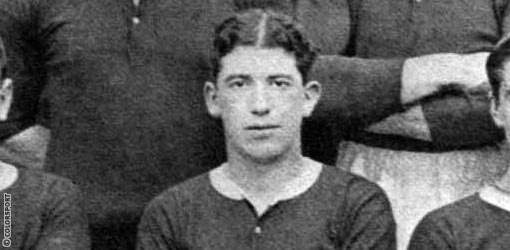
It took a good man to replace Willie Orr, but Jamie Weir was just that man, replacing the ageing Willie Orr in the left back position in summer 1907 and holding the position down for three glorious years in which he won three Scottish League medals, one Scottish Cup medal, one Glasgow Cup medal and one Glasgow Charity Cup medal – not a bad haul for three years!

More than 90 Minutes Issue 113 Print Edition

The change was seamless, although the style of play was different. Weir was younger (born in 1887 in Muirkirk, Ayrshire) and has been described as ” strong, truculent and fearless” and freely compared to Storrier, Battles and Doyle. not to mention Willie Orr himself. This doughty character whose tackle was ferocious, apparently he had the habit of shouting at his opponent “Get Rid Of The Ball” as a sort of warning as he charged in! He had a good relationship with his full back partners Donnie McLeod and later Alec McNair, and on the left flank he could interchange with another Ayrshire man, James Hay, who was of course now the captain.

Being an Ayrshire man, Weir, like quite a lot of early Celts (Sandy McMahon, Peter Somers, Sunny Jim) had a great love of Robert Burns and did, we are told, a mean Tam O’Shanter at the Celtic soirees at the intensive training sessions at various Hydro hotels.

His finest hours were the Scottish Cup final in 1908 and the glorious 12 days of April 1909 when Celtic were required to play 8 games to win the League. They duly did so, and Weir played in every game without giving the slightest hint of being tired!

Thousands Are Sailing T-Shirt (Pre-Order Includes FREE Badge)

His departure in 1910 was quite abrupt, and apparently involved a falling out with Maley and the establishment over wages. He left to play for Middlesbrough and stayed with them until after World War One. He settled in the North East and as late as the 1950s, he was running the Crown Hotel in Redcar. He died in around 1959 or 1960 but the exact date of his death has been difficult to tie down.

Jamie Weir is yet another of the many undervalued Celts of the great days. His replacement at left back was eventually the great Joe Dodds.


Annual Magazine Subscription

Born in 1948, David Potter first saw Celtic at Dens Park, Dundee in March 29. It was a 3-5 defeat, which equipped him admirably for the horrors of the early 1960’s. He had “followed” Celtic for a few years before that and recalls having been called upon to impersonate Jock Stein and receive the family silver teapot which had to do for the Scottish Cup as it was presented on April 24 1954, after he and his father had spent a nerve wracking afternoon listening to the radio!  Since then, he has “followed” every Celtic game with bated breath, and has written extensively about the club in magazines and books. His favorite team was that of 1969 (which he rates marginally better than 1967) and his favorite player was Henrik Larsson.

His ambition for Celtic is for them to keep on winning silver in Scotland and to be something in Europe once again. His other interests are cricket and drama. He is 70, a retired teacher of Classical Languages, married with three children and five grandchildren. He now travels on the Joseph Rafferty bus from Kirkcaldy. He also loves Forfar Athletic.

St Margarets CSC Quadruple Treble Badge


If you would like to support our Independent Celtic Fan Media Platform you can become a Member, Subscribe, Buy or Donate for the Price of a Pint. Your Support helps us continue to produce Daily News & Articles, Weekly Newsletter, Weekly Podcasts, Monthly Fanzine, Video Content & Live Shows.

https://celticfanzine.com/join-us/

https://celticfanzine.com/product-category/monthly-print-subscription

https://celticfanzine.com/shop/

https://celticfanzine.com/donations-page/

More than 90 Minutes Issue 113 Digital Edition

y/

Quadruple Treble


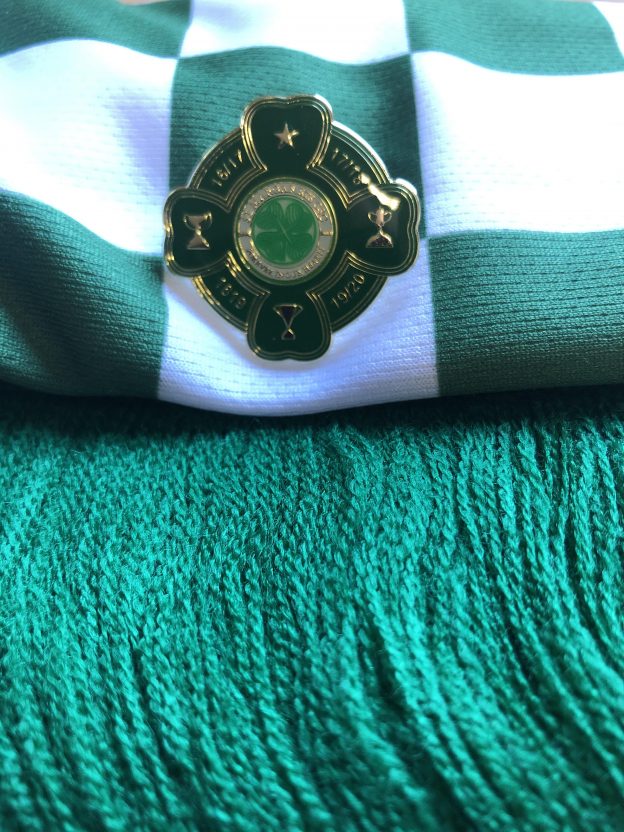
New St. Margarets CSC Quadruple Treble Badge  Now in Stock plus  a small amount of Treble Treble Badges and Travel Mugs

St Margarets CSC Quadruple Treble Badge

St Margarets CSC Travel Mug

St Margarets CSC Treble Treble Badge


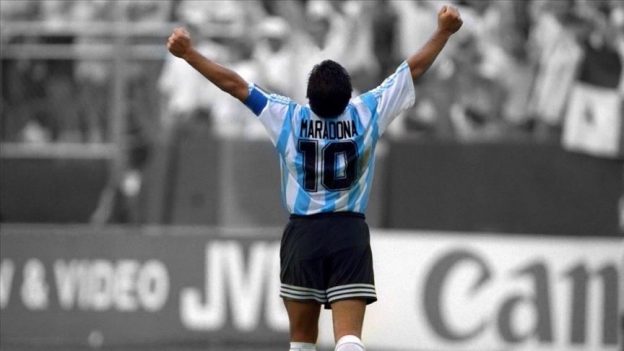
DIFF-ER-ENT CLASS!. Diego Armando Maradona.

……….Enrique to Maradona…….different class………DIFF-ER-ENT CLASS!……….when they talk about the great players of international football this man will be on a pedestal……….. everyone in the stadium, fans, commentators, pressmen, everybody on their feet in acclamation of one of the greatest goals ever in the World Cup, all from the feet and brains of one man………Diego Armando Maradona….’! 

 Jimmy Magee.

More than 90 Minutes Issue 113 Print Edition

The unmistakable voice of RTE’s Jimmy Magee, ‘the memory man’, sticks in the mind, the passion, the emotion, ‘different class’, he captured the moment in a dramatic style for all time. Forgive me for indulging in a little nostalgia as I recall the life and times of possibly the greatest player of all time, certainly in that special group of Pele, Messi, Georgie Best, Garrincha, Puskas, Di Stefano, the street kid from a shantytown, Villa Fiorito in Buenos Aires who became a God-like figure in Naples and Argentina, sadly Diego Armando Maradona was dead at 60, dying on the same day as another flawed genius Georgie Best on the 25th November, the lights dimmed, it was a JFK moment, the world mourned, but like James Dean or Marilyn Monroe, he will live forever!

Thousands Are Sailing T-Shirt (Pre-Order Includes FREE Badge)

Annual Magazine Subscription

Three finals in 12 years and winning two is exceptional, in World Cup history only England and Spain once, Argentina, Uruguay and France 2, Italy and Germany 4 and Brazil 5 have won the biggest tournament on the planet, only eight countries in 90 years, the elite in football and unfortunately, I have to include England in that despite ’66, every game at Wembley, a dodgy Russian linesman, and repeats on tv every Xmas and all that.

But when the two teams arrived in Mexico for the ’86 World Cup there was a lot of history between the two countries, despite Spain being the colonial power in Argentina the British invaded both Buenos Aires and Montevideo in 1807-08 during the Napoleonic Wars seeing it as a proxy for Spain, the Argentines as the song ‘Admiral William Brown’ goes, ‘ran the British out of Buenos Aires’, Brown from Mayo and he is still celebrated in Argentina as Admiral of the Argentine Navy, las Islas Malvinas, Argentina.

After Argentine independence from Spain relations with England became cordial for a long time but there was always resentment that the British still claimed the Malvinas or the Falklands as known in the UK, these islands which are just 1,500 kilometres from Argentina but 8,000 miles from Britain and contain more sheep than people led to what became known as the Falklands/Malvinas war in 1982.

Celtic Badges Multi Pack

5/


Argentina had taken over the islands but Thatcher and her Government sent an ‘armada’ halfway around the world to defend the Falkland islanders, these people bear comparison with those in Gibraltar or the Shankill Road, they are hardly Latin American.

In a conflict of vicious engagement 250 British soldiers were killed, 750 wounded and five islanders whilst 350 Argentine soldiers were killed, 1,500 wounded and 300 Navy Cadets were drowned when the British sank the Belgrano in a flagrant act of international piracy as it was outside the exclusion zone.

The conflict created world headlines and the Irish Government were the only one in Europe not to back the British, it lasted 74 days with the British claiming victory amidst xenophobic hysteria as the ‘armada came home. In Argentina, there were mixed feelings as the conservative Government used the conflict to create populist  support after years of internal conflict when thousands of left-wing opposition leaders and activists were murdered and ‘disappeared’, in due course the Generals would be thrown out of power and democracy prevailed but the Malvinas left a sour taste in Argentine hearts and that was paramount when England came to meet Argentina at World Cup ’86.

Quarterly Magazine Subscriptions


Besides the political rivalry there was also football history, back in ’66 England played Argentina on the way to winning the Jules Rimet trophy, in the last eight-game England, won 1-0 and the Argentine captain Rattin was sent off in a tough game, afterwards Alf Ramsay the England Manager called the Argentines ‘animals’, it didn’t go down well by the River Plate.

So we arrive at June ’86 and a titanic tussle between the two protagonists from the recent conflict, the game was built up as Argentina seeking revenge for the defeat at the Malvinas, for the rule Britannia brigade who follow the England team it was a time to gloat over the Falklands, the two teams arrived at the last eight-game again with considerable ease but there was tension in the air as the teams took the field, Maradona led Argentina out and Peter Shilton England, pennants exchanged, the teams played as they lined out, it was a hot day in the Azteca stadium as indeed it was in Termon which I’ll come to later.

The first half was a fairly even affair although Argentina would have the better of the play, there were clashes on the terracing as indeed there was on the streets leading to the stadium, and the game was just as tough. Within ten minutes of the game restarting two moments of contrasting, quick thinking and unadulterated brilliance would turn the game Argentina’s way and confirm the title of the world’s best player on Diego Armando Maradona.

Celtic Soul Original Badge

Firstly a quick attacking movement through the heart of the English defence seen Maradona overhit a pass to Valdano but Terry Fenick tried to clear it but sliced the ball in the air towards Shilton’s nets, Maradona continued his run and jumped with Shilton, it was an uneven battle, Maradona’s 5’5” in comparison to Shilton’s 6’1′, 8 inches of a difference and the big keeper’s natural advantage of his reach with his arms, undeterred the diminutive but built with great upper body strength Maradona somehow reached the ball milliseconds before Shilton and the ball sailed into the English net, as we all know now the ‘Hand of God’ had seen Maradona send the ball into the net like the Gooch in his heyday, the English players protested but to no avail, no VAR in those far off days.

The African referee said he didn’t see it and the goal stood, years later Maradona said ‘it was symbolic revenge against the English for the Malvinas’. Something overlooked in the build-up for the first goal by the magnificence of the second was that Maradona left about 6/7 England players in his wake for that goal as well.

If the first goal has been a constant irritant to the English ever since, and only to them it has to be said, the second goal has gone down in the history of football as the greatest goal ever scored. Another four minutes had passed when Hector Enrique passed the ball to Maradona in the Argentine half about 60 yards from the England goal, the little Argentine ‘general’ left Peter Beardsley and Peter Reid in his wake, Terry Butcher twice in his slipstream and Terry Fenwick’s haphazard last stand defending before rounding Shilton and leaving him on his posterior as he slammed the ball into the net, it was a goal for the ages, a goal of such scintillating beauty that it was like a mixture of Chopin, Van Gogh, Michael Angelo, Picasso and Gaudi, best summed up by the famous commentary of Uruguayan journalist Victor Hugo Morales.

‘Enrique passes the ball to Diego, Maradona has it, two men on him, he steps on the ball, then goes down the right flank, the genius of world football, he leaves the wing and feints to pass to Burruchaga, but still Maradona, genius, genius, genius, there, there, there, there, Goaaaaaaaal! Goaaaaaaaal! I want to cry, oh holy God, long live football, what a goal, Diegoal! Maradona, it is to cry for, excuse me! Maradona in a memorable run, in the best play of all time, cosmic kite, which planet did you come from, to leave so many Englishmen behind, for the country to be a clenched fist crying for Argentina? England 0 Argentina 2, Diegoal, Diegoal, Diego Armando Maradona, thank you God for football, for Maradona, for these tears, for this, Argentina 2 England 0’!

           It was a magical moment, England pulled one back through Lineker but it was Argentina and Maradona’s day, and even if we shouldn’t mix football and politics it did feel in a way as revenge for the Malvinas.


On a personal level, I was sat at home watching the game on my own, I think the wife was awayto the beach at Marble Hill with the kids. It was a stifling hot day and the front window was open and outside on the street, my next-door neighbour, big Eugene, was working at his car engine, he was an overhead camshaft merchant, a stock car racer as a hobby, no interest in football, once when I said to him there wasn’t much to stock car racing only ‘a few bangers going round and round in a field’, Eugene retorted, ‘there’s not much to football only 22 grownmen running round and round in a field after a bag of wind’, everyone to his own.

Annual Digital Subscription

Anyway, after Maradona’s hand passed the first goal into the English net I gave a cheer but nothing to compare to the second goal when I let out the biggest roar which might have been heard at Doon Well, I did a bit of a jig around the living room and looked out on the street where Eugene was up to his elbow in engine oil, ‘What the fcuk happened’ he said,  I replied, Maradona had scored a goal for the ages, Eugene looked at me as if he was surprised that Madonna played football, I retired to the living room and a glass of wine as he checked the oil with a dipstick, probably how Shilton felt that day.

When the news broke about Maradona’s death I thought of the life the little Argentine had lived, he was 60, Georgie Best was 59, they died on the same date if you believe in fate and stuff, both led a life of electrifying brilliance and pathos, both grew up in working-class streets and embraced the game of the working class, they both became superstars and a genius with a ball but also descended into a world of drink in Georgie’s case and drugs in Diego’s case, with the genius, also comes the flaws, they go hand in hand, most footballers are just athletes in the modern era, the sadness of the real genius is that they become an oxymoron in their own lives, Best and Maradona, Gazza and Jinky Johnstone, blessed with skills that mere mortals only dream off they then succumb to the evils their superstardom provides, it’s sad, at the end of the day they are only working-class kids from the tough streets.

I grew up at the end of the Pele era, he also was a genius, I lived through the Georgie Best era and Jinky of course, flawed geniuses as well, later on came Gazza and in a limited manner Paul Byrne at Celtic, a Dub who found the celebrity status too much! But there was no one like Maradona, his career started at Argentinos Juniors when he was 15, then Boca Juniors before heading to Europe and Barca for a world record fee, it wasn’t a perfect fit at the Camp Nou where everyone is a superstar although he scored 22 goals in 36 games.

Glasgow Celtic Hoodie / Green


Then a move to Napoli for another world record fee and the place where he became a God! In seven years he scored 81 goals in 188 appearances in Serie A where scoring goals was at a premium but led the Napoelese to their first Serie A title and a second title within a few years and also the UEFA Cup, it was incredible stuff, the Italians in the south, the poorest part of Italy, the home of the Mafioso, they were looked down on by the industrial north, they couldn’t compete with Juve, AC or Inter Milan, that is until Diego Maradona arrived and drove them to success, they revered him in Napoli as a God, the narrow streets around Naples have wall murals of Maradona everywhere, he was from Argentina but also a son of Naples.

Maradona played out his career at Sevilla, Newell’s Old Boys and Boca Juniors, his alma mater of sorts, and had an unsuccessful period as Manager of the Argentine national team, his life had been lived to excess in the extreme, but at all times he was conscious of where he came from, he was a working-class kid from the wrong side of town, his idols weren’t some pampered poncy rich kid who flaunted their wealth with pompous greed, Diego had Che Guevara and Fidel Castro tattooed on his arms, he was at home in the La Bombonera stadium in the La Boca area of Buenos Aires, home of Boca Juniors, it’s the only stadium in the world I could compare to ‘Paradise’, the atmosphere like nothing else and when Maradona was there he was a God, RIP Diego, a footballing God.

Paddy McMenamin was born in Belfast with Donegal and Tyrone parents. He spent the 70’s in Long Kesh. He has been going to Paradise since the Benfica game in Nov. 1969. He lived in Donegal for 30 years but now lives in Galway. He returned to University at 50 and became a secondary school teacher of history and English.

If you would like to support our Independent Celtic Fan Media Platform you can become a Member, Subscribe, Buy or Donate for the Price of a Pint. Your Support helps us continue to produce Daily News & Articles, Weekly Newsletter, Weekly Podcasts, Monthly Fanzine, Video Content & Live Shows.

https://celticfanzine.com/join-us/

https://celticfanzine.com/product-category/monthly-print-subscription

https://celticfanzine.com/shop/

https://celticfanzine.com/donations-page/

More than 90 Minutes Issue 113 Digital Edition

y/


An Old Celtic Maverick


Boli Bolingoli stupidly visiting Spain for 24 hours before shirking quarantine rules earlier in the season. It’s the behaviour of a loose cannon, a “naughty boy”, or a maverick as you may describe it. Likewise, Leigh Griffiths holding house parties and returning from the close season out of condition is also akin to this maverick type of behaviour. Griffiths has undeniable talent and popularity with the Celtic support and in that respect, he is almost a carbon copy of an early Celtic star from the beginning of the 1900s…

More than 90 Minutes Issue 113 Print Edition

Celtic were undeniably international from an early age. The club had already enjoyed two successful tours encompassing Austria, Czechoslovakia and Germany, by the time that the decision was made to embark on another continental expedition at the end of the 1906/1907 season. This time the Hoops would swap central Europe for Denmark – a new region with a fresh opportunity to exhibit the ‘Celtic way’ to football fans abroad.

First on the Danish menu was Boldklubben 1893, who Celtic disposed of by five goals to two. The crowd-pleasing outside left, Bobby Templeton, ran the show that day and stole all the local newspaper inches. Templeton had joined Celtic from Woolwich Arsenal for £250, just over a year previously. His wizardry on the wing justified such a price tag and made him a firm favourite with the faithful.

Next for the Hoops was a København Select side, who defied the odds and defeated Celtic 2-1. Although their team overachieved with their performance, the Danish supporters screamed for Bobby Templeton to continue his dribbling exploits throughout the match, such was the show that the Scottish international was putting on. Bobby’s compliance with the crowd infuriated Willie Maley, for if such genius artistry did not result in goals then it was futile as far as the Celtic boss was concerned. Nevertheless, Templeton continued showboating. Dribble after dribble. Dummy after stepover. This defiant behaviour comes as no surprise when one explores the character of the man. Afterall, he was the footballer who once famously took a bet at Bopstock & Wombwell menagerie in New City Road, to step into a lion’s cage and twist its tail!

Thousands Are Sailing T-Shirt (Pre-Order Includes FREE Badge)

An incensed Maley, whose Celtic team had travelled to Denmark without a recognised goalkeeper, punished Templeton by placing him between the sticks for the remaining two matches of the tour. Celtic oversaw the same København Select side 5-1 and 4-2 respectively in those closing games, yet by the time the squad had returned to Glasgow, Willie Maley had announced that Bobby Templeton would be transfer listed. Despite being surplus to requirements, he did play a handful of matches at the beginning of the new season. Although, he was finally sold when an offer from Kilmarnock was accepted on 18th October 1907.

Annual Magazine Subscription

Hailing from an Irish background,Liam Kelly was born in Bournemouth in 1996, with the good fortune of watching Celtic during the Martin O’Neill era. Still living on the south coast,He has a season ticket in the Lisbon Lions Stand and travels to European away matches when possible.
At the age of 19, he published his first Celtic book (Our Stories & Our Songs: The Celtic Support), which focuses exclusively on the Celtic faithful throughout the club’s history. Last year he published his second book (Take Me To Your Paradise: A History Of Celtic-Related Incidents & Events), which has now sold out in Waterstones and Official Celtic stores. His third book (Walfrid & Bould Bhoys), which he co-authored with Matt Corr and David Potter, was published in September 2020 and is stocked in all official Celtic stores.

Celtic Multi Pack Stickers includes FREE Badge

If you would like to support our Independent Celtic Fan Media Platform you can become a Member, Subscribe, Buy or Donate for the Price of a Pint. Your Support helps us continue to produce Daily News & Articles, Weekly Newsletter, Weekly Podcasts, Monthly Fanzine, Video Content & Live Shows.

https://celticfanzine.com/join-us/

https://celticfanzine.com/product-category/monthly-print-subscription

https://celticfanzine.com/shop/

https://celticfanzine.com/donations-page/

More than 90 Minutes Issue 113 Digital Edition

y/


Seven of the Best…..at Ibrox


So, why do we not like Ibrox? It’s a fine stadium, not all that difficult to get to, parking facilities not bad, pies OK – but they tell me the natives aren’t all that friendly, and the tickets are expensive. I don’t really know, for I haven’t been there for years. And yet, we have had some great games there – quite a lot in recent years, but also some from long ago. Here are a few! I could have chosen a lot more, but the number 7 has its attractions.


More than 90 Minutes Issue 113 Print Edition

Scottish Cup final 1892 April 9 Celtic 5 Queen’s Park 1 – Celtic’s first ever Scottish Cup win. This was actually a replay of a game played a month earlier which was badly disrupted by crowd encroachment at a packed Ibrox. In an attempt to reduce the crowd, the price of admission was raised to an astronomical 2 shillings (10 pence!) which meant that many Celtic supporters simply couldn’t afford the entrance fee. There were enough though to see Johnny Campbell and Sandy McMahon score two each and these, along with an own goal, were sufficient to start the biggest street party that the East End of Glasgow had ever seen. Some say that Sandy McMahon scored three – which would have made it the first ever Scottish Cup final hat trick.

Scottish Cup final 1900 April 14 Celtic 4 Queen’s Park 3 – commonly known as the Hurricane final because of the strength of the wind blowing from the west. Celtic played with the wind in the first half, and were 3-1 up at half-time with goals from McMahon, Divers and Bell. Queen’s Park came back in the second half, and scored twice, but Divers had scored early on in the second half against the wind. It was Celtic’s third Scottish Cup triumph, and this game marks the end of Queen’s Park as a major force in Scottish football. They have never since appeared in a Scottish Cup final.

Scottish Cup quarter final 1907 March 9 Rangers 0 Celtic 3 – Glasgow had been talking of this game for weeks. It was ironic that Jimmy Quinn who had been unjustly suspended for two months in the New Year game against Rangers, found himself playing against Rangers at Ibrox in his first game back. Would Rangers target Quinn? Yes! Would they goad him into retaliation? Well, they tried but Jimmy didn’t rise to it; Did they prevent him from scoring? Yes…but they seemed to forget that Celtic had other players as well, and Davie Hamilton, Alec Bennett and Jimmy Hay scored the goals in a very easy victory. The only threat to Celtic came in a snowstorm near the end. Celtic would go on to win a League and Cup double that year.

Thousands Are Sailing T-Shirt (Pre-Order Includes FREE Badge)

Scottish League 1908 March 25  Rangers 0 Celtic 1 – Willie Maley celebrated his 40th birthday and Celtic celebrated winning the League to add to last week’s Scottish Cup en route to winning everything. Jimmy Quinn was hacked mercilessly, and could not finish the game, but at full time after Alec Bennett had scored the only goal of the game, Jimmy ostentatiously limped across to the Rangers players and offered them his hand. He did not have to boast or show off. He knew he was the greatest man on earth in 1908. Celtic had now won the League four times in a row and eight times in total.

Empire Exhibition Trophy 1938  June 10 Celtic 1 Everton 0 aet – Until the 7-1 game and Lisbon, this was Celtic’s best ever triumph as they won this all-Britain competition one sunny Friday night in Govan, where they had also beaten Sunderland and Hearts en route. Tonight’s game was very even but eventually in extra time Johnny Crum scored the only goal of the game, and then ran to the crowd to do a Highland fling to celebrate. It was a great way to celebrate 50 years of Celtic history.

Scottish League 1967  May  6 Rangers 2 Celtic 2 – As in 1908 the only other year that Celtic have swept the boards of winning every competition they entered, the League was won at Ibrox! This time the rain was incessant, and both teams played well in what was a genuinely clean and sporting game of football, finely balanced with a late winner a possibility at either end. Each team scored a brilliant goal and a scrappy goal, both of Celtic’s coming from Jimmy Johnstone. The draw was enough to give Celtic their 22nd League Championship.

Annual Magazine Subscription

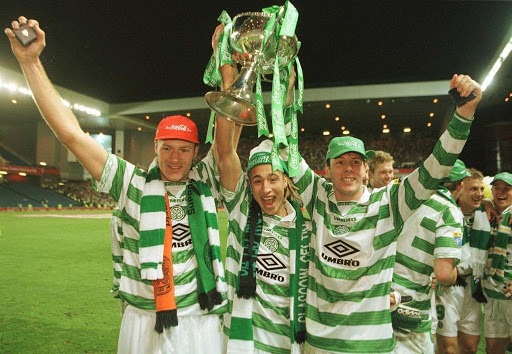
Scottish League Cup final  1997  November 30  Celtic 3 Dundee United 0 – This game must not be under-estimated in Celtic history. Celtic had started the 1997/98 season reasonably well, but needed something tangible. Their 10th Scottish League Cup provided just that. Things might not have been so good for Celtic in their attempt to stop the 10 in a row  in 1998, if they had not won this game, but Mark Rieper, Henrik Larsson and Craig Burley produced the goods in what was eventually a very easy victory over Dundee United who could not overcome their traditional problems concerning playing in Glasgow.

So there we are. Seven of the best and that is without even touching the 21st century! We’ve had a few good wins recently as well involving Moussa Dembele, Odsonne Edouard and others. So let’s look upon that fine stadium called Ibrox with a little affection and respect…OK then, perhaps not! But it is not without its happy memories!

Celtic Multi Pack Stickers includes FREE Badge

Born in 1948, David Potter first saw Celtic at Dens Park, Dundee in March 29. It was a 3-5 defeat, which equipped him admirably for the horrors of the early 1960’s. He had “followed” Celtic for a few years before that and recalls having been called upon to impersonate Jock Stein and receive the family silver teapot which had to do for the Scottish Cup as it was presented on April 24 1954, after he and his father had spent a nerve wracking afternoon listening to the radio!  Since then, he has “followed” every Celtic game with bated breath, and has written extensively about the club in magazines and books. His favorite team was that of 1969 (which he rates marginally better than 1967) and his favorite player was Henrik Larsson.

His ambition for Celtic is for them to keep on winning silver in Scotland and to be something in Europe once again. His other interests are cricket and drama. He is 70, a retired teacher of Classical Languages, married with three children and five grandchildren. He now travels on the Joseph Rafferty bus from Kirkcaldy. He also loves Forfar Athletic.


If you would like to support our Independent Celtic Fan Media Platform you can become a Member, Subscribe, Buy or Donate for the Price of a Pint. Your Support helps us continue to produce Daily News & Articles, Weekly Newsletter, Weekly Podcasts, Monthly Fanzine, Video Content & Live Shows.

https://celticfanzine.com/join-us/

https://celticfanzine.com/product-category/monthly-print-subscription

https://celticfanzine.com/shop/

https://celticfanzine.com/donations-page/

More than 90 Minutes Issue 113 Digital Edition

y/


Talk of the Terrace

Talk of the Terrace SALE

More than 90 Minutes Talk of the Terrace T-Shirts

19.99 15.99

Glasgow 3 Stripe T-Shirt |Black

GLASGOW 3 STRIPE SCREEN PRINTED T-SHIRT.

All Prices Include Worldwide Postage and Packaging

No Hidden Charges

Glasgow 3 Stripe T-Shirt / Black

19.99 15.99

Lisbon 67 T-Shirt |Black

LISBON 67 SCREEN PRINTED T-SHIRT.

All Prices Include Worldwide Postage and Packaging

No Hidden Charges

Lisbon 67 T-Shirt / Black

k/


19.99 9.99

The Original Glasgow Celtic T-Shirt |Green

THE ORIGINAL GLASGOW CELTIC SCREEN PRINTED T-SHIRT.

All Prices Include Worldwide Postage and Packaging

No Hidden Charges

Glasgow Celtic T-Shirt / Green

To see full range of T-Shirts click link

https://celticfanzine.com/product-category/t-shirts/


Operating in a crowded market, the Celtic Soul Podcast stands out


Operating in a crowded market, the Celtic Soul Podcast stands out from the rest. It is put together with care and professionalism by Andrew, Ronan, and the team, who clearly take pride in their work and create a quality production whilst keeping things real and independent. This is fan media at its very best.

The Celtic Soul doesn’t cover topics by the mainstream, it doesn’t indulge in gossip and it certainly doesn’t make sensationalised comments for hits. Instead, it is building an audience based on the unique topics, superb guests and engaging discussion that it delivers.

More than 90 Minutes Issue 113 Print Edition

Always an intriguing listen, with guests from the Celtic fanatic on the street to former players and the odd celebrity Celt, the latest episodes have really stood out as being particularly enjoyable. In episode 52/53 we were treated to a two-part discussion with The Shamrock editor, Paul McQuade. Paul is a fine example of a fan with a thirst for the history of Celtic. His publication is essential reading, and it covers the social history of the support as well as the story of the club itself. Paul bequeaths us with some of these fascinating historical tales and discusses his Walfrid Walking Tour, which visits many key sites from the club’s early years around Glasgow.

This is a genuinely interesting project led by a fan for the fans, and the fact that Andrew explores this for listeners is a credit to the Celtic Soul podcast. Paul goes on to discuss his various books, which leads to some hilarious stories about Johnny Doyle, and he talks about his involvement in the Celtic Graves Society, alongside his own memories as a Celtic fan. The conversation ebbs and flows between two Celtic supporters with a real love for the club.

Following those back-to-back podcasts was always going to be a tough ask, but there was no let up when Jonny Owens was announced as the next guest. What a listen. Jonny comes across as a proper football man. The conversation weaves in a bit of everything, from working class life, the music scene in recent decades and of course football. Jonny put together the quite incredible Three Kings documentary, which explores the lives of Jock Stein, Matt Busby, and Bill Shankly. These Scotsmen transformed the game and achieved greatness with Celtic, Manchester United and Liverpool, respectively.

Thousands Are Sailing T-Shirt (Pre-Order Includes FREE Badge)

Naturally, much of the discussion was about those men and the thinking behind the film. Jonny gives a fascinating insight, and his enthusiasm was so infectious that it prompted me to immediately sign up for Amazon Prime and give the documentary a watch. It goes without saying that Stein was the man I was most interested in when talk of the Three Kings began, but as the podcast rolled on, I found myself developing an increasing level of admiration for the way in which Busby rebuilt Man Utd after losing his young team in tragic circumstances.

Although, I was left with an outright love of Shankly when Andrew and Jonny discussed his character, the hilarious comments he made in his career and the extreme level of devotion that he had for the sport. I think this episode would appeal to anyone who has a working-class background, mining roots, a love of football, an interest in boxing, a passion for music, or just support for Celtic, Manchester United or Liverpool.

Looking out for the Celtic Soul being released on a Friday night has long been a habit of mine during lockdown. But that habit must have increased ten-fold after those episodes. We got our wish on Friday, when after a week full of discussion about Neil Lennon’s resignation, Andrew broke the mould and delivered some unique content again. Indeed, the most recent episode’s guest was Charlie Fealy of the Blarney Pilgrims. It doesn’t get much better than that.

Annual Magazine Subscription

On a personal level, I am extremely interested in the culture of supporting Celtic – in terms of the music, the atmosphere, and the politics. Sadly, I am too young to have heard the Pilgrims perform live, but I have always listened to them throughout my life. I used to love the band’s recording live in McNees from one St Patrick’s night back in the 90s, meanwhile Marching Down Sackville Street and Granda Was A Celtic Man are two of the group’s albums that I often enjoy on Spotify. Therefore, it was great to hear about how the band came to be, how they revolutionised the Irish music/Rebel scene in Glasgow and why they were inspired to do so.

The experience of the Irish diaspora in Glasgow was wonderfully captured and it demonstrated just how far we have come. Perhaps more poignantly, the discussion shows what an important role Celtic Football Club plays, and has played, in giving the Irish and their descendants a place to freely express their identity and restore pride in who they are. It’s a romantic listen, but with an educational message behind it. Little snippets of information stick in my mind such as the fact that the guitar was only introduced to traditional Irish music in recent times. I also found it interesting when Andrew and Charlie explored the reasons as to why the Glasgow Irish are not such a recognised diaspora, when compared to Irish America and London Irish.

Billy McNeill & Jock Stein Badge

It was another faultless hour and a half, rounded off with the Pilgrim’s Fans of St Pauli song playing us out…

Roll on Friday night and the next episode of the best Celtic podcast out there. The subject matter doesn’t only seek to be different from others, but it is always top class in doing so.

Hailing from an Irish background,Liam Kelly was born in Bournemouth in 1996, with the good fortune of watching Celtic during the Martin O’Neill era. Still living on the south coast,He has a season ticket in the Lisbon Lions Stand and travels to European away matches when possible.
At the age of 19, he published his first Celtic book (Our Stories & Our Songs: The Celtic Support), which focuses exclusively on the Celtic faithful throughout the club’s history. Last year he published his second book (Take Me To Your Paradise: A History Of Celtic-Related Incidents & Events), which has now sold out in Waterstones and Official Celtic stores. His third book (Walfrid & Bould Bhoys), which he co-authored with Matt Corr and David Potter, was published in September 2020 and is stocked in all official Celtic stores.


If you would like to support our Independent Celtic Fan Media Platform you can become a Member, Subscribe, Buy or Donate for the Price of a Pint. Your Support helps us continue to produce Daily News & Articles, Weekly Newsletter, Weekly Podcasts, Monthly Fanzine, Video Content & Live Shows.

https://celticfanzine.com/join-us/

https://celticfanzine.com/product-category/monthly-print-subscription

https://celticfanzine.com/shop/

https://celticfanzine.com/donations-page/

More than 90 Minutes Issue 113 Digital Edition

y/


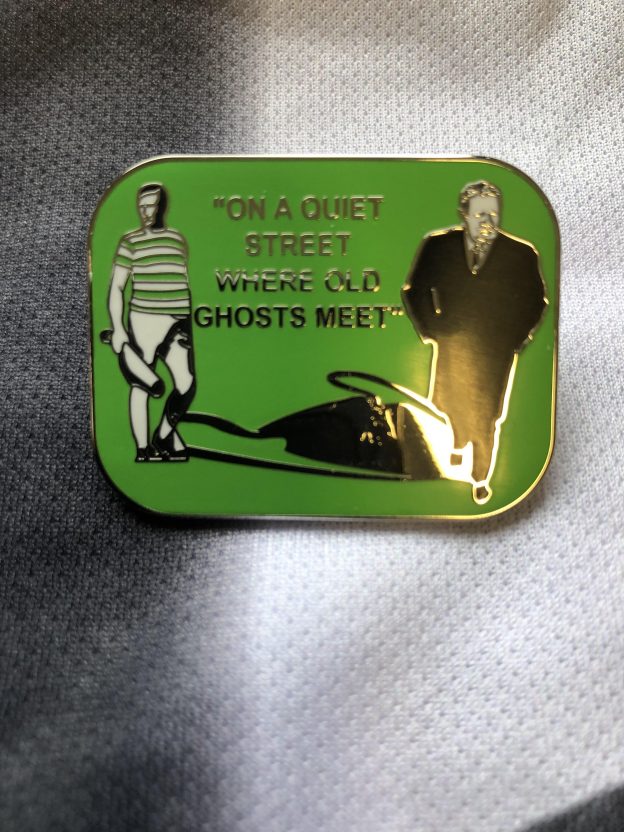
ON A QUIET STREET WHERE OLD GHOSTS MEET

Some New Badges added to our SHOP today

Billy McNeill & Jock Stein Badge

“ON A QUIET STREET WHERE OLD GHOSTS MEET”

St. Margarets CSC 9IAR

The Pogues

IF I SHOULD FALL FROM THE GRACE OF GOD

Billy McNeill & Jock Stein Badge

St Margarets CSC 91AR Badge

The Pogues Badge


John Hughes “Feed the Bear” – The Weekend Long Read


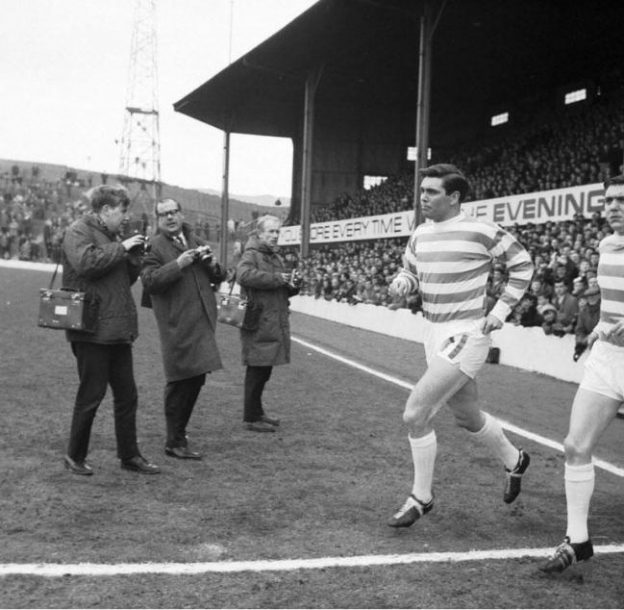
John Hughes was an enigma. No player had the ability to split the Celtic support to the same extent than he did. Arguments would rage in the stand, the terracings and supporters’ buses about the value or otherwise of John Hughes to the cause. Stein himself did not seem able to make his mind up about him, and to this day, it remains difficult to assess John.

More than 90 Minutes Issue 113 Print Edition

Born in 1943, John joined Celtic as a teenager in 1960 from Shotts Bon Accord, making his debut at the start of the 1960/61 season. Part of Hughes’s problem was that his start was a whirlwind one, and that the support kept expecting him to live up to this high standard, forgetting that he was merely a teenager, and a rather vulnerable one at that. With his huge physique and his hair sticking up, he very soon earned the nickname of “Yogi Bear”, a cartoon character of the time. Stories about him getting lost in a wood on a European trip in 1963 and earning the “bear” nickname on that occasion are false. He was called “Yogi” from a very early stage, and it was a nickname that he shared with his great opponent, Ian Ure, the centre-half of Dundee.

The Celtic team that he joined was young, enthusiastic and recognisably “Celtic” in the desire to attack and entertain the crowds, but crucially the players all lacked experience. The fine, experienced Celtic team of the middle 1950s had beaten Rangers 7-1 in the Scottish League Cup final of October 1957 but had evaporated almost immediately, leaving a youth policy in place. The trouble was that, although the players were good, there was by 1960 when Jock Stein departed to be manager of Dunfermline Athletic, no great guidance.

John scored on his debut as centre-forward in August 1960 against Third Lanark in the Scottish League Cup, then a week later played absolutely brilliantly as Celtic beat Rangers 3-2 at Ibrox. Cyril Horne in the Glasgow Herald talks about “much football ability” and a “splendid temperament” (he did not retaliate to much fouling from Doug Baillie). Then Cyril gives us the first Yogi Bear reference when he says “bigger- than-average man” and “better-than-average footballer”. This was because Yogi Bear would always say that he was smarter than the average, so naturally John was better than the average Ranger. Yogi Bear had come to Glasgow.

Thousands Are Sailing T-Shirt (Pre-Order Includes FREE Badge)

Sadly it did not last. Rangers beat Celtic in the return match in the League Cup, then in the League game, and Celtic imploded miserably. Hughes soon found himself out of the team, whether through injury or being dropped, and it began to look as if he was about to disappear. But by the turn of the 1960/61 season, Hughes was back in action and although League form was inconsistent and patchy, a Scottish Cup run restored the spirits of the support. Hughes was beginning to play well, scoring freely, including two memorable efforts in the semi-final against Airdrie. There was some experience in the forward line as Willie Fernie had returned from Middlesbrough, and he was able to slow the game down and direct the enthusiasm of youngsters like Hughes.

The Scottish Cup final was against Dunfermline Athletic, who had never been in a final before. But their manager was Jock Stein, who not only knew football, but knew the Celtic team and managerial set-up as well. Yet with their huge support, and free-scoring John Hughes in the centre-forward position, it was difficult to see any other result than a Celtic victory.

Even though almost half a century has now elapsed since these two dreadful Cup finals (the draw and the replay) the Celtic chronicler finds it difficult to contain his emotion as his team’s forwards, Hughes in particular, missed chance after chance, then the slick professionalism of Dunfermline gained two goals in the latter stages of the replay. It was a profoundly depressing experience and what this did to the 18-year-old Hughes can barely be imagined. The supporters turned nasty, threw bottles (as they did rather too often in those dreadful days) and singled out Hughes for abuse as he collected his loser’s medal in the gathering murk and gloom which symbolically engulfed Hampden on that desperate night.

Annual Magazine Subscription

A more sober and reasoned reflection a day or two later would have found excuses in the youth of Hughes. The trouble was, however, that the team was in the iron grip of chairman Bob Kelly who, using the genial and legendary Jimmy McGrory as his shield, indulged his futile whims in team selection. The support remained large and committed, but there were clear signs that they had taken a great deal more than they were prepared to do. Often the frustration exhibited itself in the singling out of players for abuse. John Hughes, the speedy, powerful but sometimes clumsy centre-forward, was the obvious target on occasion.

The events of 1961/62 were mitigated for the support only by the fact that Dundee, rather than Rangers, won the League championship. The characteristic of Celtic was inconsistency in everything – team selection, performance and achievement. John Hughes played in the centre-forward position virtually all season, and had some really good days cheering up his fans. But on occasion he was disappointing, not least in the disastrous Scottish Cup semi-final against St Mirren, in which the whole team let the support down, but no more than the support let the team down with a late invasion of the field in a misguided crazy attempt to stop the game.

Such a background was hardly what Hughes needed. What was really required was a period of stability in which the young man could learn his trade. But the atmosphere was frenetic, the support was unforgiving and the back-up from the top of the club was virtually non-existent. Sometimes John had great days – there was a fine hat-trick against Stirling Albion in October and two terrific goals in the quarter-final replay against Third Lanark – but at other times he was leaden-footed, clumsily ineffective and seemed to give up far too easily.

Yet it was obvious from the way that he was marked by the opposition that he was very highly rated, and that the potential was certainly there. Season 1962/63 opened brightly, with Hughes scoring seven goals in the first six games, including two fine ones against Ian Ure of Dundee at Parkhead. But, crucially, he failed to score in the game against Dundee United at Tannadice Park that Celtic needed to win to qualify from the League Cup section, and depression set in again. Indeed, without Hughes, Celtic went through a purple patch in the autumn, hitting six against Airdrie and seven against St Mirren. Hughes was back in the team for the New Year, and had the misfortune to be part of the line-up that collapsed ignominiously 0-4 to Rangers at Ibrox.

Pat Crerand left Parkhead in the wake of that disaster. Indeed, he had been at least partially responsible. Pat had no great opinion of John, and in the game immediately after the Ibrox disgrace, Pat was left out and John flourished, scoring a hat-trick on a frost-bound pitch at Aberdeen. This was a feature of Hughes – he was a good player on bad pitches, whether they were frosty or waterlogged. He was such an unpredictable performer at the best of times, and problems with the pitch created even more problems for defenders in trying to read him. That day at Pittodrie, it was a perfect tonic to see the way that Hughes could run through defences. Perhaps the season could yet be saved.

St Margarets CSC 91AR Badge

But two things characterised early 1963. One was the big freeze which severely curtailed football for many weeks, and the other was the perpetual chopping and changing of the Celtic team. Hughes played only sporadically, but the side, although reducing their supporters to despair in the Scottish League, reached the final of the Scottish Cup. It was the first Old Firm Scottish Cup final for 35 years. Like the Dunfermline game of two years previously, the 1963 Final went to a replay after Celtic had deservedly earned a 1-1draw. Hughes had played tolerably well in the first game at centre-forward, then found himself on the left wing for the replay, in which he hardly kicked a ball as the team collapsed to a 0-3 defeat, which could have been even heavier.

The 60,000 Celtic fans who disappeared home that night blamed Hughes as much as anyone, but there would be little relief the following season for the club. That said, Hughes enjoyed some very fine moments during 1963/64. He started off that season in the centre, where he persisted in trying to run through a defender rather than beat him, but then he was moved to the left wing and began to enjoy the extra space. He scored at least two wonderful goals that term – a tremendous solo effort in the Scottish Cup against Morton at Cappielow in January and a great goal in Bratislava to guarantee passage to the semi-final of the European Cup Winners Cup.

But he and the team collapsed miserably against the Hungarians MTK Budapest away from home after being 3-0 up from the home leg. Meanwhile on the domestic front, Celtic could not shake off their Rangers complex, giving every impression of believing that they were not allowed to beat their city rivals, so paralysed and mesmerised were they by the impressive (but by no means) insurmountable skills of Jim Baxter, Willie Henderson and Ralph Brand.

Yet in spite of all this, the fans of Hughes (and there were many) did notice an improvement. He was still only in his early 20s and he had learned as well as he could in that dysfunctional Celtic organisation. When at last Celtic did beat Rangers, in the rain at Parkhead on 5 September 1964, Hughes was magnificent, netting what would have been one of his best ever goals in the first minute, only to find it disallowed for some mysterious infringement on the halfway line after he had run all the way from there to shoot. He did not let that upset him, however, and continued to play brilliantly that day.

But then it all stopped again. The loss of the League Cup final (against Rangers yet again) was hard to bear, but after that the team collapsed more or less totally. John was out for a while but then came back as centre-forward, and began to play well for the team in what became commonly known as the “one-man forward line”. Defeats were common, and people were now beginning to ask the question: “Are Celtic finished?”

More than 90 Minutes Issue 113 Digital Edition

In some ways, John Hughes typified Celtic in those years. No-one doubted his ability and potential, but ability and potential were all that we were getting. Consistent success seemed a long way off for both Hughes and the club. He was, of course, the marksman that Celtic needed. A great Celtic team usually has a great personality centre-forward – Quinn, McGrory, Larsson – and poor Celtic teams are characterised by the lack of one. Yet while this may have been a poor Celtic side, there were some fine players there, for all their lack of success.The problem was that they were being led badly.

January 1965 was the turning point. The first few weeks of that year were the absolute nadir, including an infamous day at Parkhead when Hearts fans outnumbered the home contingent. But then it all turned on 30 January. While Sir Winston Churchill was being buried in London, Celtic met Aberdeen at Parkhead on a frosty pitch before a paltry crowd of 14,000. Hughes, wearing sandshoes (as he had done against Motherwell on Boxing Day and scored twice) suddenly turned on the magic and scored five as a not-insignificant Aberdeen side containing fine players like Ally Shewan, Dave Smith and Ernie Winchester, were put to the sword to the tune of 8-0.

Bertie Auld had already returned to the fold, and his influence was important, but the following day came the really crucial announcement that Jock Stein was to take over as manager. The players had already known about this, of course – something that perhaps explains the zip in the performance against Aberdeen – but for the fans, it meant that in the course of one weekend, things had changed completely.

For several players, this meant that their futures would be on the line. A new manager always will make changes, particularly in the circumstances at Parkhead, where changes were so obviously necessary to bring the success that the desperate supporters craved with such intensity. Some players, like Hugh Maxwell, John Divers and Jim Kennedy, did not long survive the arrival of Stein. Jimmy Johnstone was removed from the team, and it looked as if he might not survive the “Big Man” either.

But how would Stein react to Hughes? Would he lose patience with the loveable Yogi Bear, whose performances caused such divisions in the support? Would he off-load him to a team like Newcastle, who would have paid a king’s ransom for his services? Or would Jock be able to bring out the best in Hughes, and add consistency and reliability to the cocktail of brilliance and flair that we already knew he possessed?

The relationship between Stein and Hughes was complex, but initially, at least, all went well. John earned a cap for the Scottish League against the English League at Hampden in March and roasted Jack Charlton of Leeds United. Then, under Stein’s guidance, Celtic’s trophy famine ended on 24 April 1965 when they won the Scottish Cup in an epic final against Dunfermline Athletic. John did not necessarily star in that game, but he was a fine team man, a “rumble-them-up” centre-forward with a fine shot and the ability to draw men out of position, and to lead his own line brilliantly.

With Stein in temporary charge of the Scotland team, John won the first few of his eight Scotland caps, playing particularly well in a creditable 1-1 draw in Poland. Things were going well for the 22-year-old and, in retrospect, 1965 was the peak of his career. At long last, he seemed to have matured, to have grown into a good, consistent player, and the word “great” was even beginning to be applied to him.

Certainly destiny called on him to deliver the Scottish League Cup in 1965. This was a vital tournament in the context of the long-term history of Celtic, as a failure to deliver would perhaps have indicated that the Scottish Cup triumph of the previous year was a fluke, and that the “Celtic Revolution” was an illusory, transient thing. On at least three occasions in that tournament, John Hughes delivered the goods.

Glasgow 3 Stripe T-Shirt / Black

With Joe McBride now at Parkhead, Yogi was played more on the left wing. Whether he was happy about that was unclear, but Celtic were having a dreadful struggle to qualify in a strong section containing Motherwell and the two Dundee teams. Celtic faced the last game of the section at Dens Park, needing a draw to qualify. Dundee were a good side, with men like Andy Penman, Stevie Murray and Charlie Cooke, and although Celtic scored first through John Divers, the issue was in doubt until John Hughes’s wonder goal, which even had the Dundee season-ticket holders joining in the warm applause.

The memory remains bright even after 40 years, of how John got the ball on the left wing, halfway inside the Dundee half, then beat Scotland international Alex Hamilton, charged across the field with Hamilton and another defender in hot pursuit, suddenly turned and fired home a brilliant unstoppable shot from at least 25 yards. As often happens in such cases, there was a moment’s pause to allow the 28,000 crowd to take in what had happened before Dens Park exploded in appreciation for such brilliance.

His second contribution came at Stark’s Park, Kirkcaldy, when he scored a late hat-trick in the quarter-final first leg against a sadly outclassed Raith Rovers, who were defeated 8-1. It was not so much the hat-trick that is recalled as the breathtaking football played by all the Celtic forward line, with Hughes very much part of it, as if to prove that he could be a team man as well as a brilliant individualist.

Then, after a couple of games to beat the strong Hibs team in the semi-final, came the final against Rangers. This was to be the acid test of the new Celtic. Victory would send out signals to Ibrox and elsewhere that Celtic had arrived; defeat would perhaps signal a backward slide and indicate that the bad old days of the Rangers phobia had not entirely gone. Rangers had the psychological advantage with a 2-1 win in the League a month earlier at Ibrox, and a record League Cup crowd of 107,609 were in attendance.

Reports of this game centre on the crude tackles and the pitch invasion at the end, and thanks to hyperbole like “orgy of crudeness” and “X-certificate” and “war correspondents rather than sports correspondents should have been there”, the Celtic victory tends to be ignored. In particular, little credit has been given to the ability of John Hughes to hold his nerve.

A quarter of an hour had gone when Rangers centre-half Ron McKinnon inexplicably handled in the box. Ron did not even argue, so clear cut was it. We Celtic fans behind that goal saw the burly figure of John Hughes lumbering up to take the penalty. We held our breath, for although John’s record with penalties had been good, we had seen rather too much of his tendency to blow up under pressure. No fear of that, though, as he beat Billy Ritchie from the spot.

Ten minutes later it happened again. This time Davie Provan brought down Jimmy Johnstone, and there ensued a long argument about it, partly, one felt, deliberately prolonged by the Rangers defenders with the express purpose of unsettling John. He stood calmly, the ball under his arm, then placed it on the spot. Once again, we held our breath, and once again John scored, although this time Billy Ritchie got his hand to it.

Two goals up after half an hour, and Yogi was the hero of the Celtic End. But anxiety crept into the battle hymns during the second half as Rangers pressed and pressed, and Yogi played as the one-man forward line while everyone else was back helping out the hard-pressed defence. Rangers did, in the event, pull one back but it was Celtic who won the League Cup.

Some misguided youths invaded the field at the end, trying to attack the Celtic players. It was perhaps as well that such idiots, undernourished in both body and mind, did not get anywhere near Big John. What that fit physique might have done to the physically and spiritually derelict of Govan and Larkhall really does not bear thinking about!

But Celtic fans, admirably restrained and without feeling that they had to retaliate, would sing for months after:

“We won the Cup, we won the Cup

                        High–oh–my-dadio, we won the Cup!

                        And who scored the goals, who scored the goals?

                        High-oh-my-dadio, big Yogi scored the goals!

Life was sweet for Celtic and for big John Hughes.

The Scottish League was won that year for the first time since 1954, and only bad luck prevented the lifting of the Scottish Cup. Then a far too energetic linesman denied Bobby Lennox the goal at Liverpool which would have beaten the home side in the European Cup Winners’ Cup. Hughes had played in most of the games that season, and had every reason to feel confident about the future.

The problem was that this was a very strong side, and the following term, 1966/67, saw six forwards vying for five places. Johnstone, Wallace (after McBride was injured), Chalmers, Auld, Lennox, and Hughes would have been an embarrassment of riches for anyone. Hughes was injured in the League Cup final in October – he was replaced by Chalmers, the first substitute in a major Cup final in Scotland – and was out for some time after that. He returned on Hogmanay to play against Dundee United at Tannadice, but unfortunately that was one of the few games that Celtic lost that season, and thereafter his place was in doubt.

He did play off and on, including a few of the vital European games, but for the two biggest games of that season, the Scottish Cup final against Aberdeen and the European Cup final against Inter Milan, John found himself on the sidelines. There were at last two reasons for this. One was that Lennox was a far better player down the left in dry, hard conditions, although perhaps Hughes had the edge in the wet. But the main reason was that this Celtic team, the greatest in their history, was recognisably a combination who played cohesively, who fitted into a system, who read each other and who relied on each other.

Quarterly Magazine Subscriptions

John was far more of a loose cannon. Jimmy Johnstone was similarly unpredictable, and possibly Stein felt that one brilliant individualist in the team was enough. John, on his day, could be unbeatable. Fast, powerful, strong – he had all these attributes and he had improved dramatically with the arrival of Stein and the coaching methods of Neil Mochan, but he still remained far too unreliable at producing the performances. On his day, he could beat the world. Sadly his days were not as plentiful as Stein and the fans of Hughes would have liked.

It is important, however, to retain a sense of perspective in all this. Being a reserve for the Lisbon Lions did emphatically not mean that Hughes was a bad player. Indeed, had Stein been allowed more substitutes, there is little doubt that he would have featured at some stage of the action in Lisbon, or indeed any other game where Stein felt that a touch of the unpredictable was called for. Hughes remained one of Scotland’s great players, and there was no shortage of interest in him from English clubs, particularly Newcastle United, who repeatedly asked about his availability for transfer.

Things would have been different if John had gone south in the mid-1960s, but he stayed as part of the excellent Parkhead set-up, very much in the squad for Lisbon and clearly seen on the lorry going round Parkhead with the Cup the following night. But he would always say that it hurt not being in the actual team, and it was perhaps the beginning of the end of his good relationship with Stein, who may well have handled Yogi’s omission from the biggest game in Celtic history in a none-too-tactful fashion.

But his value to the side was seen in the following season, particularly in the latter half. Then the left wing of Charlie Gallagher and John Hughes (neither of whom had been on the field in Lisbon) carried all before them as Celtic, after a series of misfortunes and a long time to recover from disasters in the Ukraine and in South America, rallied to win the League with some absolutely breathtaking performances, particularly away from home at traditionally difficult places like St Johnstone, Dundee United, Hearts and Aberdeen. He was also good enough to earn a cap and to score Scotland’s goal in the 1-1 draw against England, but to all intents and purposes the draw was a defeat as it deprived Scotland of qualification for the European Nations Cup finals. John would have graced that stage in 1968, one feels.

The sight of John Hughes rampaging down the left wing, cutting a defence to ribbons and leaving defenders sprawling in the mud was the sight which inspired the song:

                                    Feed The Bear, The Bear

                                    He’s every-f***ing-where

                                    Feed the Bear!

This song earned official disapproval in The Celtic View and elsewhere because of its offensive lyrics, but it was sung universally and with gusto as Celtic kept winning, and Rangers visibly cracked under the onslaught, even though the direct matches between the two teams had been played to Rangers’ advantage.

Yet there was a down side to Hughes as well that season. His er . . . challenge (some might say attack) on the goalkeeper in South America thoroughly merited his sending-off, and there was at least one other time when the referee might have pointed to the pavilion. This was against Hibs at Easter Road in January when John’s admirers in the 38,077 crowd found it hard to justify his tackle on Arthur Duncan, which saw that very fine player taken off.

Earlier in the season, on the eve of the trip to South America, he had won his third League Cup medal in a hard-fought final against Dundee in which he scored early, but that League Cup campaign will be remembered most vividly for his goal in the semi-final against Morton. The Ton were already beaten thanks to a fine team performance in the first half, when Hughes, having done the “team bit”, now showed his individual flair with a run from about the halfway line, the waltzing round of several defenders, then a screamer of a shot which had his fans in raptures. If only he could have done that oftener, Celtic could win the European Cup for years to come, we felt.

John had real bad luck in April 1969, as an injury sustained at St Johnstone prevented him from taking part in that magnificent April in which Celtic, uniquely, lifted all three Scottish trophies in a calendar month. It was a shame because he had performed so well that season, scoring goals at the vital times and teaming up so well with others in a side that, in the opinion of many observers, played even better football than they did in 1967, the only blot in the copybook being an unfortunate defeat to AC Milan in the quarter-final of the European Cup.

In August 1969 John was at the centre of a major incident. In an Old Firm League Cup game at Parkhead eventually won by Celtic, Willie Johnston of Rangers was seen to go down following a clash with Hughes. Hughes had already been booked and marching orders seemed to be the inevitable consequence, but to the astonishment and anger of Rangers’ players, directors and supporters, Hughes remained on the field. The consequences for the referee were dire, as he found himself suspended for failing to take action, but Hughes escaped any retribution.

There were several mitigating factors. One was that Johnston, who holds the Scottish record for being ordered off most times, was no angel. He had fouled Hughes originally, and he could certainly retaliate himself and fake injury on occasion. The incident had taken place in front of the Jungle, where stood all the Celtic fans. It could well be that the referee decided to take no action in view of the threat to public order if the hero of the Jungle was sent packing.

Glasgow Celtic Hoodie / Green

Celtic’s success continued. Hughes was playing in the centre-forward position when the League Cup was won for the fifth year in a row against St Johnstone (where he had a reasonable-looking goal disallowed for a mysterious infringement), and in spite of a few injuries, he played his part in another League championship win. But he will be best remembered in season 1969/70 for his brilliant header against Leeds United at Hampden, which helped propel Celtic to their second European Cup final.

This time Hughes was in the team, but there was clearly an attitude problem with the players before and after their game with Feyenoord. Perhaps it was just complacency and over-confidence, or perhaps there was something else happening, but there can be little doubt that this was a woeful display and that on the night the Dutch team were far superior to a Celtic side which lacked application, zest and flair.

John collected much of the blame (certainly in the eyes of Jock Stein, if not in the opinion of the disillusioned support) by missing a chance in the first minute of extra time in that dreadful final, and it was from that day that the relationship between Hughes and Stein, which had never been close or warm, and had been deteriorating for some time, took a marked turn for the worse.

Stein was clearly rebuilding that season and Hughes, like a few others, was not guaranteed a place. Stein felt that the player exaggerated an injury – even though he needed stitches in e leg wound – in a game that Celtic lost at Muirton Park, Perth, in February 1971. Hughes was off the field, leaving Celtic with only ten men at the time St Johnstone scored their second goal, then he insisted on returning before having to come off again five minutes later. A month after that, when he was left out of the team for a Cup tie against Raith Rovers, Hughes and Stein had an almighty row and Hughes either walked out of Parkhead or was sent home by Stein, depending which story one believes.

The feud continued. Hughes was taken down to Kilmarnock to be told he was not playing in a reserve match, something that he found deeply humiliating, and it did indeed look more than a little like sheer spite on the part of Jock Stein. At the end of the season when Celtic won a League and Cup double, Hughes did not feature. He did not help matters by asking for a pay rise, but it was now clear to all concerned that this feud helped nobody. It was also clear that John Hughes’s days at his beloved Parkhead were more or less at an end, even though he was still some two years short of his 30th birthday.

A temporary truce of sorts was patched up at the start of the 1971/72 season, but when Crystal Palace offered £50,000 for Hughes and Willie Wallace in October, both Stein and Hughes accepted the opportunity. He scored one spectacular goal for the Palace against Sheffield United, akin to the famous ones at Cappielow in 1964 and Dens Park in 1965. But he did not sojourn long at Selhurst Park, moving on to Sunderland for a spell to play alongside his brother Billy. Then he returned to junior (non-League) football north of the border, at one point being the coach of the Scotland Junior team.

John remains a curious, difficult-to-understand character. He is an archetypal Celt with loads of flair, individuality and class. He deserves respect for the way in which he came through the dreadful barracking and abuse that he suffered from so-called supporters in the bad days. On his day, like the little girl with the curl on her forehead, when he was good, he was very, very good, fully deserving comments like “unbeatable”, “world-class” and “great Celt”. What a pity it was that we cannot add the word “consistent” to his many other attributes.

If you would like to support our Independent Celtic Fan Media Platform you can become a Member, Subscribe, Buy or Donate for the Price of a Pint. Your Support helps us continue to produce Daily News & Articles, Weekly Newsletter, Weekly Podcasts, Monthly Fanzine, Video Content & Live Shows.

https://celticfanzine.com/join-us/

https://celticfanzine.com/product-category/monthly-print-subscription

https://celticfanzine.com/shop/

https://celticfanzine.com/donations-page/

Annual Digital Subscription


The Sound of the Glasgow Irish


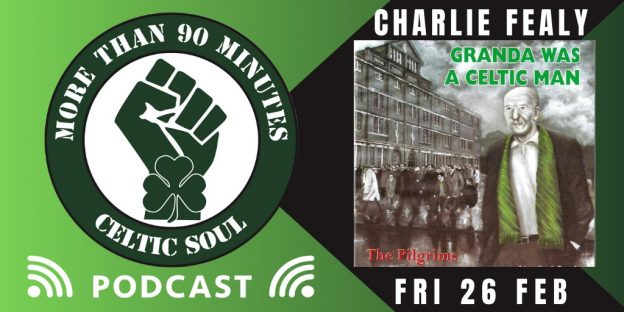
Celtic Soul Podcast Episode 55 with More than 90 Minutes, Editor Andrew Milne chatting to Charlie Fealy.

Charlie Fealy is a singer, songwriter and front man of the legendary Glasgow Irish band The Blarney Pilgrims. Born in Dundalk, it was Glasgow where Charlie and his band would become part of the Celtic Match Day experience for so many Celtic fans and his music can be heard blasting out of supporters buses up and down the coast of Scotland on route to Paradise and on European away days.

More than 90 Minutes Issue 113 Print Edition

With the Blarneys iconic album “Granda Was A Celtic Man” now re-released on digital platforms including Spotify. Andrew and Charlie chat about the album, Charlie’s life growing up in Glasgow after moving from Ireland to the Gorbals at 3 years old and Kerry where he now calls home.

Charlie talks about the bigotry he faced in Glasgow and also the decent people who educated him and his awakening to Celtic and what it stood for on his first visit to Celtic Park as a young boy. They chat about Celtic, music, politics and social issues as the conversation flows after almost two decades since they last spoke.

Legendary gigs in Glasgow and Ireland come up in conversation including the Mean Fiddler in Dublin where another iconic album was recorded “Marching Down Sackville Street” and some new material that Charlie has written and hopes to record soon and who knows maybe a reunion and some live gigs to look forward to after these lockdowns.

Thousands Are Sailing T-Shirt (Pre-Order Includes FREE Badge)

They talk about the songs that Charlie wrote for “Granda Was A Celtic Man album” and how it was written through the eye of a Celtic fan for the Celtic fans. Celtic is much more than a team who plays for 90 minutes to Charlie and that comes out through his music and also in this conversation.

It’s fascinating to hear how the Glasgow Irish sound of the Blarney Pilgrims originated from and the musical pioneers who influenced Charlie along the way from America and closer to home in the pubs of Glasgow. If the London Irish sound was captured perfectly by The Pogues fussing of Céilí and Punk then the Glasgow Irish sound created by Charlie came from the drums of Republican Flute Bands and American Bluegrass.

Influenced by some wise words from Luke Kelly, Charlie set out on his musical career in smoke filled Irish pubs in Glasgow from his Gorbals home with the conflict in Ireland never far from his thoughts when he sang or strummed a guitar.

Annual Magazine Subscription

Charlie jumps in the Tim Time Machine and heads back to 1980 and into a packed Celtic Park when you could still bring a carry out in to enjoy the game.

Both “Granda Was A Celtic Man” and “Marching Down Sackville Street” are both available to download and listen to on Spotify.

Andrew Milne started More than 90 Minutes in 2001. He has written for numerous publications and online about Celtic.  He is a former newspaper columnist with the Daily Ireland and the man behind celticfanzine.com. He is host of the Celtic Soul Podcast & Celtic AM pre-match events at Malone’s in Glasgow on match days and follows Celtic Home & Away. He is a season ticket holder for Celtic FC and the Republic of Ireland. He is also P.R.O. of St. Margaret’s CSC, a member of the Celtic Trust and the Celtic Graves Association. When not following Celtic he spends his time DJing.

If you would like to support our Independent Celtic Fan Media Platform you can become a Member, Subscribe, Buy or Donate for the Price of a Pint. Your Support helps us continue to produce Daily News & Articles, Weekly Newsletter, Weekly Podcasts, Monthly Fanzine, Video Content & Live Shows.

https://celticfanzine.com/join-us/

https://celticfanzine.com/product-category/monthly-print-subscription

https://celticfanzine.com/shop/

https://celticfanzine.com/donations-page/

Glasgow Celtic Hoodie / Green