Author Archives: celtic

MATCH REACTION from the COUNCIL OF THE CELTIC DA’s


PRE MATCH: It was a quiet morning with love in the air on Valentines Day but that love for Lenny was short lived once the Celtic starting 11 was annouced. Shane Duffy on the team sheet always sets the hearts of Celtic fans racing but in fairness to the big man he had a decent game without making too many mistakes. A few weeks ago Ajeti’s ommision from the starting 11 would not raise an eyebrow but social media was busy asking why he was not playing, why was Ryan Christie playing? and why was there three strikers on the bench? All seemed to annoy some of the faithful.

More than 90 Minutes Issue 113 Print Edition

FIRST HALF: Scott Bain in the Celtic goal had little to do only watch the game. Just like midweek, the game only came to life with about 10 minutes to half time.

SECOND HALF: I sunk into the sofa when St Johnstone came out of the traps quicker than Celtic and opened to scoring with some questionable defending again on our behalf. Thankfully we upped our game and French Eddie was on hand to get the win for us before the tempo seemed to drop again although they did see out the game easy enough.

MAN OF THE MATCH: Edouard showed all his qualities today when Celtic came from behind after once again gifting the inform St. Johnstone the opening goal of the game but the French man popped up twice within minutes to make sure Jelly and Ice Cream day was a happy one. No doubt the Celtic board room will be rubbing their hands at the prospect of cashing in on him in the Summer now that he is back banging in the goals on a regular basis which will see his price rise.

The Bhoys Are Back in Town T-Shirt |Black

HONOURABLE MENTIONS:  Another good shift from Tom Rogic and Ryan Christie looked his old self when the team finally kicked into life. Scott Brown’s fitness and legs could not be questioned as he got another 90 minutes under his belt.

SKY SPORTS: Shaun Maloney and James McFadden with Lenny’s best mate Andy Walker on co-commentary while Kris Boyd’s absence is always welcome.

MATCH REACTION:  Neil Lennon ‘The character they showed from going a goal down was excellent. They could easily have given up but they’re in the mood at the minute and it’s a great win away from home.’

Annual Magazine Subscription

FAN REACTION: Social Media can be a swamp but Twitter brought a smile to my face after the game not once but twice. First smile from Eddie Toner “Lenny two victories away from being Manager of the Month. Just saying” Second Smile from Danielle C “There are some amount of rules for when you’re allowed to criticise Lennon and how you do it. Obviously have to get permission from the Council of Celtic Das first #LennonOut” Council of Celtic Das – Quality.

Glasgow Celtic Hoodie / Green

Andrew Milne started More than 90 Minutes in 2001. He has written for numerous publications and online about Celtic.  He is a former newspaper columnist with the Daily Ireland and the man behind celticfanzine.com. He is host of the Celtic Soul Podcast & Celtic AM pre-match events at Malone’s in Glasgow on match days and follows Celtic Home & Away. He is a season ticket holder for Celtic FC and the Republic of Ireland. He is also P.R.O. of St. Margaret’s CSC, a member of the Celtic Trust and the Celtic Graves Association.


More than 90 Minutes Issue 113 Digital Edition

y/


If you would like to support our Independent Celtic Fan Media Platform you can become a Member, Subscribe, Buy or Donate for the Price of a Pint. Your Support helps us continue to produce Daily News & Articles, Weekly Newsletter, Two Weekly Podcasts, Monthly Fanzine, Video Content & Live Shows.

https://celticfanzine.com/product-category/monthly-print-subscription/

https://celticfanzine.com/shop/

Support Us for the Price of a Pint

Join Us

https://celticfanzine.com/donations-page/

Celtic Soul Polo-Top | Black


Celtic, Ferencvarosi and the Russian Invasion of Prague


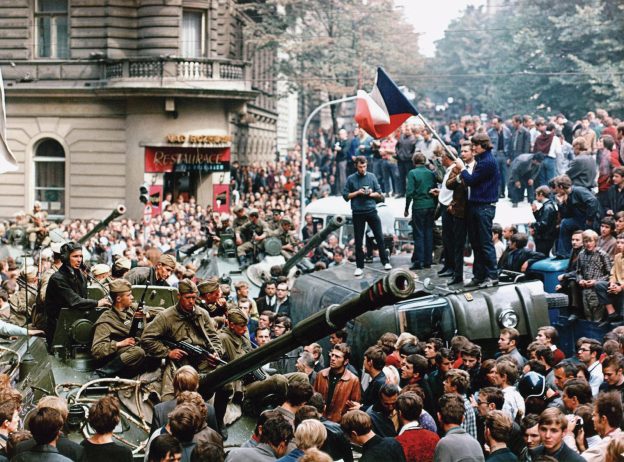
In 1968 as Vietnam was in full flow and the Black Civil Rights movement marched to Washington and Chicago, in the 6 counties Civil Rights was also on the agenda as marchers took to the streets to protest for reform of the corrupt gerrymandered statelet, across Europe tanks were rolling into Czechoslovakia from Eastern Bloc countries, Bulgaria, Hungary, Poland and the USSR, the Kremlin had decided that the liberalising Government of Alexander Dubcek were pushing reforms a bit much and Warsaw Pact forces trundled into Prague.


More than 90 Minutes Issue 113 Print Edition

It became known as the Prague Spring, the country was divided into the Czech Republic and Slovakia, on 20th August 200,000 soldiers and 2000 tanks invaded the country, over 70 civilians were killed and 200 wounded, similar to Operation Motorman in Derry in ’72 there was no organised military resistance to the Russian invasion but the people organised a form of nonviolent protest, not fraternising with the enemy troops especially, changing and painting over road signs to confuse the foreign soldiers, not unlike you see in the 6 counties where Londonderry’ will be painted out and ‘Derry’ left as the road sign! Wencheles Square where we visited a few years ago was the scene of major protests during the year and battles between the communist activists and those protesting against the system

The Russian intervention put an end to that! The iconic image of the period was the self-immolation of Jan Palach in Wencelas Square that year, the History undergrad at Charles University set himself on fire in a single act of resistance to outside interference, his brave and defiant protest was not unlike the Hunger Strikes of 1981, the funeral turned into a massive protest and eventually made him a Czech martyr, his sacrifice was followed by two other students, also in Hungary two more students did the same thing and a Polish student took the same form of protest against the influence of the USSR throughout Eastern Europe. 20 years later the memory of Palach led to the fall of Communism in the Czech Republic!

As a consequence of the events in the Czech Republic the European Cup draw for season ’68-69 was affected. Celtic had been drawn against Ferencvaros but with Hungary involved in the invasion, Bob Kelly said that Celtic as a protest would refuse to play against the Hungarian team, the same happened throughout Western Europe where clubs in every country refused to play against teams from the East and in return teams from the East refused to play Western European teams causing a major headache for UEFA!

The Bhoys Are Back in Town T-Shirt |Black

Bob Kelly sent a message to UEFA that no teams in Western Europe should be
forced to play in the East. Ironically Leeds were to play Ferencvaros in a two-legged final of the Fairs Cup (forerunner of the present Uefa Cup /Europa League), Don Revie criticised Celtic for mixing football with politics and Leeds went ahead with the second leg of their final which they won. UEFA decided in a compromise that teams from East and West would be kept apart in the rejigged draw, most of the Eastern
teams withdrew although a few decided to play on, including the Czech Republic.

In the remade draw Celtic were paired with St Etienne, winning 6-0 on aggregate, then demolishing Red Star 6-2 before progressing to the quarter-finals where they lost 1-0 to AC Milan, the eventual winners, to illustrate the status of Celtic in European football at the time, when they drew 0-0 in the San Siro, Celtic were favourites to go through but an early mistake by Cesar gave Milan the lead which
in typical Italian style, they defended for the next 80 minutes to progress to the semi-final, when the result came through it was seen as a real shock as in those days generally, the host team always won their home games, unlike today.

As far as Ferencvaros went and the occupation of the Czech Republic, Celtic had taken a principled stand although some would say there was never any protests about the Yanks invading Vietnam and murdering thousands of innocent Vietnamese, or indeed in our own case, they never objected to British troops on
Irish soil, in fact, to rub salt into the wound they made former British Minister for Defence John Reid Chairman of Celtic.

Annual Magazine Subscription

Whatever the merits of boycotting Eastern European teams, Bob Kelly was given
a Knighthood in the following year’s Honours List, his final observation on the whole issue, ‘for Celtic there are things more important than money’! Bob Kelly had a certain reputation at Celtic, he more or less ran the show before the Jock Stein era but without his stance during the flying of the flag of the Irish Republic controversy in the 1950’s there might not be any Celtic at this stage.

The SFA were insisting that Celtic remove the flag from Paradise but Bob Kelly stood his ground and refused to do so saying that he would ‘prefer to see Gaelic football at Parkhead than take down the tricolour’! Hibs, the original Irish and catholic club in
Scotland were the prime movers on the issue and ironically to their credit Rangers gave support to Celtic and the issue was dropped and the flag flies proudly over the North Stand to this day.

Ferencvaros visited Parkhead this season in the second qualifying round of the Champions League, it was over 50 years since they were originally paired with the Hoops and we have never met since. The club based in Budapest, the Hungarian capital and centre of an uprising against Russian occupation a decade earlier in
the mid 50’s, the club are the most successful in Hungary winning the League title 31 times and the Magyar Kupa 23 times, they also won the InterCity Fairs Cup in ’65 and lost three other finals and were the first Hungarian club to qualify for the Champions League in 1995. The club play in green and white with their badge showing similar stripes and while based in Budapest have supporters all over Hungary, the fans have a connection with fans of Rapid Vienna and Panathinaikos
who also play in green and white, like our own ‘Green Brigade’ they are called ‘the Green Brothers’, and apparently they also have a connection with fans of Hibs

Glasgow Celtic Hoodie / Green

Their main rivals in Hungary are Ujpest Doza and Honved but their city rivals and local derby is with MTK Budapest dubbed ‘the Eternal derby’ to join El Classico, Merseyside, North London, Superclasico, Derby Milano and what used to be called ‘the Old Firm’! Ferencvarosi to give them their proper name have had lean times since the turn of the millennium winning only five titles since 2000 although they have had a revival in recent years with three titles in the last five seasons.

More than 90 Minutes Issue 113 Digital Edition

y/

Paddy was born in Belfast with Donegal and Tyrone parents. He spent the 70’s in Long Kesh. He has been going to Paradise since the Benfica game in Nov. 1969. He lived in Donegal for 30 years but now lives in Galway. He returned to University at 50 and became a secondary school teacher of history and English.


If you would like to support our Independent Celtic Fan Media Platform you can become a Member, Subscribe, Buy or Donate for the Price of a Pint. Your Support helps us continue to produce Daily News & Articles, Weekly Newsletter, Two Weekly Podcasts, Monthly Fanzine, Video Content & Live Shows.

https://celticfanzine.com/product-category/monthly-print-subscription/

https://celticfanzine.com/shop/

Support Us for the Price of a Pint

Join Us

https://celticfanzine.com/donations-page/

Celtic Soul Polo-Top | Black
 

Celtic Soul SALE – Weekend Offers


Celtic Soul T-Shirt Was 19.99 Now 9.99

https://celticfanzine.com/product/celtic-soul-t-shirt-black/

Celtic Soul Polo Tops Was 24.99 Now 14.99

https://celticfanzine.com/product/celtic-soul-polo-top-black/

Celtic Soul/ Soul Bhoys Scarf Was 14.99 Now 9.99

https://celticfanzine.com/product/celtic-soul-soul-bhoys-scarf/

The Original Glasgow Celtic Hoodie Was 34.99 Now 24.99

https://celticfanzine.com/product/glasgow-celtic-hoodie-green/

The Original Glasgow Celtic T-Shirt Was 19.99 Now 9.99

https://celticfanzine.com/product/the-original-glasgow-celtic-t-shirt-green/

Bhoys are Back in Town Was 19.99 Now 14.99

https://celticfanzine.com/product/the-bhoys-t-shirt-black/

Rude Bhoys x 2 Designs Was 19.99 Now 9.99

https://celticfanzine.com/product/rude-bhoys-t-shirt-green/

https://celticfanzine.com/product/rude-bhoys-t-shirt-white/

Celtic Badges (Set of 6) Was 24.99 Now 14.99

https://celticfanzine.com/product/badge-deal-6-for-5/

Celtic Stickers Multi Pack Includes FREE Badge Was 10.00 Now 7.99

https://celticfanzine.com/product/celtic-multi-pack-stickers/

Charlie Tully Celtic’s Cheeky Chappie – The Weekend Long Read


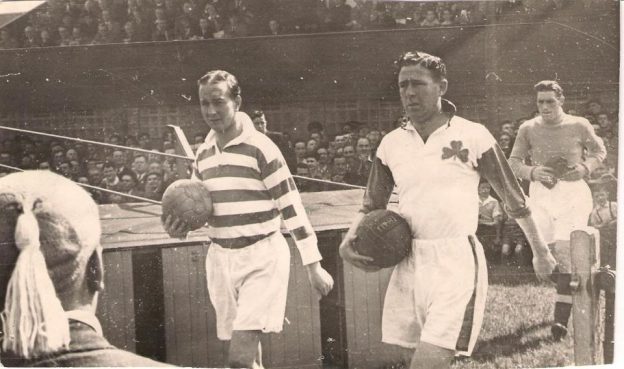
Charles Patrick Tully was born in Belfast on 11 July 1924 and died in the same city on 27 July 1971, a couple of weeks after celebrating his 47th birthday. Like many great Celts, it was Charlie’s fate to die young, but those who saw him on the football field would always consider him to be an immortal. Indeed, there was the famous quote on the occasion of his funeral when someone said to Jock Stein: “Charlie was immortal. And noo he’s deid!”

More than 90 Minutes Issue 113 Print Edition

He was a hero for Celtic at a time when a hero was badly needed. The immediate post-Second World War years were in Great Britain the years of the establishment and consolidation of the Welfare State. Probably in material terms, the supporters were better off than they had ever been before, even though it would be several years in the future before Prime Minister Harold Macmillan could honestly claim: “We’ve never had it so good”. But in terms of the performances on the field, Celtic were in a trough from which it seemed hard to emerge, apart from the odd rare but spectacular occasion.

In 1938 the club had experienced a high point with the winning of the all-Britain Empire Exhibition Trophy, but Celtic had a bad war and immediate aftermath, including a joust with relegation in spring 1948. There is little doubt that other teams, spearheaded by Rangers, would have launched all sorts of initiatives to prevent Celtic joining a lower division, and the team, as it happened, did save itself. But it had been a humiliating process for all concerned and questions were being asked about whether Celtic would ever rise again.

In addition, the ground itself, “that dear old Paradise”, was anything but what it claimed to be. It was large and spacious, with a well-appointed grandstand, but no-one seemed willing or prepared to do anything about the weeds on the terracing. Worse still were the holes in the roof of the only covered enclosure, an ugly barn-shaped construction which had earned the nickname of “The Jungle”, presumably because those ex-Servicemen from the Far East theatre saw certain resemblances.

The Bhoys Are Back in Town T-Shirt |Black


Enter Tully stage right. He joined Celtic from another Celtic, the Belfast variety. Belfast Celtic were doomed to extinction the following year, but Tully had done enough for them to convince the Glasgow version that he could play. He was a dribbler, a teaser, a fast runner, a ball-player and very definitely a crowd-pleaser. He was well worth the enormous fee of £8,000 which manager Jimmy McGrory convinced the reluctant and traditionally parsimonious board that he was worth.

It was possibly a crowd-pleaser that Celtic lacked most of all. Celtic’s team in 1948 mirrored the drab austerity of the times. There were utility players, committed players and hard-working players, but flair players were lacking. The Celtic crowd would sigh for someone like Gordon Smith of Hibs to entertain the fans. More poignantly, they would search their recent memories and come up with Jimmy Delaney, one of Celtic’s greatest ever entertainers but now plying his trade with Manchester United.

Tully’s Celtic career began miserably with a laboured 0-0 draw with Morton, then came defeats by Aberdeen and Rangers. The Glasgow Herald was forceful when it said: “The wearin’ o’ the green (and white) is still a tale of toil and tribulation”, “Celtic plumbed the depth of inefficiency”, although it does hint at future possibilities when it says that “Tully, from Belfast, was the most attractive ball player on the field but I cannot recall his delivering a single shot”.

It was a different matter when Rangers came to Parkhead in the League Cup on 25 September 1948. Tully had by now grown in confidence and under a headline of “Tully Bewilders Rangers”, Cyril Horne of The Glasgow Herald declares emphatically that Tully is “undoubtedly the cleverest forward in the last ten years of Scottish football”. In the 3-1 rout (it should have been a great deal more) Tully scored and the hitherto under-performing Gallachers, Willie and Jackie (sons of the peerless Patsy and the incomparable Hughie respectively) also found the net as the famous “Iron Curtain” Rangers defence was torn to shreds.

“Jackie, Willie, Weir and Tully

The lads that ran the Rangers sully”.

Annual Magazine Subscription

Hyperbole has always been a facet of Scottish football fans, and on this occasion, Glasgow’s East End absolutely exploded with paeans of praise for Charlie Tully. Almost overnight on Saturday 25 September 1948, Charlie became a cult hero. He was the one who would restore Celtic to greatness. He was Patsy Gallacher, Jimmy Delaney, Jimmy McMenemy and Malcolm MacDonald all rolled into one. “The” Celtic, as they were called, were on the way back.

Such euphoria and rapture was hardly dispelled on the Monday afternoon, the Glasgow autumn holiday, when 87,000 were at Hampden to see Celtic win the Glasgow Cup by beating Third Lanark 3-1. The Glasgow Cup was a much valued trophy in those days and Celtic had not won it since 1940. Little wonder that the streets from Hampden Park back to Celtic Park were thronged with thousands of fans, treating the inspired genius Charlie Tully in the way that pre-war dictators had been feted in Germany and Italy. Chanting was not a regular feature of football fans’ repertoires in 1948. Nevertheless, the beat of “Tull-ee, Tull-ee” resounded all through the streets of Glasgow that Monday night, and there was (as there had been the previous Saturday) dancing in the streets of the Celtic heartlands, the Gorbals and the Garngad.

Songs were made and became current with rapidity. On the template of the song about the American millionaire wishing to buy the lakes of Killarney in Ireland and being rebuffed, came an imaginary reply to the manager of Arsenal enquiring about Charlie Tully:

“How can you buy all the Cups that we’ve won?

How can you buy old Ma Tully’s son? 

How can you purchase that son of a gun?

How can you buy our Charlie?”

Then The Wild Colonial Boy was adapted to Charlie Tully, who was “Celtic’s Belfast Bhoy:”

“There is a great football player

Charlie Tully is his name

He plays for Glasgow Celtic

And wins them all their fame.

He crosses and he scores a goal

To give the fans their joy

And that is why we all love him

He’s Celtic’s Belfast Bhoy”

In Scottish football, of course, as in the rest of life, there is “nothing easier gotten than a shitey drop”, as the vulgar put it, or as the more elegant might say “pride comes before a fall”. Indeed, the higher one climbs, the harder one falls, and the rest of the 1948/49 season was a grievous and heart-breaking disappointment for the huge Celtic support. This was not all the fault of Tully. Indeed, on many occasions he was the only bright light in the all-pervasive Stygian gloom that was Celtic Park.

Glasgow Celtic Hoodie / Green

But he did lack support, as the rest of the forwards were Celtic players in name only, and would never have made the reserve team in previous or subsequent eras. Some 30 years later, Jock Stein would say: “The Celt shirt does not shrink to accommodate lesser players”. Had Jock not still been playing for Albion Rovers in 1949, and had he seen Celtic oftener, he might have had to suggest to the outfitters that a smaller size might have been appropriate in exchange for the ration coupons that were still required for clothing.

Tully must share some of the blame. He was never a great team man and not infrequently the Celtic crowd (which, hard times or not, seldom fell to below 40,000) was treated to the somewhat unedifying spectacle of the Irishman exercising his debating skills with his team-mates about how the game should he played. He also had a particularly annoying habit of beating a man, thus earning the acclaim of the denizens of the Jungle, then beating him again to earn even more acclaim, when a wiser option might have been to pass to a better placed colleague.

Yet the crowd loved his antics. “Cheeky Charlie’s capers” became the talk of Glasgow, and even Rangers fans, accustomed to their more direct and efficient, but less talented players, gave him on occasion some reluctant respect. He would take a throw-in and aim the ball at an opponent’s back to get the rebound; he would go down on his hand and knees before a linesman to beg for a corner rather than a goal kick for the opposition, and he would hold play up as he was about to take a corner to go to the crowd and shake hands with a ragged, ill-fed-looking wee boy whom the Welfare State had not yet reached.

Stories abounded about him, like the time when his car broke down outside a lunatic asylum and he asked for help saying: “I’m Tully”. One of the inmates with a speech impediment said: “But we’re all tully (sully, i.e. silly) in here!”. On another occasion the Celtic team bus broke down on the way to Ibrox, but Tully, who had made his own way there, took on Rangers himself and at half-time was beating them 1-0. But the team bus arrived at half-time – and then Celtic lost 1-2! And the most famous one, (which would have been considered blasphemous in the eyes of the Celtic support if it had featured anyone else) was the time that he met His Holiness the Pope on the Vatican balcony. The massive crowd of pilgrims all started to cheer as the two figures appeared on the balcony, but soon asked the question: “Who’s that chap with the funny hat up there beside Charlie Tully?”

More than 90 Minutes Issue 113 Digital Edition

y/


A more elevated note was struck in educational circles concerning the famous Latin author Marcus Tullius Cicero. He had been known by 19th century scholars as “Tully” but that nomenclature had faded in the 20th century and the man who defeated Verres and Catiline was known as Cicero. Suddenly, from about 1950 onwards, Latin teachers, particularly in Roman Catholic schools, began to talk once again about “Tully”!

But all this could not disguise the fact that Celtic were going nowhere with a poor team. Indeed it was often said of the story about the Pope that when the two heroes were on the Vatican balcony, His Holiness was asking Charlie: “When are we going to win something again?” Indeed, the halfway point of the century was reached with nothing to show apart from the slightly irrelevant Glasgow Charity Cup, won thanks to two Rangers own goals.

Prior to this, there had been serious doubts about the continuation of Old Firm games. Nastiness and violence had reached a serious pitch. The Glasgow slums were still the disgrace of Western Europe, and no sociologist would be surprised to discover that young men from such provenance could turn aggressive. There was to be added to the cocktail Glasgow’s traditional sectarian background, a legacy to Scotland from the bad old days of John Knox and Mary Queen of Scots, and a feature of industrial Glasgow for the past 100 years since the victims of the Irish potato famine first began to arrive seeking jobs. Also the 1950s represented the heyday of the Glasgow razor gangs, and there were still a large amount of young men who had learned rather too much violence in the khaki of the British army.

Tully had been the innocent victim in the first major incident. In a surreal and unbelievable moment at Ibrox on 27 August 27 1949, Rangers’ Sammy Cox had suddenly turned from chasing a ball and kicked Tully so high that he even missed his private parts! A kick in the stomach has no place in any kind of football, and astonishingly, the referee, Mr Gebbie, failed to send Cox off the field. This did little to dispel the notion that referees would condone any sort of Rangers thuggery against Celtic, and the Celtic crowd responded with a hail of bottles. The authorities later told Tully that he had to behave and not incite the crowd!

Less than three weeks later, Tully was not so innocent. After a few questionable decisions by the referee, a free-kick was wrongly awarded to Rangers, who were allowed to take it while Celtic players were mildly protesting to the referee, and before the official, Mr Davidson, had signalled for the kick to be taken. Rangers ran upfield and scored against a disorientated Celtic defence, and all hell erupted, with Tully quite clearly urging the Celtic players to leave the field in protest.

Glasgow Celtic T-Shirt / Green


Yet another game against Rangers was played nine days later. Celtic fans boycotted this fixture, and Tully was not playing. He was not even in Scotland, as he had gone back home to Belfast. Celtic tried to claim that Tully was injured, but few were convinced by this, and when he missed the next game as well, it was widely believed and never officially denied that he was serving a club suspension. Indeed, his whole Parkhead future teetered on the brink for some considerable time, but Tully was far too valuable a player in the eyes of the support to be allowed to slip away lightly.

The miserable form and the lack of success of the team continued until the bright spring day of 21 April 1951, when the Scottish Cup returned to Celtic Park. Tully’s finest hour in this campaign had come in the semi-final against the strong-going Raith Rovers, when before 84,237 fans he “played some delightful football throughout” and scored the winning goal immediately after Raith had equalised. In the final itself, against Motherwell (who were probably the better football team), the glory belonged to the captain, John McPhail, who scored the only goal of the game. But no-one would underestimate the role played by the all-Irish left wing of Bertie Peacock and Charlie Tully in the recapture of the old Celtic glory.

A tour of North America followed. Hysteria was the order of the day in Glasgow as Celtic departed and came back, and this atmosphere was in no way diminished as the Celts, with the Scottish Cup carried famously in a shopping bag (and once almost left behind), toured various American cities where folk of Irish or Scottish descent flocked to see this great man called Charlie Tully.

Now that Celtic were back among the honours, it was felt that with Tully approaching his best, Celtic could dominate Scottish football for the next decade. That this did not happen was due to several reasons. One was that there were so many other good teams around. Rangers were always able to present a robust challenge, but there was also the fine play of Hibs, for whom the “Famous Five” forward line were in their heyday, Hearts were also developing fast, and Motherwell, Aberdeen and Dundee would all have their moments of success.

The main problem as far as Celtic were concerned was the lack of good or even clear management. Jimmy McGrory, the hero of the Celtic support of the 1930s, was the manager, but a manager in name only, as the real power was wielded by Robert Kelly, the chairman. No-one could ever doubt his sincerity and love for the Celtic. What was in question was his knowledge of the game, and his inflexible obstinacy, particularly when it involved spending money.

Yet money was not really a problem. Celtic’s support stayed loyal. Indeed, it was vast, and huge crowds crossed the length and breadth of Scotland wherever Celtic were playing. The behaviour was often less than perfect, and more than once pictures appeared in Sunday newspapers of men like Charlie Tully, Bertie Peacock and Bobby Evans appealing to the Celtic fans to desist from throwing beer bottles. But the root cause was frustration – frustration at having a team, full of talented players like Tully, but which consistently failed to deliver trophies

Quarterly Magazine Subscriptions

s/


The man who would eventually change all that was Jock Stein, who arrived anonymously at the club, as an afterthought in an injury crisis in December 1951. For a long time it was rumoured that he and Tully did not get on. Whether Tully did not trust Stein because of his non-Catholic background has never been proved, but it took a long time before a good relationship was established.

They were each what the other wasn’t. Stein was a reliable (but no more than that) centre-half; Tully was, on his day, the best forward in the world. Tully was cheeky, played to the gallery and showed off to an extent that wiser elements in the team like Bobby Evans and Jock Stein found unacceptable. But Stein also could bring out the best in players, and when he was appointed captain (to the initial dismay of Tully), he soon set about creating a businesslike atmosphere on the field.

Tully took a long time to adapt to that, but eventually grew to respect and appreciate Stein to such an extent that on the eve of the 1954 Scottish Cup final, Charlie was so besieged by fans importunately demanding tickets that he asked if he could stay with Mr and Mrs Stein. This request was granted and in later years, when Stein became the manager, he had no greater fan and supporter than Charlie Tully.

Tully played ten times for Northern Ireland between 1948 and 1959. On one occasion against England he scored direct from a corner, and on other occasions made life miserable for luminaries like Alf Ramsey and Billy Wright. Against Scotland he was less lucky, never being on the winning side. As has happened with other Celtic players, notably Anton Rogan and Neil Lennon in more recent times, Charlie was on the wrong side of the sectarian fence for large sections of the Ulster crowd and was often given a disproportionate share of the obloquy when things went wrong. Yet many Irish fans were ashamed of this treatment given to a star player, and it would be wrong to say that he was ever deterred from playing for Northern Ireland for that reason. In any case the bigots were well and truly silenced when Bertie Peacock, a Northern Ireland Protestant and a fine player, became captain of Celtic – and Northern Ireland!

The year 1953 saw the great Tully incident, the story of which has been retold from one generation to another, clearly losing nothing in its telling, but in some ways a suitable metaphor for the Tully career. Charlie frequently disappointed in his attitude and his commitment, but just occasionally something happened which betokened brilliance. It was at Brockville, Falkirk on 21 February 21. It was a Scottish Cup tie and Celtic were deservedly 0-2 down. Early in the second half, Tully took a corner on the left and scored direct. The small ground erupted and the pitch was invaded, several youngsters being injured. The celebrations were premature, as the linesman had his flag up because Tully had not put the ball properly inside the arc.

Waiting patiently for the crowd to get back on the field, Tully prepared to take the kick again, this time handing the ball very politely to the linesman to place it for him. The linesman obliged, the referee blew his whistle, Tully took the kick and scored again. If Brockville had erupted the first time, it exploded this time, and indeed some crush barriers collapsed, causing mainly minor injuries. This time the goal was given, Charlie performed a little sand dance before disappearing under adoring team-mates and fans, and Celtic, now only 1-2 down, went on to win the tie 3-2.

Celtic Badges Multi Pack

5/

That same year saw the Coronation of Queen Elizabeth II. In honour of this event, a football tournament was held in Glasgow to which were invited the best eight teams of Great Britain. Celtic could not really have claimed in 1953 to have been among the best 20 teams in Great Britain, after their piteous performances in that year, but they could hardly not have been invited, given their huge support and financial drawing power, especially as all the games were to be played in Glasgow.

History tells that Celtic upset all the odds and won this tournament, and that the fans had a song which had a refrain: “Tully-ee-Tully-aye-oh-Tully-ee-aye-oh-ee”. Unfortunately, Charlie was injured and did not play in the final against Hibs, but it was as much Tully as anyone else who put them there through fine wins against Arsenal and Manchester United.

And then there was the epic season of 1953/54, in which Celtic at long last realised their potential and won the Scottish League and Cup double, for which their fans had been craving since before the First World War. Unfortunately, Tully was carried off with a nasty leg injury in a 1-1 draw against Hibs on 7 November, and did not reappear until the beginning of February. But he was there when it mattered, and took part in that epic Scottish Cup final victory over Aberdeen in 1954, an encounter often regarded as the best final of them all.

But for fans who expected now the “promised land” of sustained Celtic success, this proved illusory. Two Scottish Cup finals were lost, one in 1955 through a goalkeeping error and another in 1956 through a static Celtic performance which had the fans puzzled and which leaves the uncomfortable feeling more than 50 years later that the whole truth has not yet been told. The prickly Tully was certainly out of sorts that day, as were several other players, and it was on a day like that that some Tully magic might have been expected. Sadly none was forthcoming.

All through this time, nothing had happened to diminish the cult following of Charlie Tully, even though little was happening on the field to justify its continuation. Tully had certainly slowed down as a result of general old age, loads of injuries (many of which were caused by cynical defenders) and the undeniable fact that Charlie was none too energetic in his training. He would frequently find excuses for not lapping the track, saying things like “you don’t learn to play snooker by walking round the table”, and the impression of ageing was encouraged by the fact that he was prematurely bald. This did, of course, happen to men in the 1950s, thanks to overuse of hair oils like Brylcreem and the permanent wearing of bonnets, but in the case of Charlie Tully, he seemed to have been old for a very long time, even though in 1956 he was still only 32.

He was also no innocent on the field. He was seldom a dirty player in the blatant sense, but he did know how to niggle, to chat, to undermine an opponent’s confidence by remarks about his wife and other things. He did get off with a great deal from referees who possibly sensed that a riot might follow if Tully disappeared up the tunnel, and in any case Charlie, with his natural Irish blarney and disarming smile, was often able to talk himself out of it. Naturally, jokes circulated about how Jack Mowatt, a famous referee, had threatened to send Tully to the pavilion. There was in Glasgow a famous theatre called the Pavilion, so Charlie said to Mowatt: “Can you no’ make it the Empire or the Regal, instead, Mr.Mowatt? There is a better show on there this week!”

Annual Digital Subscription

n/

Yet there was at least one occasion when a sending-off might have been called for. It was in his best ever game, namely the one already referred to involving the twice-taken corner at Brockville in 1953. Just at the start of the second half, a cynical body-check on a Falkirk player left the man on the ground, aroused the Falkirk fans to justifiable anger and hushed the Celtic fans into embarrassed silence. The Falkirk player, you see, was one Jimmy Delaney, who had been one of Celtic’s greatest ever players in the years before the Second World War.

Tully’s last three seasons for Celtic between 1956 and 1959 were even more injury-plagued than the previous ones, and although he was still loved by the fans, it was clear to everyone that Celtic’s future interests might be better served without the Belfast Bhoy. Not that he didn’t have his moments, of course. In October 1956, when the whole world was holding its breath fearing World War Three in the wake of the Suez crisis, Celtic at last won the Scottish League Cup, after ten years of constant disappointment. Heavy weather was made of it in the final against Partick Thistle. Tully looked out of sorts in a 0-0 draw in which Thistle were the better side, but then in the replay the following Wednesday afternoon, in front of a miniscule crowd, Tully took charge and although he did not score, he was instrumental in helping Collins and McPhail to do so.

Then came the most famous game of the 1950s, very much involving Charlie Tully. It was the Scottish League Cup of 1957/58 when, for the first time ever, the Old Firm met in the final. The run-up to this game contained an incident in the Parkhead dressing room at training which everyone tried to hush up, but this being Glasgow (the biggest gossipy village in the world), everyone got to hear about it.

Two weeks before the final, Scotland had played Northern Ireland in Belfast and had been lucky to get away with a 1-1 draw following a feckless performance. Tully was not playing for Northern Ireland, but was writing a column for the Glasgow Evening Citizen. Whether or not the column was ghosted by a journalist (as often happened) was irrelevant, it was Tully’s name at the top of it. Tully saw fit to criticise the Scottish team, and said that despite having a few fine players (whom he named and exonerated) the chances of Scotland making the World Cup finals of 1958 with that team were slim. The “exonerated” list failed to contain Bobby Evans or Bobby Collins.

Collins, a feisty wee character, did not seem to be too upset about this sneer, but Evans saw a personal attack in this (as well he might have) and relations between himself and Tully (which had never been great in the first place) took a dip, culminating in a bout of fisticuffs at training on the Thursday before the final. Such things are not unknown in football teams, but this did seem to be a problem before a major final against Rangers.

Fortunately Celtic had a fine diplomat in captain Bertie Peacock. Peacock had himself played in that international match, and once everything had calmed down had a word with the two men individually, then together, then in front of the rest of the team. Handshakes were exchanged, and although the incident was not exactly forgotten, it was put on the back burner until the final was over.

Lisbon 67 T-Shirt / Black

k/

The League Cup final of 1957 was a famous, yet galling and frustrating occasion. Celtic, as any fan will tell you, won 7-1 and it was a brilliant exhibition of that team at its best. It showed the world what that side containing such fine players as Fernie, Collins, Evans, Peacock, McPhail and Tully could have been. Sadly, there was only that brief October encounter which showed Celtic at their best – then the team dissolved soon after. But it was a glorious sunset.

Injury meant that Tully played only another seven games that season, and by 1958/59, clearly one of the worst in the history of the club, the emphasis was very much on a youth policy so the veteran played only 15 games. His last was a 4-0 win over Albion Rovers in the Scottish Cup on 31 January 1959, and he was given a free transfer in the following summer. He had played 11 seasons for the club, made 319 appearances and scored 47 goals.

His subsequent career saw him as a boss with Cork Hibs, Portadown and Bangor (twice), but he was never really cut out for the serious side of football management. He did return once to play at Parkhead and that was for the Irish League against the Scottish League in season 1960/61. He was given a great reception by the Parkhead crowd, who clearly retained their love for their “cheeky Charlie,” singing songs about “Bonnie Prince Charlie”, the likes of Will ye no’come back again? and Clap hands, here comes Charlie.

It is, indeed, a shame that Tully left Celtic with a fairly miserable total of one Scottish League medal, two Scottish Cup gongss and two Scottish League Cup medals. Other lesser players have won more, but Tully came at a bad time in Celtic history, with a weak manager and a dictatorial and pig-headed chairman. Events after the departure of Tully would prove how bad things were. Perhaps for this reason a little credit must be given to Charlie for his ability to hold the line and arrest this decline.

Tully was very much a man of the 1950s. Things were changing fast, with new team formations and more tactics coming into the game. Tully would have found it very hard to adapt to the new ideas, and certainly would not really have fitted into Jock Stein’s great Celtic team of the mid-1960s. He was, of course, delighted with the team’s triumph, and when asked where would he have fitted into that side, he said (perhaps only half as a joke): “I could have taken the corners”.

He continued to take a great interest in the team and in football, writing a column for various newspapers, like the Daily Record, talking about “Tullyvision” and saying things like “You’ve seen it on television, now hear comes Tullyvision!” “If you don’t like it, then turn your Tully off!” “My son wants to come to Britain and to play for two teams – Manchester United are the other one!”

He died suddenly in his sleep in the summer of 1971. The Falls Road area of Belfast, with the British Army looking on, saw scenes of grief and mourning which presaged, in some tragic way, the funerals in subsequent years for victims of paramilitary terror or British Army repression. As the cortege made its way to Milltown Cemetery, goalkeeper Johnny Bonnar looked at all the huge crowds and said to Jock Stein: “Charlie would have loved all this, Jock”. “Aye, he would that” came the reply.

Quarterly Digital Subscription

n/


Born in 1948, David Potter first saw Celtic at Dens Park, Dundee in March 29. It was a 3-5 defeat, which equipped him admirably for the horrors of the early 1960’s. He had “followed” Celtic for a few years before that and recalls having been called upon to impersonate Jock Stein and receive the family silver teapot which had to do for the Scottish Cup as it was presented on April 24 1954, after he and his father had spent a nerve wracking afternoon listening to the radio!  Since then, he has “followed” every Celtic game with bated breath, and has written extensively about the club in magazines and books. His favorite team was that of 1969 (which he rates marginally better than 1967) and his favorite player was Henrik Larsson.

His ambition for Celtic is for them to keep on winning silver in Scotland and to be something in Europe once again. His other interests are cricket and drama. He is 70, a retired teacher of Classical Languages, married with three children and five grandchildren. He now travels on the Joseph Rafferty bus from Kirkcaldy. He also loves Forfar Athletic.


If you would like to support our Independent Celtic Fan Media Platform you can become a Member, Subscribe, Buy or Donate for the Price of a Pint. Your Support helps us continue to produce Daily News & Articles, Weekly Newsletter, Two Weekly Podcasts, Monthly Fanzine, Video Content & Live Shows.

https://celticfanzine.com/product-category/monthly-print-subscription/

https://celticfanzine.com/shop/

Support Us for the Price of a Pint

Join Us

https://celticfanzine.com/donations-page/

Celtic Soul Polo-Top | Black

 

DONEGAL FIELD – A CELTIC LANDMARK


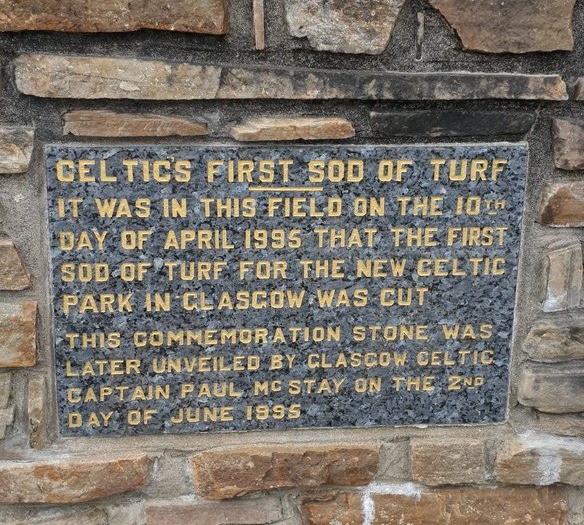
On the evening of 10 April 1995, in a small field located in the rural Donegal town of Mullaghduff, hundreds of people gathered to see a moment of Celtic history. The R259 Road, which is a scenic route around the coast of the Rosses, witnessed a sod of turf being dug from a field by members of the Rosses CSC. Local Fife and drum bands marched to the field and the local parish priest blessed the grass.

More than 90 Minutes Issue 113 Print Edition

The sod then travelled with 50 supporters from Gweedore and the Rosses on a bus to Glasgow. To ensure that it was usable at Celtic Park, the grass was watered in Larne, before boarding the ferry. Once across the water, the turf carrying bus was met at Celtic Park by Fergus McCann, along with son of Donegal, Packie Bonner.

The Sod was laid in the centre circle of the revamped Celtic Park stadium pitch and a short service was held. A plaque was later unveiled at the field in Mullaghduff by Paul McStay. The purpose of the whole event was to relive the historical occasion when revolutionary Irish Patriot, Michael Davitt, was invited to lay the first sod of shamrock smothered Donegal turf at the new Celtic Park in 1892.

The ground was officially opened on Saturday 13 August 1892 with the club’s third, of what would prove to be annual, sports days. Newspaper reports of the time describe the weather that day to be of ‘the most disagreeable kind.’ Indeed, a thunderstorm hovered above the new ground at 3pm. However, the wet conditions were not enough to stop star attraction, Bradley (of Huddersfield), winning the 150 and 100 metre sprint races. Edinburgh distance runners, Hume and Hunter, claimed the top two spots in the mile race; whilst the day saw further distance runs and cycling jousts won by Englishmen.


The Bhoys Are Back in Town T-Shirt |Black

A quote from the 1932/33 Celtic handbook reflected on the day: ‘The old trouble landlord brought about a change of field, and it was in keeping with it, too, that a seeming impossible site was converted into a splendid enclosure. A case of leaving the graveyard to enter the paradise. A happy title did that pressman strike. The lessons learnt and the experience gained on the old monument to the loyalty and fidelity of the pioneers of the club – did they not give their labour to construct it- were not lost. The splendid pedestrian and cycling tracks, which surround the playing area on which champions the world over showed their paces, added another title: ‘The home of sport.’ It was an auspicious occasion and great day when the late Fenian, Michael Davitt, laid a fresh centre sod of turf from Donegal with a handsome silver spade presented to him by the club.’

As seen in the extract from the handbook, Celtic invited Michael Davitt to perform the penultimate action of the day, when he laid the first sod of shamrock smothered turf, imported from the town of Mullaghduff in Donegal. Michael Davitt was the founder of the Irish National Land League and had served 15 years in a Dartmoor prison for ‘Fenian agitation’ and gun running. He was appointed Celtic Patron at the club’s AGM in 1889 and was a natural choice to perform such a symbolic act in terms of extenuating the Irish identity of the club.

Davitt was accompanied at the new Celtic Park by MP Timothy Daniel Sullivan, who concluded the occasion when he turned to the crowd and sang the unofficial Irish national anthem of the time: God Save Ireland. MP Sullivan had penned the song himself, in tribute to the three Manchester Martyrs, who were executed after a sham trial on 23 November 1867.

Annual Magazine Subscription

The grand opening was epitomised by a poetic east end Headmaster in the following way:

On alien soil like yourself I am here;

I’ll take root and flourish, of that never fear;

And though I’ll be crossed sore and oft by the foes,

You’ll find me as hardy as Thistle or Rose.

If metal is needed on your own pitch you’ll have it

Let your play honour me and my friend Michael Davitt.

Sadly, the turf was stolen hours after it was ceremoniously laid, and the culprit was never found.


Glasgow Celtic Hoodie / Green

Hailing from an Irish background,Liam Kelly was born in Bournemouth in 1996, with the good fortune of watching Celtic during the Martin O’Neill era. Still living on the south coast,He has a season ticket in the Lisbon Lions Stand and travels to European away matches when possible.
At the age of 19, he published his first Celtic book (Our Stories & Our Songs: The Celtic Support), which focuses exclusively on the Celtic faithful throughout the club’s history. Last year he published his second book (Take Me To Your Paradise: A History Of Celtic-Related Incidents & Events), which has now sold out in Waterstones and Official Celtic stores. His third book (Walfrid & Bould Bhoys), which he co-authored with Matt Corr and David Potter, was published in September 2020 and is stocked in all official Celtic stores.


If you would like to support our Independent Celtic Fan Media Platform you can become a Member, Subscribe, Buy or Donate for the Price of a Pint. Your Support helps us continue to produce Daily News & Articles, Weekly Newsletter, Two Weekly Podcasts, Monthly Fanzine, Video Content & Live Shows.

https://celticfanzine.com/product-category/monthly-print-subscription/

https://celticfanzine.com/shop/

https://celticfanzine.com/donations-page/

Celtic Soul Polo-Top | Black
More than 90 Minutes Issue 113 Digital Edition


Celtic Retrospective


Celtic Soul Podcast Episode 53 with More than 90 Minutes, Editor Andrew Milne chatting to Paul McQuade

Paul McQuade is the Editor of the Shamrock Fanzine. He is also the man behind the Walfrid Walking Tours and is one of the founding members of the Celtic Graves Association. He has written three books on Celtic, Said Lizzy To Philip How Celtic Gate Crashed the Coronation, This Is How it Feels to be Celtic an account of the Invincible Season and a book of Celtic Quotes. He is currently writing a biography of Johnny Doyle.

The Bhoys Are Back in Town T-Shirt |Black

In part 2 of the interview, Paul and Andrew chat about his new book on the life and career of Johnny Doyle and the dept of detail he has researched to get the true picture of Johnny on and off the park.

Paul also looks back on the Invincible season, Why he wrote the book and how good a season it really was when the board, the players, the management and the fans were all United during that time which is a far cry from this season. He gives his opinion on Brendan Rodgers now and then.

Kieran Tierney a player who was ever present during that Invincible season gets talked about as does Tommy Burns who he tells the listeners had also contemplated leaving Celtic to improve his financial situation.  Tommy when playing for Celtic relied on a league win bonus to bring his family on holiday. Hard to believe when you think of what some players are paid for sitting on the bench and kissing the jersey now and again.

Annual Magazine Subscription

He also gives his opinion on outgoing CEO, Peter Lawell and the task that faces incoming CEO Dominic McKay while he expresses his disappointment at the absence of power broker and decision maker, Dermot Desmond from Celtic Park.

Paul also jumps into the Tim time machine and heads back to the Centenary season.

Glasgow Celtic Hoodie / Green

Andrew Milne started More than 90 Minutes in 2001. He has written for numerous publications and online about Celtic.  He is a former newspaper columnist with the Daily Ireland and the man behind celticfanzine.com. He is host of the Celtic Soul Podcast & Celtic AM pre-match events at Malone’s in Glasgow on match days and follows Celtic Home & Away. He is a season ticket holder for Celtic FC and the Republic of Ireland. He is also P.R.O. of St. Margaret’s CSC, a member of the Celtic Trust and the Celtic Graves Association.

If you would like to support our Independent Celtic Fan Media Platform you can become a Member, Subscribe, Buy or Donate for the Price of a Pint. Your Support helps us continue to produce Daily News & Articles, Weekly Newsletter, Two Weekly Podcasts, Monthly Fanzine, Video Content & Live Shows.

https://celticfanzine.com/product-category/monthly-print-subscription/

https://celticfanzine.com/shop/

https://celticfanzine.com/donations-page/

Celtic Soul Polo-Top | Black


In Conversation – Dougie McGuire


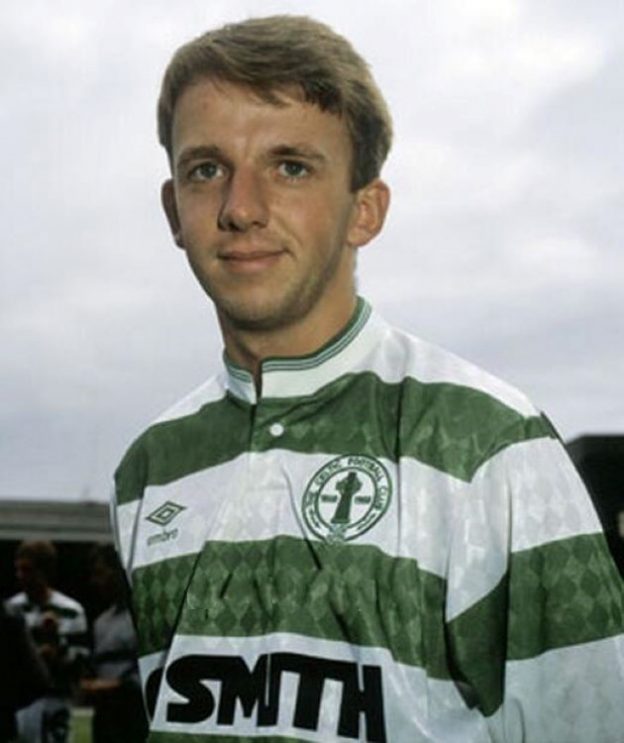
I’ve been very fortunate to interview lots of huge names that have played for Celtic over the years and one interview that really sticks out for me and without a doubt, the funniest one I ever did was with a player from the 1980’s named Dougie McGuire. Now a few readers will probably be saying, “Who”? But others will remember him as genuinely the next big thing at that time that was meant to come out of Celtic

Dougie himself was touted as the next big thing by two very big admirers at the club at that time. None other than Jinky and Bobby Lennox. Two great players to be singing your praises eh? I sat down with Dougie and here is his interview.


More than 90 Minutes Issue 113 Print Edition


How did the move to Celtic come about and was there a link with St Michael’s Academy in Kilwinning with Bobby Lennox and Lou Macari having attended that school?

I don’t think so Scott no, there was a Scout from Eaglesham named Jim McGuire who got me to Parkhead. That was my Father’s name, that’s how I remember that. I had Aberdeen, Liverpool, Man Utd and St Mirren all sniffing about me. I was going to go to Aberdeen for a week but then I had a week’s trial at Celtic at Barrowfield and when they wanted to sign me, that was it, it was no brainer after that being a Celtic Supporter.

What can you remember about the day you signed?

I shouldn’t probably say this but people always say that the best day of your life is when you get married or when your kids are born etc., which of course was magnificent but from a selfish point of view I’d have to say that the day that I signed for Celtic was the best day of my life. I was only 13 years old at the time. It was a dream come true, it really was. Me and my Dad with big Billy McNeill in the Manager’s office. It was like I’d genuinely died and gone to heaven.

Who were the players that came through the Boys Club and the Reserves at that time that went on to have big careers?

A guy that stuck out like a sore thumb was Tony Shepherd. He was a magnificent player, he was the stand out. John Traynor was a good player and wee Jimmy Boyle as well who went on to have a good career with Airdrie. Derek Mills, Joe Miller and Stevie Kean. Big Derek Whyte!! What an athlete he was. I could run, in fact I could probably run by anybody but big Derek. He was some athlete.


Glasgow Celtic Hoodie / Green

You made your first team debut as a Sub against Falkirk in November 86. We were 2-1 down when you came on and changed the game completely creating 2 in a 4-2 win. What do you remember about the day of the game and how did it feel when you knew you were going on?

Back in those days the crowds weren’t like anything you get these days. Probably 15-18000 that day. The Jungle were singing my name and I couldn’t believe it. I remember just putting the ball low into the box and Mo Johnston just being clever and getting on the end of it. What a smashing feeling it was. There was a big fight after the game in the dressing room. Not fisticuffs or that, just Roy Aitken and Pat Bonner going at it. We’d conceded a late goal and they were arguing about whose fault it was. Davie Hay just came in and surveyed the scene. No punches were thrown but it was close.

You played against Borussia Dortmund in what was then, West Germany, what was that experience like?

I came on as a late sub, a kind of last throw of the dice thing. A magnificent Stadium. Apparently Ibrox was designed on that one at the time. Murdo MacLeod played for them that day. He came in to the dressing room after the game and wished all the boys all the best. One thing happened during the game that made us all laugh. I was on the bench at the time and Roy Aitken kind of halved this guy. It must’ve been a German thing but the medics came on and put a blanket over the guy that was injured. We’d never seen that before, it was like big Roy had killed the guy and they were putting a sheet over him ha, ha.

You made 4 appearances for Celtic, did you feel that your time at Celtic was up when Billy McNeill bought Joe Miller, for a then huge sum of £650,000 in Oct 1987?

I thought long before that to be honest. Big Billy was a legend. I was a talented boy just my mental strength probably wasn’t good enough if I’m being honest. I think if Davie Hay had stayed I’d have probably got a few more chances to play. Bobby Lennox liked me and Jimmy Johnstone did too. I’m not saying they picked the team cause they never but their influence was there. They were wingers so knew I was a good wee player. I got a mention in both their books so that’s something I hold dear. Probably the best wingers the club have had so I’m happy with that.

Annual Magazine Subscription

You used to travel to training in the same car as Roy Aitken, Mark Reid and Bobby Lennox, what was that like and what were those 3 guys like to travel with on a daily basis?

Back to what I said to you earlier Scotty, it was like I’d died and gone to heaven. Big Roy Aitken, Captain of Celtic, Bobby Lennox a legend and Reidy. The patter in the motor was second to none. We had John Traynor in the motor as well. I was kind of cheeky so they liked me, I’d give it back anyway and I think they liked that. It was an education for life you know travelling with these guys.

Who were the Characters in the dressing room in your time at Celtic? Any funny stories?

In the Reserves, there was a guy called John Halpin. He was a natural comic, so funny. We had Roy Aitken, Bobby Lennox, Tommy Burns, Graeme Sinclair and Davie Provan. Neilly Mochan though, being 16 you thought you were the cock of the walk at Celtic. Neilly as you’ll know was the kit man so you’d go to him for boots and that. If you were a good player you got the Coppa Mundial’s and if you weren’t that good, you got mouldies or that. I went to see Neilly one day and said to him, “Can I get new boots please Neilly”? He says to me, “Do you think you’re going to be here that long son”? I remember Scotty, I was nearly greeting. He then goes, “Son, I’ve been in big Billy’s office, what’s your name again”? I goes, “Dougie, Dougie McGuire”. He says, “Aye Dougie, Dougie McGuire, they were talking about you, I don’t think you’re going to be here that long”. See going home on the bus, I’m nearly greeting thinking Celtic are going to release me, but that was just Neilly.
Who was your biggest influence at the Club and why?

Bobby Lennox. I seem to remember when he did a report in the programmes and that, he’d give me a good mention. He stuck by me. You don’t realise until you leave Celtic, the stuff he and Jinky for example said and did for me.

More than 90 Minutes Issue 113 Digital Edition

y/

You lived the dream Dougie and wore that sacred shirt. Nobody can take that away from you ever. Thanks once again for chatting and we hope to see you at Paradise soon for a game. HH

Scott Alcroft is the author of the 4 Books, “The Bunnet”, “Hugo”  “The Factory Girls” and “Bonded by Burns” 

If you would like to support our Independent Celtic Fan Media Platform you can become a Member, Subscribe, Buy or Donate for the Price of a Pint. Your Support helps us continue to produce Daily News & Articles, Weekly Newsletter, Two Weekly Podcasts, Monthly Fanzine, Video Content & Live Shows.

https://celticfanzine.com/join-us/

https://celticfanzine.com/product-category/monthly-print-subscription/

https://celticfanzine.com/shop/

https://celticfanzine.com/donations-page/


Celtic Badges Multi Pack

Glasgow Celtic T-Shirt / Green

Celtic Multi Pack Stickers includes FREE Badge


More than 90 Minutes – More than just Headlines


More than 90 Minutes has landed from the printers and will be in the post today to all subcribers and those who pre-ordered. Order your copy today.

More than just headlines cut and pasted from the tabloids. Independent Celtic fan media should never peddle the same crap as the Sun or the Record. These tabloids have proved over the years that they are no friends of football fans.

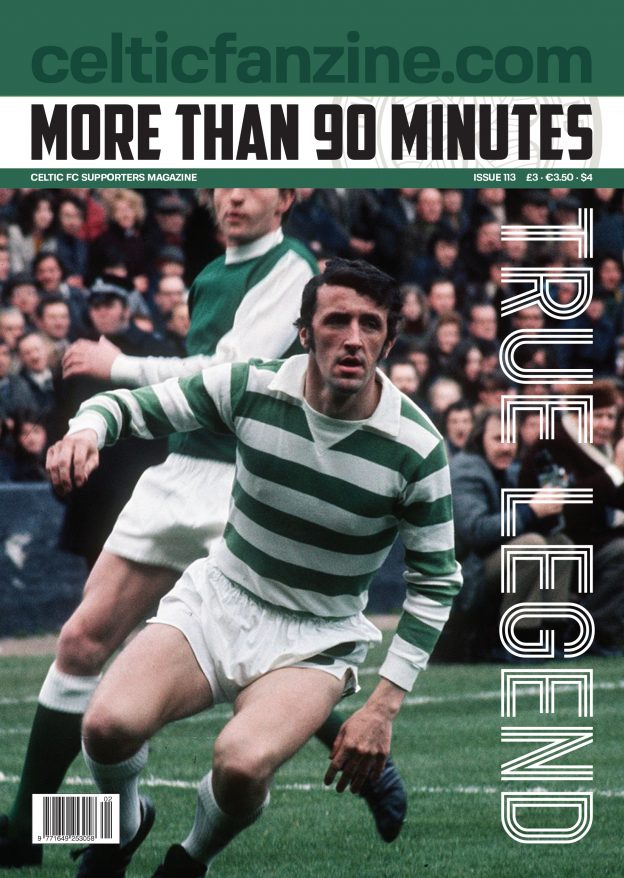
A True Celtic Legend, Danny McGrain graces the cover of Issue 113 of the fanzine before his famous beard was grown and there were no clash of colours as the image shows Danny in action in the famous hoops sporting a big collar as was the fashion back in the seventies. The jersey has no sponsor, no sports label or club crest.

More than 90 Minutes Issue 113 Print Edition


Legendary Celtic Author, Tom Campbell who appeared at Celtic AM before the lockdown makes his long overdue debut for the fanzine as he looks back on the career of Danny McGrain who made 439 appearances in the hoops.

Lisbon Lion John Fallon is back as honest as ever as he calls for change at the club as the season stumbles on. Editor, Andrew Milne looks back at Peter Lawell’s 17 years as CEO at Celtic after the club announces he will step down at the end of the season. The Good, the Bad and the Ugly.

Selfless Celtic Trust member,  Jeanette Findlay who has done so much for the Celtic support over many years brings us up to date on the Trust as membership continues to grow. The CT  gives ordinary fans and shareholders a Collective Supporters Voice.

Glasgow Celtic Hoodie / Green

David Potter pays tribute to Jo Venglos and Shuggie Edvaldsson who both sadly passed away recently. Alec Bodenfeatures in Potters Players. Young Author, Liam Kelly looks at the career of Willie Maley, the man who made Celtic

Dublin journalist, Rachel Lynch is feeling let down that the 10 was given up so easily. While Eoin Coyne thinks we are bottomed out and looking up. Paddy McMenamin looks back at Neil Lennon’s Celtic career and how he has suffered for wearing the Green and White of Celtic, Lenny’s time may be up but he deserves respect. Ciaran Kenny reminds us that Celtic’s for Life and not just a season.

Talented Young Glasgow Poet, Erin Boyle makes her debut for the fanzine after appearing on the Celtic Soul Podcast with A Quadruple Treble, Beautiful Sunday, 20th December 2020. A day and game we will never forget as the Bhoys done the business in an empty stadium to make history as we went through every emotion while watching from a distance in our homes.

Annual Magazine Subscription

Regular contributor, Scotty Alcroft joins us for a conversation to talk about his new book, “Bonded By Burns” while Martin Donaldson looks back in GOAL! at Henrik Larsson’s strike at the Estadio do Bessa on the 24th of April 2003, the goal that would bring us all to Seville.

We look back at the talking points of the past month in our regular Since Last Time column.  Snap takes us back to the 1980 Scottish Cup final in pictures. Tim Molloy is back with his regular column in our native tongue.

The digital edition of More than 90 Minutes also available to download.

More than 90 Minutes Issue 113 Digital Edition

y/


If you would like to support our Independent Celtic Fan Media Platform you can become a Member, Subscribe, Buy or Donate for the Price of a Pint. Your Support helps us continue to produce Daily News & Articles, Weekly Newsletter, Two Weekly Podcasts, Monthly Fanzine, Video Content & Live Shows.

https://celticfanzine.com/join-us/

https://celticfanzine.com/product-category/monthly-print-subscription/

https://celticfanzine.com/shop/

https://celticfanzine.com/donations-page/

Celtic Badges Multi Pack

Talking Celtic Talking Johnny Doyle


Tune in this evening for the second part of our chat with Paul McQuade. Paul  is the Editor of the Shamrock Fanzine. He is also the man behind the Walfrid Walking Tours and is one of the founding members of the Celtic Graves Association. He has written three books on Celtic, Said Lizzy To Philip How Celtic Gate Crashed the Coronation, This Is How it Feels to be Celtic an account of the Invincible Season and a book of Celtic Quotes. He is currently writing a biography of Johnny Doyle.


More than 90 Minutes Issue 113 Print Edition


Last week, Paul and Andrew chatted about the current situation at Celtic while Paul reflects back on his formative years growing up and starting on his Celtic supporting journey. Johnny Doyle died on his 11th birthday and he now finds himself writing a biography of the player. As a youngster he waited outside the stadium to get Mo Johnston’s autograph, he has no plans to write a book on him.

His love of Celtic and Celtic’s history started at a young age when he was gifted a collection of books on Celtic and started to travel on supporters buses. He chats about selling Not the View during his University years in Edinburgh and the story telling that he has enjoyed from fellow Celtic supporters over the years. The 90’s may have been bad but you have to chuckle when he mentions Tony Mowbray’s testimonial when we were singing “Always look on the bright side of life”. A Monty Python moment!

Player recruitment and the policy of interference going back to Gordon Strachan’s time as manager get questioned and the fans stories of buses and away trips to Europe which may well lead to a book, Paul recounts stories like the bus that crossed the Alps from Turin after the windows were put in and takes us right back to the Celtic Brake Clubs who were the originators of Football Away Days


Glasgow Celtic Hoodie / Green

Like his pal, Brendan Sweeney, Paul’s research for his books is amazing and that shines through in this conversation with his knowledge and love of Celtic. Both Paul and Brendan are just two of the founding members of the Celtic Graves Association and it was great to see how it came about and the work they and the other volunteers have done since then and the famous names they have honoured and remembered.

Paul also takes us on a Virtual Walfrid Walking Tour starting at Celtic Park which leads us then through the streets of the East End of Glasgow from the 1870’s onwards which is a fascinating listen.

Annual Magazine Subscription

Andrew Milne started More than 90 Minutes in 2001. He has written for numerous publications and online about Celtic.  He is a former newspaper columnist with the Daily Ireland and the man behind celticfanzine.com. He is host of the Celtic Soul Podcast & Celtic AM pre-match events at Malone’s in Glasgow on match days and follows Celtic Home & Away. He is a season ticket holder for Celtic FC and the Republic of Ireland. He is also P.R.O. of St. Margaret’s CSC, a member of the Celtic Trust and the Celtic Graves Association.

More than 90 Minutes Issue 113 Digital Edition

If you would like to support our Independent Celtic Fan Media Platform you can become a Member, Subscribe, Buy or Donate for the Price of a Pint. Your Support helps us continue to produce Daily News & Articles, Weekly Newsletter, Two Weekly Podcasts, Monthly Fanzine, Video Content & Live Shows.

https://celticfanzine.com/join-us/

https://celticfanzine.com/product-category/monthly-print-subscription/

https://celticfanzine.com/shop/

https://celticfanzine.com/donations-page/

Celtic Badges Multi Pack

Glasgow Celtic T-Shirt / Green

Celtic Multi Pack Stickers includes FREE Badge


Willie O’Neill – Remarkable Man & Genuine Celt


For a man who played less than 100 games for the club, and was only very briefly for half a season (August – December 1966) considered to be a first team regular, it is odd that Willie O’Neill is still considered a real Celtic hero. And yet when he died in 2011, the Celtic community was plunged into grief for the loss of someone who was considered very much to be one of their own. He was a couple of years with Carlisle United, but struggled with an injury there and in any case, as he himself admitted, his heart was never with him in Carlisle. It never really strayed far from the east end of Glasgow.

More than 90 Minutes Issue 113 Print Edition


He was born in 1940 and joined the club in 1959 from St Anthony’s. He had played for a couple of seasons in the reserves, was generally agreed to be making good progress, but full backs were not really needed at Celtic Park because of Dunky MacKay and Jim Kennedy who were regarded as being one of the better departments of that fast developing 1961 team. But then Destiny summoned Willie O’Neill. Following the Scottish Cup final 0-0 draw with Dunfermline, Jim Kennedy suddenly took ill with appendicitis, (by an odd coincidence, Dunfermline’s Tommy McDonald had gone down with the same complaint before the first game) and O’Neill was summoned. Historians are divided on the wisdom of this choice. The veteran Bertie Peacock had been allowed to go to Italy to play for Northern Ireland. He might have been recalled, John Clark might have then been pushed back to play at left back rather than left half, and Peacock’s experience might have been invaluable against a team managed by his old friend Jock Stein whose mind Bertie knew well.

But O’Neill was given the nod. Not many players are given a Scottish Cup final for a debut, but O’Neill was entrusted with this mighty task. It could not have been said that the 20 year old O’Neill played badly – the deficiencies lay further up the field – but there was to be no “dream come true” story for Willie that night, as Stein’s professional Dunfermline with an inspired and lucky goalkeeper, beat Celtic 2-0. For anyone connected with the club, that night remains an agonising memory for supporters who were at that murky Hampden or who listened to the painful and tantalising radio broadcast.

Willie then disappears for a spell – in and out of the team to cover for injuries and failing to grab the left back spot when Jim Kennedy moved to left half, leaving a vacancy at left back which was filled by Tommy Gemmell rather than Willie. We next really hear of Willie in summer 1966 in the USA. Jim Craig was left behind to do his dentistry exams, Ian Young returned early to Scotland to get married and the only two full backs were Tommy Gemmell and Willie O’Neill, both left backs. But Tommy was willing to try anything and moved to the right where he was also encouraged to move up and “have a go” now and again, while Willie the defensive minded left sided player stayed back. So successful was this move that Stein persevered with it, until a bad day at Tannadice on Hogmanay 1966 made him realise that Tommy Gemmell was really a left back, and that Jim Craig was an excellent right back. Thus, through no real fault of his own, Willie was ousted – with grateful thanks, as it were – but he remained always available, if required.

Glasgow Celtic Hoodie / Green

Mention must be made, of course, of his goal line clearance at Hampden in the League Cup final against Rangers when he appeared from nowhere to save the day, and earned a pat on the head from Ronnie Simpson as the team lined up for the corner kick. It was his only real big Hampden appearance, and one has to wonder what might have happened in 1967 if that one had gone in? Things might have been different.

He was also given a different and unusual job by Jock Stein – that of sitting beside Jimmy Johnstone on aeroplanes to tell him jokes, keep him happy and prevent Jimmy from freaking out because of his fear of flying! Willie had a great sense of humour – very dry and straight faced most of the time – and his talent was needed. No doubt he told the old ones about how he wasn’t really afraid of flying… but crashing really upset him! Or in answer to the questions about how often do these planes crash, “just the once” normally!

It was a shame that he did not play more often, but his contribution to Celtic did not stop when his playing career was over. He worked in Baird’s Bar in the Gallowgate as a barman where he could always be relied upon to cheer everyone up. On one occasion after the team had defeated Rangers, he showered everyone with champagne as they came in the door. Now that doesn’t happen very often to anyone in pubs!

But then again Willie O’Neill was a remarkable man! And a genuine Celt!


Annual Magazine Subscription

Born in 1948, David Potter first saw Celtic at Dens Park, Dundee in March 29. It was a 3-5 defeat, which equipped him admirably for the horrors of the early 1960’s. He had “followed” Celtic for a few years before that and recalls having been called upon to impersonate Jock Stein and receive the family silver teapot which had to do for the Scottish Cup as it was presented on April 24 1954, after he and his father had spent a nerve wracking afternoon listening to the radio!  Since then, he has “followed” every Celtic game with bated breath, and has written extensively about the club in magazines and books. His favorite team was that of 1969 (which he rates marginally better than 1967) and his favorite player was Henrik Larsson.

His ambition for Celtic is for them to keep on winning silver in Scotland and to be something in Europe once again. His other interests are cricket and drama. He is 70, a retired teacher of Classical Languages, married with three children and five grandchildren. He now travels on the Joseph Rafferty bus from Kirkcaldy. He also loves Forfar Athletic.


More than 90 Minutes Issue 113 Digital Edition

If you would like to support our Independent Celtic Fan Media Platform you can become a Member, Subscribe, Buy or Donate for the Price of a Pint. Your Support helps us continue to produce Daily News & Articles, Weekly Newsletter, Two Weekly Podcasts, Monthly Fanzine, Video Content & Live Shows.

https://celticfanzine.com/join-us/

https://celticfanzine.com/product-category/monthly-print-subscription/

https://celticfanzine.com/shop/

https://celticfanzine.com/donations-page/

Celtic Badges Multi Pack

Glasgow Celtic T-Shirt / Green

Celtic Multi Pack Stickers includes FREE Badge