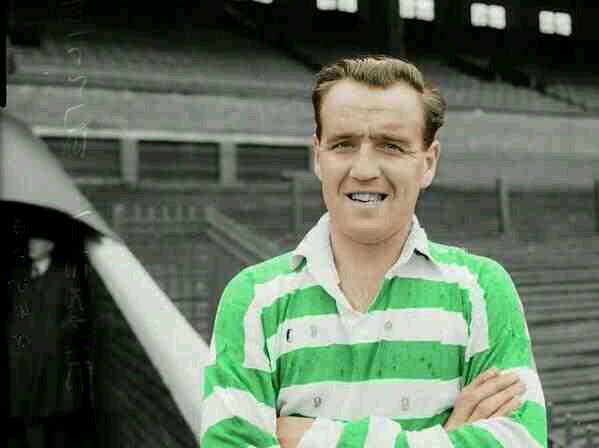
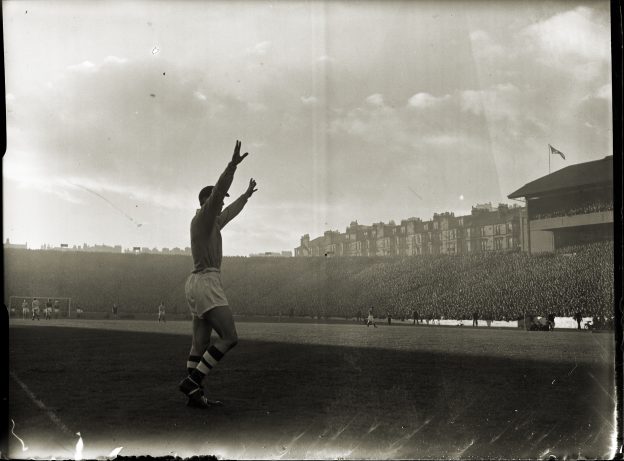
Kinglassie is a very ordinary Fife ex-coal-mining village. Its best days are now clearly well behind it, and the once vibrant community never really recovered from the Thatcher-Scargill civil war of the mid 1980s. Coal mining is sadly no more. Willie Fernie was born here in 1928 in what was a fertile area for Celtic football players. John Thomson’s Cardenden and Charlie Geatons’ Lochgelly are very close, with Alec Thomson’s Buckhaven and Scott Brown’s Hill of Beath only about half an hour away. Fernie is essentially a Fife name. There is a Fernie Castle, again about half an hour away from Kinglassie but on a rather different social plane. Now a very rich hotel, it often becomes the temporary home of American golfers when the “Open” is in St Andrews, and only a very opulent “daddy” can afford it for a daughter’s wedding!
Presumably Willie’s forbears came from the small village that grew up round the castle. The Fernies who lived in the castle in the middle ages were rather obscure aristocratic nonentities and not really very famous at all. That cannot be said about our Willie Fernie!
Willie Fernie was a player of the old school. He was a dribbler, a craft that even in the 1950s was beginning to die out. But he was an expert at it, and could do other things as well. He could pass, tackle, had a fair turn of speed and could take a goal when required. He played in the 1950s a time when Celtic had loads of great players – Collins, Peacock, Tully, Evans, to name but a few – but did not have a great team, such was the shambolic disorganisation that prevailed at Parkhead at the time.
Willie Fernie was born in 1928. These were hard times, and you really had to be tough to survive in the brutal football that existed in the Fife mining communities of that time. It was with a juvenile team called Leslie Hearts that he cut his teeth. “Cut his teeth” is perhaps an inappropriate metaphor, because in the Scottish Juvenile Cup Final of 1948 at Easter Road, he was carried off with a broken jaw but had played well enough to convince a Celtic scout to come to visit him in hospital, and he signed soon after.
After a year or two in the reserve side and being farmed out occasionally to the Kinglassie Colliery side, Willie Fernie made his debut at Love Street, Paisley, towards the end of the 1949-50 season. He soon had the pleasurable experience of winning a Glasgow Charity Cup medal against Rangers in May 1950, in the game that was immortalised by the presence of the American film star Danny Kaye. But Fernie realised that he would have to work at his game, and it would be some time before he could hope to establish himself. In fact it was season 1952-53, before he could be called a regular, and in that see-saw season his form as sporadic as the rest of the team. Yet Jimmy McGrory and Bob Kelly were convinced that there was talent here, and the big break came when Charlie Tully was injured before the Coronation Cup Final of May 1953, and Willie was called up for this tremendous occasion.
From then on, he never looked back, and the League and Cup double of 1953-54 was won by Willie Fernie as much as by anyone else. He played at inside right and although he scored 13 goals, it was the way that he could make goals for others that really impressed everyone. His classic was the goal that he made in the Scottish Cup Final of 1954 for Sean Fallon to finish off. It was claimed with a touch of romantic hyperbole in an Irish newspaper that “the shamrocks burst forth on the banks of the Shannon ” to applaud such Fernie brilliance. He was even compared with the immortal Patsy Gallacher!
At the end of the season, Willie was given the first of his 12 Scottish caps, and then he was picked to travel to the disastrous World Cup of 1954.He would have done better to have missed out on that one. Like most players on that dreadful experience, he was given the bullet as far as International honours were concerned, at least temporarily, but such was the quality of his Celtic performances that Willie came back, and was one of the few Scottish players to return from the Sweden World Cup of 1958 with his reputation enhanced. He played in only one game in Sweden, but had done so much in the qualifying games that he deserved more employment than that. As with Celtic, Willie was often the victim of crazy selection with Scotland as well!
For Celtic, he played in the two unhappy Scottish Cup Finals of 1955 and 1956. 1955 was unlucky, but 1956 was the game in which Fernie simply did not perform. In a clear indication of how much Fernie meant to Celtic, the team visibly collapsed around him as he simply had a bad game.There were of course other reasons for Celtic’s bad defeat – not least that the talented Hearts team played better. He would have found this frustrating, but he kept on with his task and his best moments in a Celtic jersey were still to come.
On Hallowe’en 1956, he inspired Celtic to their first ever Scottish League Cup Final victory over Partick Thistle. Then, the following year, now playing at right half and part of the immortal half back line of Fernie, Evans and Peacock, Willie played his glorious part in the 7-1 thrashing of Rangers in the League Cup Final, scoring the seventh goal with a penalty kick. In some ways he was the architect of this triumph controlling the right side of the midfield like Peter Wilson or Sunny Jim of old. And it only came about because of the injury to Jock Stein which compelled his retiral. Evans now moved the centre half, and someone else was needed for right half. Who better than the effervescent and ubiquitous Willie Fernie?
Had Willie been at Parkhead when Jock Stein was Manager, the team would have won the European Cup more than once, for he was a superb player. There was little that he could not do on the field, being dubbed “Scotland’s Stanley Matthews” and threatening to usurp the title “It’s Ma Ba” from McKenna of Partick Thistle of a decade earlier. With Bobby Collins and Charlie Tully playing alongside him, Celtic were indeed rich in players of natural talent, and were a joy to watch. His dribbling skills in particular could be guaranteed to send a ripple of appreciation round the crowd.
But things change. Celtic embarked on a youth policy and Fernie was one of those sold off, in his case to Middlesbrough on December 1st 1958, to make way for the ill thought out shambles that was to be the Celtic set-up of 1959 and 1960. There are those who deny that his departure, like those of Bobby Collins and Bobby Evans, had anything to do with playing for the new floodlights (which were indeed a sight to behold), but the connection was a coincident, at least! He was on Teeside for less that two years, yet Boro fans still talk of his “halcyon days” there, along with the abrasive but talented Brian Clough.
The Celtic fans were distressed at his departure, but in a rare moment of visionary common sense he was brought back in October 1960 to be an “auld heid” for the youngsters. He took them to the Scottish Cup Final, paying particular attention to the development of Charlie Gallagher, but the result was the tragedy of Dunfermline’s victory of 1961, something that distressed Fernie intensely and deprived him of a second Scottish Cup medal.
There was to be yet another cause of pain for Celtic fans when Fernie was off loaded for the second time – to St.Mirren in the autumn of 1961, once again when there was still a great deal of football left in him. There Willie helped the Buddies to beat Celtic 3-0 in that disgraceful Semi Final of 1962, in which the raw, young, leaderless Celts, talented undeniably but not so streetwise in the ways of the world were “ambushed” by Willie’s St Mirren who had allowed Celtic to beat them 5-1 the previous Monday night in a meaningless League match. It was a different story in the semi-final. It would have been nice to see Fernie’s St Mirren win the final as well against Rangers, but it was not to be.
Willie then dabbled in the minor reaches of Scottish and Irish football for a few years, before returning yet again to Parkhead, soon after Lisbon , to be a reserve team coach under his old friend Jock Stein. He thus deserved a great deal of credit for the development of McGrain, Dalglish, Hay, etc. He was Manager of Kilmarnock from 1973 to 1977. He did well for them, taking them to the Premier League but was peremptorily dismissed after a bad start to season 1977/78. After his dismissal, he gave up football altogether in favour of driving taxis. Quite a few fans on match day would get a taxi from one or other of the railway stations to Celtic Park, and remark on the fact that the taxi driver with the Fife accent looked very like Willie Fernie – but no, that couldn’t possibly have been him, could it?
He was happily married (from 1956 onwards) to Audrey Douglas whom he had met at Celtic Park, for she was Secretary to Jimmy McGrory. Soon after the turn of the century, he developed dementia (a common problem with ex-football players) and died a few months after his wife on July 1 2011.
Those of us who saw Willie Fernie play saw a genius. It remains a tragedy that Celtic did not exploit this awesome talent to a greater extent than they did. One Scottish League medal, one Scottish Cup medal and two Scottish League Cup medals are a poor yield for such a prodigious input from this essentially quiet and shy man from the backwoods of the Fife coalfield. He won 12 caps for Scotland, and was worth a great many more.
Born in 1948, David Potter first saw Celtic at Dens Park, Dundee in March 29. It was a 3-5 defeat, which equipped him admirably for the horrors of the early 1960’s. He had “followed” Celtic for a few years before that and recalls having been called upon to impersonate Jock Stein and receive the family silver teapot which had to do for the Scottish Cup as it was presented on April 24 1954, after he and his father had spent a nerve wracking afternoon listening to the radio! Since then, he has “followed” every Celtic game with bated breath, and has written extensively about the club in magazines and books. His favorite team was that of 1969 (which he rates marginally better than 1967) and his favorite player was Henrik Larsson. His ambition for Celtic is for them to keep on winning silver in Scotland and to be something in Europe once again. His other interests are cricket and drama. He is 70, a retired teacher of Classical Languages, married with three children and five grandchildren. He now travels on the Joseph Rafferty bus from Kirkcaldy. He also loves Forfar Athletic.
If you would like to support our Independent Celtic Fan Media Platform you can become a Member, Subscribe, Buy or Donate for the Price of a Pint. Your Support helps us continue to produce Daily News & Articles, Weekly Newsletter, Two Weekly Podcasts, Monthly Fanzine, Video Content & Live Shows.
Is the pandemic to blame for Celtic’s ills this season. Difficult to say. Some commentators have said that the lack of support affects Celtic more deeply that other teams. I’m not sure about this. I remember being in Tynecastle and Easter Road on occasions and there was certainly no lack of passion or support from the stands from Hearts and Hibs supporters and it is clear to me that the lack of supporters affects those clubs also but they are not playing badly in the way that Celtic are. On the other side of Glasgow it is obvious that the lack of support is not adversely affecting the Rangers. It is easy to use the pandemic as an excuse and some people [NL included] have done this but there is no evidence to support this theory
The difficulties associated with the pandemic affect everyone. Even the small teams, they have their own supporters and the lack thereof affects them also. Clearly, Celtic supporters display enthusiasm and passion on behalf of the team but I remember being in Celtic Park once or twice when the atmosphere became flat and quiet. This doesn’t happen terribly often of course but it does nevertheless occur occasionally and nobody can use this excuse.
It’s difficult to say what are the sources of Celtic’s problems this season. The league was lost even prior to the trip to Dubai [and it is certain now that that this decision was a mistake]. In the first game at home to the Rangers they were abysmal and even though they were much improved for the game at Ibrox they lost that game. It is unacceptable that the team cannot get the better of Livingston over two games, home or away. Even though the league title is lost, Celtic will still have to concentrate on this season and there is a risk that they will not even finish in second place. Hibs or Aberdeen could take this place if things continue as they are.
I have said previously in this column that I do not wholly place the blame for this collapse on NL. There is at the very least a certain percentage of the blame that should be apportioned to Peter Lawwell and Nick Hammond. Some of the players let down the team and the management and it seems that some of the signings made were not appropriate for the club. It bothers me a lot that Celtic seem to have lost the ability to sign suitable players. You think back to the likes of Lubo Moravcik and Henrik Larsson and the way that the club was able to sign these players at low cost. It appears that this capability has been lost
At present I’m reading a very interesting book entitled “Celtic – The Official History” written by Brian Wilson. This books deals with the history of Celtic from 1888 up to 2017. At the moment, I’m at the point where Jock Stein has just been appointed as manager in 1965. It was great the way Stein could just go out and sign such a great players as Willie Wallace for €30,000. Even allowing for the devaluation of money since then, this shows the ability of Stein to identify a players and to be able to slot him straight into the first team. I believe that this ability has been lost by Celtic when you consider some of the mistakes made as regards new signings in the recent past. Of course, the principal boast of that team was the fact that they all grew up within thirty miles of Celtic Park [twenty when you omit Bobby Lennox!].
I believe that this approach must be returned to by Celtic. That is to say more emphasis needs to be place on attracting local players to Celtic Park so that more pride and passion can be in evidence throughout the team. Clearly, the absence of spectators would not have deterred the Lisbon Lions. I really find it difficult that there is not a goalkeeper with a Celtic background of the required standard playing in Scotland. I also believe that Declan Gallagher should be signed from Motherwell. This central defender played for Celtic when he was a youngster and has attracted attention from a number of other clubs. If he is good enough to play internationally for Scotland then he is more than capable of doing a good job in the SPFL.
Maybe now is the time to move on some of the players who do not have Celtic in their hearts. NL has stated that certain players were dis-satisfied with Celtic and it might be better if they weren’t there any longer. Incidentally, I do not include Ryan Christie in this category. I was surprised to learn recently that he was only earning £7,000 per week. He should be put on a much improved contract and there is an onus on the Chief Executive to put this injustice to rights.
Of course it’s not as simple as that when you consider the case of Shane Duffy, who followed Celtic as a youngster, but it seems that the style of play of the team does not suit him. However, there should be more players with a “Celtic” background in the team, when you consider players such as Paul McStay and Tommy Burns [RIP] and Johnny Doyle [RIP], players who had Celtic in their DNA. It seems that players of this nature are not there now.
It now appears that NL will remain in position until the end of the season but it is obvious that significant changes will be put in place by the start of next season. It seems that there will be a new manager and maybe a new Chief Executive and possibly even a new team charged with recruitment. Clearly changes need to be made before the start of the new season so that it will be possible for Celtic to make a good start and to recover the title from the other side of the city.
Finally, some commentators have now stated that it is unfair to subject NL to further unnecessary suffering by keeping him in position any longer and that it might be more humane to allow him to leave now on his own terms in recognition of the wonderful service he has rendered the club. Maybe.
Tim Molloy is law graduate of London University and is a High Court Registrar and lives in Drogheda. He is a life-long Celtic supporter and an Irish language enthusiast. He also speaks some Spanish and French and a few words of Polish and Czech. He also follows the fortunes of the Munster rugby team.
If you would like to support our Independent Celtic Fan Media Platform you can become a Member, Subscribe, Buy or Donate for the Price of a Pint. Your Support helps us continue to produce Daily News & Articles, Weekly Newsletter, Two Weekly Podcasts, Monthly Fanzine, Video Content & Live Shows.
THE TOOMEBRIDGE WOMAN WHO OWNED CELTIC: HOW A CRUCIAL DEPARTURE CHANGED THE COURSE OF HISTORY AND ULTIMATELY SAVED THE CLUB FROM LIQUIDATION
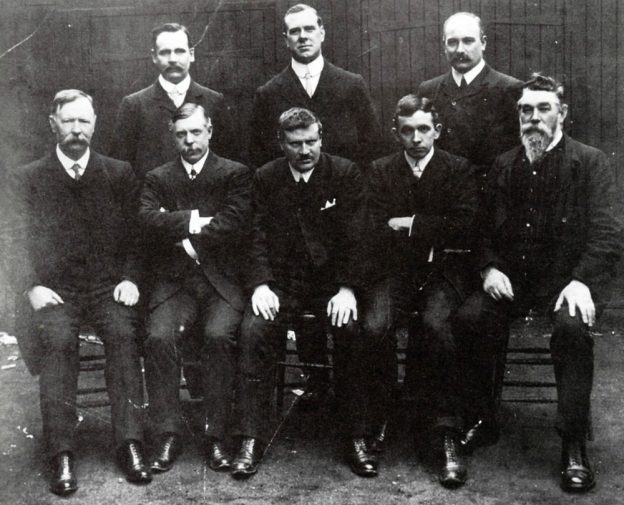
Thursday evening was a night on which the weekly meeting of the Celtic directorate was held for many years. Thursday 1 February 1940 was the last to be attended by Willie Maley as manager of the club. He had sat in on almost every meeting for the last half a century but the time to retire had eventually come.
Another departure was announced at the same meeting. Indeed, Mr. Tom Colgan was absent as he now resided in Ireland, but he had already sent notice of his resignation as a director of Celtic. Colgan had replaced founding father John O’Hara on the Celtic board in 1905, so he was another long-term servant to depart the club. His decision had been made on health grounds, but a short while later he joined the board of Belfast Celtic FC as he couldn’t stay away from the game.
Colgan was a prominent member of the Home Government Branch of the Irish National League in Glasgow and as well as serving as a Celtic director, he had a keen eye for a footballer. By no means were his expertise limited to the one sport though, for he was excellent on a links golf course by all accounts too.
By leaving the club, Tom Colgan altered the course of its history in a very intriguing and complex way. Tom had married the daughter of fellow Celtic director, James Grant, in 1906, whose family roots were in Toomebridge (Co Antrim). Miss Grant, or Mrs Colgan as she had become, died upon giving birth to the couple’s daughter (Mary) a short time later. From a young age, Mary lived at Toome House in Toomebridge with her aunty and uncle, Neil and Felicia Grant, both of whom were not married.
When Tom Colgan retired from business in Glasgow and as a Celtic director, he moved into Toome House with his daughter and the Grant family. He died in 1946 and his shares were left to his niece, Felicia, who thus became, when the transfer was completed in 1949, the holder of 1103 fully paid, and 1150 part paid shares making her the third force in Celtic behind the Kelly’s and the White’s!
Readers may have heard of the reference to the woman in Ireland who owned Celtic. That claim is in relation to Felicia Grant and it is almost true, in the sense that she was the major individual shareholder in the club. Over the years, Bob Kelly, and latterly his descendants, kept Felicia sweet and would visit her during Celtic’s trips to Ireland, often when playing against Belfast Celtic. This action meant that Felicia, who had limited interest in football, was happy to back the Kelly’s and the White’s in whatever they decided to pursue in the boardroom.
When Felicia passed away, her shares were split six ways amongst her brother and five children. One of those children was based in the North of Ireland, whilst the rest resided in Canada.
Decades later, to oust the old board, Fergus McCann needed to acquire the Grant shareholding. John Keane played a monumental role in tracking these down and eventually purchasing them. Without doing so, it may have been impossible to complete the takeover that ultimately saved Celtic from liquidation!
Hailing from an Irish background,Liam Kelly was born in Bournemouth in 1996, with the good fortune of watching Celtic during the Martin O’Neill era. Still living on the south coast,He has a season ticket in the Lisbon Lions Stand and travels to European away matches when possible.
At the age of 19, he published his first Celtic book (Our Stories & Our Songs: The Celtic Support), which focuses exclusively on the Celtic faithful throughout the club’s history. Last year he published his second book (Take Me To Your Paradise: A History Of Celtic-Related Incidents & Events), which has now sold out in Waterstones and Official Celtic stores. His third book (Walfrid & Bould Bhoys), which he co-authored with Matt Corr and David Potter, was published in September 2020 and is stocked in all official Celtic stores.
If you would like to support our Independent Celtic Fan Media Platform you can become a Member, Subscribe, Buy or Donate for the Price of a Pint. Your Support helps us continue to produce Daily News & Articles, Weekly Newsletter, Two Weekly Podcasts, Monthly Fanzine, Video Content & Live Shows.
Concerned members of The Celtic Trust have called for an urgent root-and-branch shake up of the club at a members’ meeting last month.
The meeting was held just prior to Celtic’s announcement of the resignation of CEO Peter Lawwell at the end of the season.
Trust members pressed for an early meeting with the club top brass following the collapse of the football season with only the Scottish Cup to play for.
Jeanette Findlay, acting secretary said: “Following the deterioration in the team performance, Trust members called for a top to bottom review of club activities, from the boardroom to the pitch.”
“There is a real disconnect between the corporate board and the ordinary paying fans,” Jeanette revealed.
Supporters are angry about the club’s poor communication with fans and have called for a shake-up of the Celtic boardroom.
“Public relations by the club has been shambolic” she said, “with senior club officials either silent or offering ill-judged statements through the national sports media.
The Celtic Trust has been critical of the board’s ‘stale, male and pale’ make-up. The invisible chairman, Ian Bankier, has been in post for almost a decade and there have been no meetings of the nominations committee in the last twelve months to even consider whether new blood and thinking is required in the Celtic boardroom.
“It is apparent there has been a stagnation at board level in Celtic PLC over a number of years,” Jeanette said, “and – while the announcement that the CEO will be retiring at the end of the season is a step in the right direction – a shake-up is long overdue for anyone with a passing knowledge of good corporate governance standards.”
More than 200 members and shareholders of the Celtic Trust attended the online meeting held on 26 January 2021. The Trust will meet the PLC board to discuss these matters on 17 February.
A root and branch review of all of our operations – football and non-football – to be carried out specifically with regard to the performance of the CEO and the football manager
Radical changes in our football department. These are urgently required and should be motivated by the results of a comprehensive study of how different models operate in Europe.
A review of the performance and contribution of the chairman should be carried out and changes made to the composition of non-executive directors.
The next members meeting is planned to take place on 27 April 2021.
If you would like to support our Independent Celtic Fan Media Platform you can become a Member, Subscribe, Buy or Donate for the Price of a Pint. Your Support helps us continue to produce Daily News & Articles, Weekly Newsletter, Two Weekly Podcasts, Monthly Fanzine, Video Content & Live Shows.
Celtic will travel to Paisley and Perth this week for games against St. Mirren and St. Johnstone. Two teams who sit mid-table and both teams also featured in the recent League Cup semi finals. St. Mirren going down 1-0 to Livingston after beating the Rangers in the quarter finals, while St. Johnstone beat Hibs 3-0 and now have a final to look forward to later in the month.
Sunday we are in McDiarmid Park for a midday kick off against St. Johnstone a game Sky will also broadcast. Without a midweek fixture the home side will have a week to prepare for Celtic after beating Livingston last weekend in a Cup final dress rehearsal. With Celtic’s poor form this season St. Johnstone will also be confident of a result, once we were the most feared team in Scotland but this season form and results have insured that there is no longer a fear factor when Celtic come calling.
We will be keeping busy on celticfanzine.com this week with plenty of news, articles, previews, reviews and reactions click links below o download our FREE app below and you will have access to all of the above and more including the Celtic Soul Podcasts all at your finger tips
When you visit the website or App please register for our Newsletter and it will drop into your inbox every week.
More than 90 Minutes Celtic Fanzine Issue 113 Digital Edition will be out on Wednesday while the Print edition will be in the post on Friday to everyone who PRE-ORDERED and will then go on general sale. Issue 112 sold out in 48 hours so lets hope we get the same response.
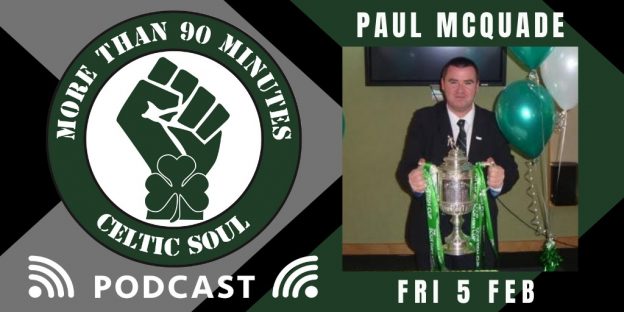
The Celtic Soul Podcast returns on Friday with the second part of our conversation with the Shamrock editor Paul McQuade. Scroll down & Click below to listen to part 1.
Andrew Milne started More than 90 Minutes in 2001. He has written for numerous publications and online about Celtic. He is a former newspaper columnist with the Daily Ireland and the man behind celticfanzine.com. He is host of the Celtic Soul Podcast & Celtic AM pre-match events at Malone’s in Glasgow on match days and follows Celtic Home & Away. He is a season ticket holder for Celtic FC and the Republic of Ireland. He is also P.R.O. of St. Margaret’s CSC, a member of the Celtic Trust and the Celtic Graves Association.
If you would like to support our Independent Celtic Fan Media Platform you can become a Member, Subscribe, Buy or Donate for the Price of a Pint. Your Support helps us continue to produce Daily News & Articles, Weekly Newsletter, Two Weekly Podcasts, Monthly Fanzine, Video Content & Live Shows.
MAN OF THE MATCH: Stephen Welsh will be delighted with himself tonight after a man of the match performance having kept his place after the comfortable win on Tuesday at Rugby Park. I was just settling in to watch the game when he scored the opening goal from a set piece. Excellent start for Celtic and the youngster, this can only give him confidence now to hold down a regular place alongside Ajer with big Jullien out injured and Shane Duffy looking more comfortable on the bench than in the box.
HONOURABLE MENTION: Greg Taylor who has come in for criticism in the past left everything on the pitch today. Plenty of commitment and deserves credit, he is now making the left back jersey his ahead of Diego Laxalt who saved our blushes with a goal line clearance in the very last second after he replaced Greg in the second half.
FIRST HALF: Celtic dominated the first half but once again numerous chances were squandered in front of the visitors goal. Failure to finish chances has cost us dearly this season.
SECOND HALF: Eddies goal and Celtic’s second was like a piece of poetry. Well worked and delivered with beauty. 2-0 easy street, well not really. Motherwell scored against the run of play and then it was heart in the mouth stuff as the seconds ticked down to the final whistle with two desperate clearances needed to save our blushes. Is it any wonder my ulcers are playing up?
REF WATCH: Nick Walsh must have forgot his red card. Two sending off offences from the visitors which only warranted yellows in his humble opinion. Scott Brown was sent off for less recently. More honest mistakes and I’m sure there will be a few more tomorrow.
CELTIC TV: Gerry McCulloch on Celtic TV commentary compared David Turnbull to Paul McStay only for his co-commentator and brother of Paul, Willie McStay to point out his brother was a different type of player in a diplomatic type of way when he really wanted to say “NO, JUST SHUT UP”, Gerry tried to save himself a little when he came back with it wasn’t him who said it but a comment on social media. Own goal Gerry!
MATCH REACTION: Stephen Welsh and Neil Lennon spoke after the game, Lenny said we were great for 70 minutes and should have scored a few more. Welsh happy, Lenny relieved.
FAN REACTION: The CSC WhatsApp and social media were quite again after another win, Tonight it’s the ref getting the grief instead of Neil Lennon, in a strange way it seems like Lenny is now in a caretaker managers role until the end of the season and Celtic remain in transition mode. If we had played like this throughout the season we could enjoy cracking open a beer tonight, still in the title race and relieved by the late, late clearance off the line!
Andrew Milne started More than 90 Minutes in 2001. He has written for numerous publications and online about Celtic. He is a former newspaper columnist with the Daily Ireland and the man behind celticfanzine.com. He is host of the Celtic Soul Podcast & Celtic AM pre-match events at Malone’s in Glasgow on match days and follows Celtic Home & Away. He is a season ticket holder for Celtic FC and the Republic of Ireland. He is also P.R.O. of St. Margaret’s CSC, a member of the Celtic Trust and the Celtic Graves Association.
If you would like to support our Independent Celtic Fan Media Platform you can become a Member, Subscribe, Buy or Donate for the Price of a Pint. Your Support helps us continue to produce Daily News & Articles, Weekly Newsletter, Two Weekly Podcasts, Monthly Fanzine, Video Content & Live Shows.
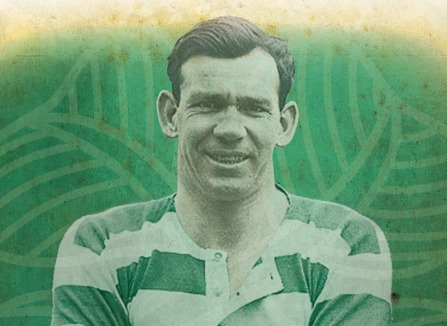
So sang the Celtic fans throughout the 1920s and 1930s. There may have been unemployment and depression, there may have been the dismal sight of the war wounded and the fear of another conflict as the funny man with the moustache rose to power in Germany, there may have been some dreadful performances on the field from Celtic . . . but there was always Jimmy McGrory.
McGrory gave the Celtic fans what they wanted _ the scoring of goals. The song which begins “They gave us James McGrory and Paul McStay” ends up with “to play football in the good old Celtic way.” He was what Celtic fans needed. He was the icon of the team. He was the man who scored the goals that sent the crowd home happy and helped them to forget the miseries of what might have been a fairly pointless existence.
He was from the Celtic stronghold of the old Garngad, and he cut his teeth playing for St Rochs. Maley, always on the lookout for new talent, was told of him and watched him. McGrory himself would say that he didn’t want to go to Celtic because of the pressure that would be put on him, but when the call came, he did not hesitate. “I grabbed my cap and ran all the way” he was reputed to have said.
It was Maley who looked after the youngster. McGrory’s own father had died in a freak accident soon after Jimmy came to Celtic in autumn 1924, and the manager, whose own family life had been far from happy, tried to be a surrogate father to the earnest young McGrory. Jimmy had attended his father’s funeral in the morning, and Maley suggested he play for Celtic in the afternoon. He did so, and scored a goal. Maley had already tried this paternal approach with Tommy McInally, but Tommy had been a bad boy and had let him down. McGrory, a decent lad from the traditional poor but honest home background, would not.
The 1924/25 campaign was McGrory’s first at Parkhead following a year in which he had been farmed out to Clydebank. It was not a great League season for Celtic, with results being inconsistent and disappointing, and it was now becoming clear that the great Patsy Gallacher was ageing. In addition, the young McGrory picked up a few injuries as he was beginning to learn some unpleasant truths about brutal defenders in the top flight of Scottish football.
But he had recovered as Celtic had reached the final of the Scottish Cup. They had done so by astonishing the world and showing their fans what they were capable of, beating Rangers 5-0 in the semi-final. McGrory had scored twice that day, but the fans really craved something more tangible. Were they to win the Scottish Cup that year, it would mean that they would have won it 11 times, once more than the record of Queen’s Park.
The opponents were Dundee, who were 1-0 up at half-time. This was the day that Patsy Gallacher scored his remarkable goal. A spectator at that game has little great recollection of that goal, as it followed a melee with loads of players involved. It all happened quickly and very few of the fans got a great view. He did, however, have a clear recollection of the young McGrory’s winner. “It was a free-kick to be te’en by “Jean” McFarlane on the left. Jean pu’ed up his stockings afore he took the kick. The ba’ cam ower and hovered ower the tap o’ the line o’ defenders and forrits. Suddenly a green-and-white figure catapulted forrit and heided the ba awae inti far corner. It was a lang time afor the crowd realised that he had scored. It happened that quick”. McGrory himself claimed that he was stunned as he hit the ground and he thought he heard thunder. It was, in fact, the roar of the crowd, greeting a monumental Celtic goal.
The full-time whistle saw great scenes of Celtic rejoicing. Not only had they won the Scottish Cup, but they had also seen the emergence of a new Celtic cult hero, in this young, shy but courageous figure. He was still trembling long after the game when Maley came in with the Scottish Cup. In those days, the Cup was presented in private to the manager and directors of the club in the board room of Hampden and the best that the fans could hope for was the sight of some of their heroes with the trophy on the team bus.
They lined the streets about eight deep that night, and great was the joy at the sight of the young McGrory holding the trophy. Maley had insisted on this. His young protege had won the Cup for the club. It was therefore right that he should be the man who carried it. “Give young McGrory the Cup” he had said.
Glory had thus begun for James Edward McGrory. Celtic fans do love a personality goalscorer, and they had clearly enjoyed this 20 years earlier in Jimmy Quinn, who had similarly marked his Celtic career with a triumph in a Scottish Cup final, namely the hat-trick scored against Rangers in 1904. There were remarkable similarities between the two Jimmies. Broad shoulders, speed, ability to jump and head, courage, wholeheartedness and, importantly, an irrepressible love of the Celtic and their supporters. “Once a Celt, always a Celt” it was said.
Jimmy Quinn had now been retired for about a decade, but was still very much part of the Parkhead scene, always there to help (unpaid) and attending every game. Like McGrory, he was modest and shy – characteristics which belied their enthusiastic and aggressive performance on the field. The elder Jimmy sought out the younger one, and offered advice, guidance and support. McGrory was possibly overwhelmed by all this. Here was this demigod seeking him out to talk to him. McGrory was delighted to discover that the man from Croy was just as shy as he was, but the two of them struck up an immediate rapport, and now McGrory had the greatest advice going.
He was also very quickly a Glasgow personality. Walking down the street was now a difficult operation as supporters sought him out to talk to him. Less pleasant ones would beg tickets or even money from him, and there would always be the odd abusive comment from a supporter of the other side. The kind-hearted Jimmy always found it difficult to deal with unpleasant people, and it would perhaps explain why he was never the greatest of managers in later years.
The year after the momentous Scottish Cup triumph saw the winning of the Scottish League. Patsy Gallacher had now gone, but in his place had returned the great Tommy McInally. The football played in that year was absolutely superb, McGrory scored 52 goals and the supporters were perpetually in raptures. The creative among the support made up songs for every member of the side, but the chorus was always:
“McGrory, McGrory, Hallelujah!
The Celts go marching on”.
But things would not stay as good as that forever. Rangers had a fine side as well, and although McGrory seldom fell short of the mark, several other departments of the team did not do so well. McGrory was injured in the latter part of the 1926/27 season and thus missed another Scottish Cup final, but there had been compensation in the winning of a couple of caps for the Scottish League. Speculation was rife about the possibility of a full international cap for Scotland.
The problem was a man called Hughie Gallagher, a superb centre-forward for Airdrie and Newcastle United. It was difficult to unseat him, as he was such a prolific scorer, but McGrory’s chance came on 25 February 1928 when he was chosen to play for Scotland against Northern Ireland at Firhill. It was felt that he could hardly be ignored, as six weeks previously he had set up a record by scoring eight goals in a single game against Dunfermline Athletic.
Playing for Scotland was a great honour, but Celtic fans were often very cynical about the lack of caps for their own players. Sunny Jim Young, for example, had only played once for his country, and although the great Jimmy Quinn had won the day for Scotland against England at Hampden in 1910, in both 1908 and 1912 he had been played on the left wing out of position to accommodate someone who was not quite so good. In any case, many Celtic supporters made it clear that they were Irish rather than Scottish.
Jimmy’s first big day for Scotland was a disaster. Scotland lost 0-1 to Northern Ireland, and that was considered a disgrace for a country that, not without cause, considered itself the best in the world. Scapegoats had to be found, and although Jimmy was not the only failure, he was not invited to play again for the national side for some time, the centre-forward’s spot returning to Hughie Gallacher for Scotland’s most famous International of all, the 5-1 Wembley Wizards’ beating of England on 31 March 1928.
It would be less easy to explain some of his other omissions from the Scotland squad, in particular why he never played for Scotland against England at Wembley. In 1930, 1932, 1934 and 1936, Scotland travelled to London without McGrory. Apart from the last mentioned which was an honourable draw, these games ended in dreadful defeats in which England took full revenge for the Wembley Wizards game of 1928 which hurt them so much. Celtic fans could not understand it, and did little to hide their glee as Scotland were defeated time and time again while the solution to the goalscoring problem was ignored. In 1930 Jimmy Fleming of Rangers got the nod, in 1932 it was Neil Dewar of Third Lanark, 1934 saw the surprising recall of Hughie Gallacher and in 1936 came the astonishing choice of David McCulloch of Brentford. With all due respect to these men, they were not a patch on James McGrory.
Such was the paranoia of Celtic fans that the non-selection of McGrory was seen in terms of anti-Celtic or anti-Catholic prejudice. There may have been something in that in the minds of certain selectors, but it is more likely that incompetence rather than bigotry was responsible. McGrory did play twice for Scotland against England at Hampden. On both occasions Scotland won and McGrory scored. In 1931, in front of Labour Prime Minister Ramsay MacDonald, McGrory netted in the 2-0 victory, and in 1933 he scored twice, the second the late winner when he picked up a pass from his friend Bob McPhail of Rangers and hammered home the goal which created the Hampden Roar and was heard clearly on the other side of the city. These two great McGrory occasions, which raised his cult status to all of Scotland rather than just among Celtic fans, did little, however, to answer the question of why he was never given a chance to play for Scotland at Wembley.
Apart from the games already mentioned, he played twice each against Wales and Ireland. On the three of these four occasions he scored, which makes it even harder to explain why the great Jimmy McGrory played only seven times for Scotland.
But there was never the slightest doubt that he could produce the goods for Celtic, and the affinity he had with Celtic and their fans was proved in the incident when the despicable Maley tried to sell him. It was despicable because there was a slight feeling of underhandedness and subterfuge about it all. Maley and McGrory, good Catholics both, were going on a pilgrimage to Lourdes in the summer of 1928. As if by chance en route in London, they met Herbert Chapman, the newly appointed manager of Arsenal, a man with unlimited funds at his disposal to awaken the sleeping and grossly wealthy giant that was Arsenal. The sum of £8,000 (huge in 1928) was offered on the way down. The two managers were in agreement, but McGrory, the home-loving Celt, refused. On the way back from Lourdes, they all met again and this time the offer had been raised to £10,000, then more or less a blank cheque, with McGrory virtually asked to name his own terms. He still said no.
The background to all this was the need for Celtic to build their new stand at the London Road side of the ground. Celtic required money, and the transfer of their most priceless asset was required to pay for it all. Celtic without McGrory would have been completely unthinkable, but no more so than McGrory without Celtic. As he said himself: “McGrory of the Arsenal would not have sounded anything like McGrory of the Celtic.” When this story became known, McGrory was loved even more, if that were possible.
The goals continued to rain in. A grand total of 550, with 410 of them in the Scottish League, sounds impressive, but even that does not take into account the quality of the goals scored. As with so many strikers, a large percentage were simply tap-ins because of his ability to be in the right place at the right time, but so many were far more aesthetic than that. A high proportion were headers, as McGrory possessed the ability to time a jump, and he had powerful neck muscles, propelling it netwards as if it had been kicked. A goal scored at Arbroath in 1936 is much remembered. The ball was bobbing about on the edge of the penalty area about knee height, when McGrory hurled himself forward to head the ball home from about 18 yards.
One curses those who were far too late in inventing videos and DVDs, for very few, if any, of McGrory’s great goals are available for us to see. Ironically, one that is visible is the only goal of the 1933 Scottish Cup final against Motherwell, and it was a simple tap-in, a goal which he himself would dub in later years “the saftest o’ the faimilie” after the famous Harry Lauder song of the time.
In addition to his other attributes, Jimmy was also fearless. Not all the defenders in Scottish football were as sporting as he was, and he was not infrequently the object of brutal tackles from those who knew of no other way to stop him. There were some fair players as well, not least his great adversary Davie Meiklejohn of Rangers, with whom he retained a good relationship until Davie’s untimely death in 1959. Then there was the legendary goalkeeper of Queen’s Park and Hearts, whose very name is a byword for fair play. This was Jack Harkness.
There was the famous occasion at Parkhead when McGrory dived to head home, but the ball flew over the bar. Harkness momentarily relaxed, but then saw that McGrory’s head was about to collide with the upright. He dived and diverted McGrory’s head to one side of the post, thus preventing a serious injury. To the Celtic crowd, however, it looked bad and McGrory’s words of “Thank You, Jack” looked from a distance like a threat. Everytime thereafter that Harkness touched the ball, he was booed for his apparent violent assault on Parkhead’s darling Jimmy McGrory. The following week, McGrory made sure that the true version of events was printed in the programme, and every subsequent visit to Parkhead after that saw Jack Harkness cheered to the echo.
Harkness himself always told the tale of how one day he was walking down Buchanan Street in Glasgow when he saw McGrory on the other side of the street. McGrory nodded to him, and such were Harkness’s reactions that he dived into the gutter hoping to save the imaginary ball. This story, one presumes, was not entirely true, but the fact that it was repeated on many occasions at functions and dinners did give some indication of how popular and well known a figure Jimmy McGrory was.
The year of 1931 was momentous. Not only did Jimmy get married, and tour the United States and Canada, but also he was involved in one of Celtic’s most famous Scottish Cup finals, the epic struggle against Motherwell and its replay. Celtic were two goals down to a great Motherwell side, and supporters looked up at the huge clock which used to hang from the South Stand at Hampden and watched the minutes ticking away. McGrory had been subdued, but then a Napier free-kick was lofted over the heads of the defence and Jimmy was there to give a lifeline. McGrory disdained all congratulations and celebrations and ran back up the field pointing to the clock and telling everyone that eight minutes remained to be played.
Once again, Motherwell dug in and looked to have weathered the storm until the very last minute, when a cross came over from the right. Everyone rose for the ball, as the Motherwell defence could not take the risk of leaving it for the peerless McGrory. But it was not McGrory who scored. It was his marker, Motherwell’s centre-half Alan Craig. “McGrory’s peal of delight was heard in the stand”, but he was also the first to comfort the luckless and distraught Alan Craig. In the replay, McGrory scored twice as Celtic ran out 4-2 winners.
There were bad times as well. The deaths of John Thomson and Peter Scarff cast a huge shadow over Celtic Park for several years, as indeed did the Depression and its consequent unemployment which seemed to hit Celtic supporters particularly hard. McGrory could usually be relied upon for a goal, but he was now getting older and increasingly injury prone as Celtic failed to make any impact on Rangers’ supremacy.
Far too often we read in accounts of dismal performance before poor crowds in 1934 and 1935 that “McGrory ploughed a lonely furrow”, “McGrory waited for the ball that never came”, “Celtic’s one-man forward line ran aground again”. The crowds dropped to alarming levels, with Maley berating publicly both the players for not living up to what they could be, and the crowd for not turning up in sufficiently large numbers to support them. Nostalgia for the great days of Jimmy McMenemy, Patsy Gallacher and Jimmy Quinn was the order of the day.
But the tide turned as it was always likely to with McGrory around, and by season 1935/36, Jimmy’s 13th in professional football, another superb Celtic team had emerged. McGrory at last had the support that his talents deserved, and the forward line of Delaney, Buchan, McGrory, Crum and Murphy was a truly phenomenal one. Buchan and Crum were superbly tireless inside-forwards, and the wing play of Delaney and Murphy was excellent. McGrory himself would later claim that all he had to do was to be there and the goals would come.
In this, Jimmy does himself less than justice, as a feature of that forward line was their ability to interchange, and that included McGrory, who would frequently appear on the left wing, in the inside-right position or even drop further back to change places with centre-half Willie Lyon for a spell. But he would never stray for long far from the centre-forward position where all the action was.
He scored 50 goals that season, as the Celtic fans rejoiced in the rebirth of their team. The crowds were now flocking back, for indeed the worst of the recession was over, and the standard of play was scintillating. McGrory’s admirers ran out of nicknames for him – “King James”, “The Golden Crust”, “The Goal-Scoring Machine” – as the goals kept coming. The team had a few stutters, notably when they crashed shockingly out of the Scottish Cup in February to St Johnstone, but League form remained impressively consistent. McGrory’s greatest day that year would be on 14 March when in a game against Motherwell he scored three times in three minutes in the middle of the second half, one of the quickest hat-tricks of all times.
“But, wait a bit, don’t be so fast,
We’ve left the star turn till the last,
There in the midst o’ a’his glory
Goal a minute James McGrory!”
This was the season in which McGrory beat the goalscoring record. In fact, he did it twice, as a mistake had been made by those who totted up the scores for records. On 19 October 1935, he overtook Steve Bloomer’s record of 352, and everyone congratulated him until someone discovered that Hugh Ferguson had scored 364 goals. It mattered little, as on midwinter’s day, 21 December 1935, Celtic beat Aberdeen 5-3 and McGrory’s brace was enough to bring him up to 366, one of them being the goal that was Jimmy’s own favourite.
This time a seemingly irresistible tide swelled up for the inclusion of McGrory at Wembley. Now, as he approached his 32nd birthday, it did not take a genius to work out that he would not have many more chances of representing his country at Wembley, and no-one could say that he was not at the top of his game. “I can confidently predict that McGrory has already been pencilled in and will be in the team to-night, along with young Delaney” said a journalist the day that the team was to be announced. But the confident predictions proved false.
Still, McGrory continued to score his goals for Celtic, and the League was won for the first time in ten years, with Jimmy the only man to bridge those two momentous years of 1926 and 1936. It is often said that McGrory was the man who made the Celtic fans forget. Forget, that is, the horrible reality that existed in the world away from Parkhead. He had been with Celtic through the labour problems associated with the General Strike and its revengeful, vindictive aftermath, through the unemployment of the early 1930s, and now his role was surely to help them forget about the international situation. The strident bullies of Nazism were spoiling for another war, oblivious, perhaps, or little heeding, the potentially awful consequences and presumably little aware of the crowds of war-blinded or those in wheelchairs who attended Celtic’s home matches at Parkhead and whose only real joy in life was the sight of another goal for Jimmy McGrory.
Nightmare scenarios abounded of aerial devastation, of appalling casualties, of the famines and plagues predicted by the Four Horsemen of The Apocalypse as the football season for 1936/37 began. War was already under way in Spain, and it was difficult not to believe that it was coming to the rest of us soon. This would be Jimmy’s last full season for the club. Celtic were unlucky not to retain the Scottish League, but there was ample recompense in the shape of the Scottish Cup, won in an epic final before a record crowd against the black-and-golds of Aberdeen in April 1937. It had been hoped that McGrory might score in the final as he had done in 1925, 1931 and 1933, or even score a hat-trick which would put him in the same bracket as Jimmy Quinn, but it was not to be. He may have been disappointed, but he needn’t have been. He had now collected four Scottish Cup winners medals, and his popularity remained untarnished.
He did not play many games for the club in 1937/38 as injuries were now taking a longer time to heal. On the other hand, Maley felt that even a half-fit McGrory at the age of 33 was better than anyone else and felt that another year could be eked out of him. No-one realised it at the time, but Jimmy’s last game for the club was against Queen’s Park in October 1937. He was yet again injured in that game, and disappeared from the team. In December Kilmarnock approached him to become their manager.
There is a certain amount of circumstantial evidence to indicate that Willie Maley was not best pleased with McGrory’s departure, even though the amount of injuries that he was sustaining would make one think that the decision was the right one. Luck would have it that his first game as manager of Kilmarnock was at Celtic Park on Christmas Day 1937. He received a tremendous cheer from the Parkhead faithful as he took his seat in the directors’ box (where managers sat in those days), but Celtic them proceeded to thump Kilmarnock 8-0, with Maley clearly revelling in the discomfiture of his old protege who had dared to disobey him.
It being McGrory’s first game in charge, he could hardly be blamed for it all, and very soon revenge came McGrory’s way. Having by now learned a little about his own Kilmarnock players and also knowing that some of his old team-mates would take the game too lightly in the wake of the Christmas Day result, he was able to mastermind a Scottish Cup upset by beating Celtic 2-1 at Parkhead.
It was the reaction of his old boss that astounded him. Although men like Jimmy Delaney and Willie Lyon shook his hand in sporting congratulation in spite of their disappointment, Maley ignored him even when Jimmy went upstairs to his room to talk to him. Yet Maley was the man who repeatedly said: “It is our proud boast that we can taste the fruits of victory in the same spirit as the bitterness of defeat”. In fact, he never had any huge problem in admitting that, on occasion, Rangers or Motherwell had been the better team. It was the fact that McGrory was an old Celt, a cult hero, that hurt. It was noticeable, too, that when Jimmy Quinn died in 1945, Maley went out of his way to stress that Quinn was the “best” and the “greatest” in circumstances that seemed to be a point being made to McGrory.
In truth, Jimmy McGrory was no manager. He took Kilmarnock to the Scottish Cup final in 1938, but they lost a replay to East Fife, and when, after the war, he took over at Celtic Park, his record over the next 20 years was a poor one for a team of Celtic’s standing. His triumphs were as spectacular as some of the goals he scored – the all-British Coronation Cup of 1953, the 7-1 beating of Rangers in the 1957 Scottish League Cup final and a glorious League and Cup double in 1954 – but they were not nearly as many.
He was, of course, in some ways a glorified office boy for the dictatorial and ineffective regime of Bob Kelly, whose say over everything including team selection and team tactics was almost total. McGrory was far too nice a man to cause trouble, and went along with all that Mr Kelly said. It would be a different matter from 1965, after Jock Stein took over.
It was the fact that McGrory had been and remained a cult hero for Celtic that allowed Kelly and his henchmen to exploit this situation so cynically. It was very difficult for supporters to get angry at the saintly Jimmy, whose presence in the directors’ box, smiling benignly at all concerned as he puffed away at his pipe, or on a train journey to Aberdeen as he was seen in the restaurant car of the train enjoying his lunch, seemed to sum up all that was old and beautiful and almost sacrosanct about Celtic. A verbal broadside on McGrory would almost be like shouting at one’s granny. It was simply one of those things that was not done.
Yet results continued to be poor and disappointments intense. The inability to win the Scottish Cup in 1961 and 1963 (both finals went to heart-rending replays) led to massive street disturbances in August 1963 after a feckless game against Queen of the South. After it became known, however, that chairman Bob Kelly was away having attended the reserve game at Dumfries, the heat was taken out of the situation, as no-one felt like shouting at Jimmy McGrory. It was like the way that a garage proprietor, when he is aware that he has not done a job adequately and sees the irate customer approaching, will send out a sweet-faced 17-year-old girl to deal with the situation, knowing that it will be very difficult for the customer to rant, rave and swear at her.
It was arrant cowardice on the part of the Celtic board to hide behind their great hero. But the remarkable thing was that the hero status of McGrory did not diminish. Even after Stein took over in 1965, McGrory, by now in his early sixties, was not put out to graze, but given the loosely defined job of public relations officer, a move that was way ahead of its time and a job for which the kindly McGrory was eminently suited.
He continued, although plagued with ill health, to work until 1979 when he retired officially. He died in October 1982, an event which provoked an orgy of mourning among football fans everywhere, even among those far too young to have seen him play. Such was the cult status that he achieved – and it is no accident that in the Willie Maley song, much loved by the Celtic fans, that it is the name of Jimmy McGrory which comes first:
Born in 1948, David Potter first saw Celtic at Dens Park, Dundee in March 29. It was a 3-5 defeat, which equipped him admirably for the horrors of the early 1960’s. He had “followed” Celtic for a few years before that and recalls having been called upon to impersonate Jock Stein and receive the family silver teapot which had to do for the Scottish Cup as it was presented on April 24 1954, after he and his father had spent a nerve wracking afternoon listening to the radio! Since then, he has “followed” every Celtic game with bated breath, and has written extensively about the club in magazines and books. His favorite team was that of 1969 (which he rates marginally better than 1967) and his favorite player was Henrik Larsson.
His ambition for Celtic is for them to keep on winning silver in Scotland and to be something in Europe once again. His other interests are cricket and drama. He is 70, a retired teacher of Classical Languages, married with three children and five grandchildren. He now travels on the Joseph Rafferty bus from Kirkcaldy. He also loves Forfar Athletic.
If you would like to support our Independent Celtic Fan Media Platform you can become a Member, Subscribe, Buy or Donate for the Price of a Pint. Your Support helps us continue to produce Daily News & Articles, Weekly Newsletter, Two Weekly Podcasts, Monthly Fanzine, Video Content & Live Shows.
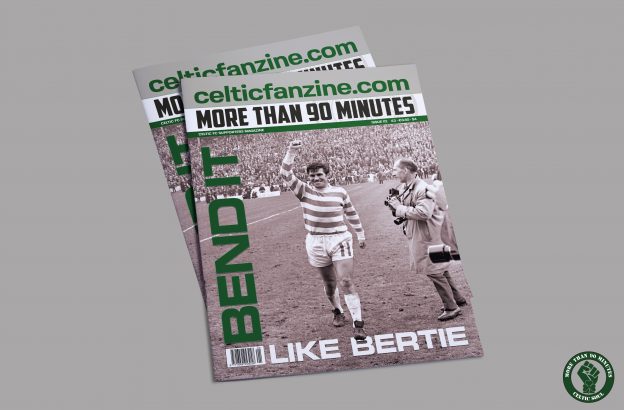
The Legendary Bertie Auld graces the cover of the new edition of More than 90 Minutes as we enter our 20thyear of publishing the fanzine. The cover picture shows Bertie with his hand raised with clenched fist after Celtic beat Rangers 4-0 in the 1969 Scottish Cup Final. Our regular columnist, John Fallon was outstanding between the sticks that day and there is no better man to write about our cover story than Celtic Historian David Potter.
As 2020 came to a close we pay tribute to a great supporter of Celtic and indeed our little publication, John Wilkes after his sudden and sad passing before Christmas. John lived for family, friends and football. We also pay tribute to former Celtic player, Tommy Docherty and the greatest of them all Diego Maradona.
Former Celtic player Dougie McGuire joins Spanish based Celtic fan and author, Scotty Alcroft in conversation while Eire Go Brach CSC member and home and away days regular, Michael McGurk is our Fan in Focus.
As mentioned above Celtic Legend, John Fallon is back with his no holds barred column on all things Celtic. Trust me age has not mellowed the Original Holy Goalie who has seen and done it all from childhood Celtic fan to an amazing medal haul in the most famous Celtic team of all time before playing against Celtic for Motherwell and then returning to Celtic Park as a fan once again.
With tensions running high among Celtic fans with all that’s going on at Celtic on and off the park, Glasgow based columnist, Mick Kane writes about how The Celtic support have brought about a change of regime before and can do it again.
Dublin based columnist Eoin Coyne asks questions on what has gone wrong as the title looks to have been handed to the Rangers without little resistance by the New Year in what should be a historical season and the one that delivered the 10IAR. While fellow Dub, Ciaran Kenny looks back at a Cup Final like no other and the remarkable Quadruple Treble.
Celtic Author, Liam Kelly writes about the Donegal field that has become a Celtic landmark while Potters Player features Jamie Weir and Paddy McMenamin looks back at the Ibrox Disaster.
Plus, all the regulars including Editors Desk, Since Last Time, Snap and Tim Molloy.
If you would like to support our Independent Celtic Fan Media Platform you can become a Member, Subscribe, Buy or Donate for the Price of a Pint. Your Support helps us continue to produce Daily News & Articles, Weekly Newsletter, Two Weekly Podcasts, Monthly Fanzine, Video Content & Live Shows.
Paul McQuade is the Editor of the Shamrock Fanzine. He is also the man behind the Walfrid Walking Tours and is one of the founding members of the Celtic Graves Association. He has written three books on Celtic, Said Lizzy To Philip How Celtic Gate Crashed the Coronation, This Is How it Feels to be Celtic an account of the Invincible Season and a book of Celtic Quotes. He is currently writing a biography of Johnny Doyle.
Paul and Andrew chat about the current situation at Celtic while Paul reflects back on his formative years growing up and starting on his Celtic supporting journey. Johnny Doyle died on his 11th birthday and he now finds himself writing a biography of the player. As a youngster he waited outside the stadium to get Mo Johnston’s autograph, he has no plans to write a book on him.
His love of Celtic and Celtic’s history started at a young age when he was gifted a collection of books on Celtic and started to travel on supporters buses. He chats about selling Not the View during his University years in Edinburgh and the story telling that he has enjoyed from fellow Celtic supporters over the years. The 90’s may have been bad but you have to chuckle when he mentions Tony Mowbray’s testimonial when we were singing “Always look on the bright side of life”. A Monty Python moment!
Player recruitment and the policy of interference going back to Gordon Strachan’s time as manager get questioned and the fans stories of buses and away trips to Europe which may well lead to a book, Paul recounts stories like the bus that crossed the Alps from Turin after the windows were put in and takes us right back to the Celtic Brake Clubs who were the originators of Football Away Days
Like his pal, Brendan Sweeney, Paul’s research for his books is amazing and that shines through in this conversation with his knowledge and love of Celtic. Both Paul and Brendan are just two of the founding members of the Celtic Graves Association and it was great to see how it came about and the work they and the other volunteers have done since then and the famous names they have honoured and remembered.
Paul also takes us on a Virtual Walfrid Walking Tour starting at Celtic Park which leads us then through the streets of the East End of Glasgow from the 1870’s onwards which is a fascinating listen.
Andrew Milne started More than 90 Minutes in 2001. He has written for numerous publications and online about Celtic. He is a former newspaper columnist with the Daily Ireland and the man behind celticfanzine.com. He is host of the Celtic Soul Podcast & Celtic AM pre-match events at Malone’s in Glasgow on match days and follows Celtic Home & Away. He is a season ticket holder for Celtic FC and the Republic of Ireland. He is also P.R.O. of St. Margaret’s CSC, a member of the Celtic Trust and the Celtic Graves Association.
If you would like to support our Independent Celtic Fan Media Platform you can become a Member, Subscribe, Buy or Donate for the Price of a Pint. Your Support helps us continue to produce Daily News & Articles, Weekly Newsletter, Two Weekly Podcasts, Monthly Fanzine, Video Content & Live Shows.
Celtic were the slight favourites for this game (they had already beaten Rangers in a League match) but no-one could ever have predicted what the score was going to be, nor the extent to which Celtic quite simply outplayed their rivals with a dazzling display of attacking football. It was one of the very few days when the talented players in that Celtic team all played to their maximum potential. It is scarce an exaggeration that Rangers were lucky not to be on the receiving end of double figures.
It was a fine autumnal day but the crowd was possibly less than might have been expected thanks to a flu epidemic that was raging in central Scotland. Strange to relate, neither Celtic nor Rangers were at the top of the Scottish League, a position held by Hearts and one which would continue to be held by the Tynecastle men for the rest of the season.
Celtic started off playing towards their own supporters at the King’s Park end of the ground and the major surprise was that it took them 23 minutes to score, a head down from Billy McPhail to SAMMY WILSON who lashed home. By half-time they had scored again, this time a tremendous move on the left finished off by a great drive from NEIL MOCHAN. Thus the interval was spent with the Celtic end of the stadium in uproar and a few bottles flying from the other end.
Yet the euphoria was tempered by the thought that Rangers might yet fight back. They were surely not as bad as all that? Oh yes, they were. BILLY McPHAIL headed home a Bobby Collins cross, and then Rangers had their brief moment of glory when Billy Simpson headed one to give them some hope, but then Celtic simply took over, totally eliminating the Rangers midfield and with McPhail in particular running past the luckless John Valentine as if he did not exist.
McPHAIL scored the fourth in a goalmouth scramble and the sixth (running half the length of the pitch to do so) to give him his hat-trick, and MOCHAN scored the fifth with a rocket. By this time the game had ceased to be a contest with the Rangers players looking for the sanctuary of their dressing room and huge gaps appearing at the Mount Florida end.
And then just on the whistle referee Jack Mowat (ruthlessly fair as always) gave Celtic a penalty kick when they scarcely needed one and WILLIE FERNIE slotted home. A few minutes later, the grinning Bertie Peacock lifted the trophy. It was a day that no-one on either side was ever likely to forget, and the tragedy was that we did not see these performances oftener.
Some 15 minutes or so after the final whistle, a knock came to the door of the Celtic dressing room. Two gentlemen wished to give their congratulations. They were two of the very few survivors of the great Celtic team of 1908. One was Davie McLean, a utility forward who sadly could not command a regular place in the team because he was not quite good enough to displace Jimmy Quinn. (Who could?) But the other was Jimmy “Napoleon” McMenemy who some people consider to be an even better player than Patsy Gallacher – and that is saying something! Both McLean and McMenemy affirmed that the 1957 League Cup final was one of Celtic’s best ever performances. Coming from Napoleon, that counts for a great deal!
It was Celtic’s second Scottish League Cup triumph, and the score still remains a record for a major Cup final in the British Isles. It will be talked about for as long as anyone will talk about Scottish football. I had just celebrated my 9thbirthday, and my mother and father were of the opinion that I was just too young to go to that game. Sadly, as far as I know, all the players of both sides have now passed on – but please someone correct me on this if I am wrong! – and even the spectators will now be wearing pretty thin. This is a shame, so I would advise anyone who was there to write down his memoirs of that great day!
A few years ago, by sheer chance at a cricket match in Prestwick, I happened to meet Johnny Hubbard who played on the left wing for Rangers that day. He was charming and told me all about men like Struth, Symon, Young and Woodburn (some of whom he disliked) and also about the art of taking penalty kicks at which he excelled. But when I mentioned this game, he seemed quite happy to change the subject! He did however eventually admit that he hardly got a kick of the ball that day, and said that no-one of earth could live with Celtic on that form!
Born in 1948, David Potter first saw Celtic at Dens Park, Dundee in March 29. It was a 3-5 defeat, which equipped him admirably for the horrors of the early 1960’s. He had “followed” Celtic for a few years before that and recalls having been called upon to impersonate Jock Stein and receive the family silver teapot which had to do for the Scottish Cup as it was presented on April 24 1954, after he and his father had spent a nerve wracking afternoon listening to the radio! Since then, he has “followed” every Celtic game with bated breath, and has written extensively about the club in magazines and books. His favorite team was that of 1969 (which he rates marginally better than 1967) and his favorite player was Henrik Larsson.
If you would like to support our Independent Celtic Fan Media Platform you can become a Member, Subscribe, Buy or Donate for the Price of a Pint. Your Support helps us continue to produce Daily News & Articles, Weekly Newsletter, Weekly Podcasts, Monthly Fanzine, Video Content & Live Shows.