Author Archives: celtic

Across the Western Ocean

Our latest Pin Badge offering now available

Thousands are sailing
Across the western ocean
To a land of opportunity
That some of them will never see
Fortune prevailing
Across the western ocean
Their bellies full
Their spirits free
They’ll break the chains of poverty
And they’ll dance
The Pogues 

Thousands Are Sailing Badge

5.00

Includes Worldwide Postage & Packaging

No Hidden Charges

Thousands Are Sailing Badge

e/


Still a handful of the Limited Edition

Thousands Are Sailing T-Shirts Available

19.99

THOUSANDS ARE SAILING SCREEN PRINTED T-SHIRT.

All Prices Include Worldwide Postage and Packaging

No Hidden Charges

Thousands Are Sailing T-Shirt (Pre-Order Includes FREE Badge)


More than 90 Minutes


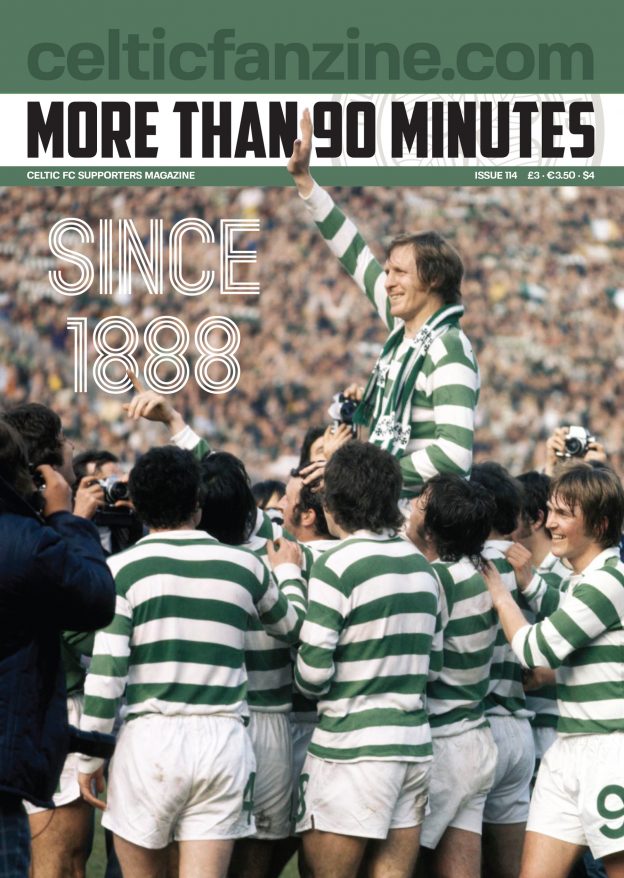
More than 90 Minutes Issue 114 is now available in both print and digital format. The print edition arrived last night from the printers and has been posted out to members, subscribers, sponsors and all those who pre-ordered. The last 6 editions of the print fanzine sold so order now to secure your copy and we will get the post man to drop it through your letter box. Click into link to order.

  • Cover Story: Billy McNeill
  • Opinion: Celtic Trust Share Proposal – Celtic have left us Deflated- Rip out the Deadwood and Modernise
  • In Conversation: Didier Agathe – Daniel McGowan (World Thai Boxing Champion)
  • Away Days: Stuttgart 2003
  • History: William McGonagle – Nazi Leader in Scotland- The First Post-War Trophy- Patsy Gallacher
  • Regulars: Since Last Time – Scoby – Editors Desk – Snap – John Fallon (Holy Goalie Column) – GOAL! – Tim Molloy

More than 90 Minutes Issue 114 Print Edition


If you can wait for the postman, you can also download the latest edition of the fanzine for a bit of quality Celtic reading. We promise more than just headlines or articles cut and pasted from the Sun & the Record. Click link below to buy, thank you for supporting Independent Celtic Fan Media.

More than 90 Minutes Issue 114 Digital Edition


Without match day sales it would be impossible to keep the print copy going without the support of fellow Celtic fans Thanks to all our sponsors including the many CSC’s throughout the World and special thanks to all our subscribers around the globe. If you would like to Subscribe please click link below subs start at 5.99.

https://celticfanzine.com/product-category/monthly-print-subscription/


Season Books, Shares & Standing Up to the SFA


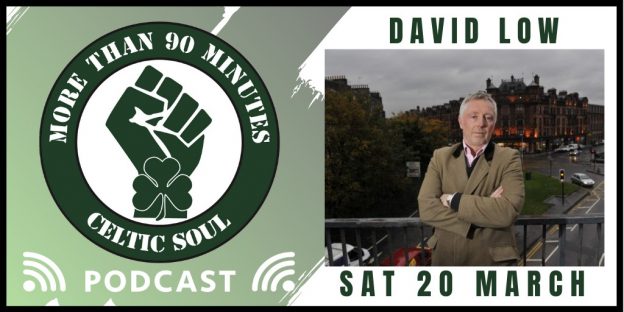
Celtic Soul Podcast Episode 58 with More than 90 Minutes, Editor Andrew Milne chatting to David Low

David Low is Chair of the Celtic Trust. He is a Celtic fan and has been lucky enough to enjoy not one but two 9IAR’s and see Celtic reach 2 European Cup finals and enjoyed the recent quadruple treble. He was involved with Fergus McCann back in 1994 when the rebels won and the old board was ousted. He was a consultant at Celtic during the McCann years which saw Celtic Park redeveloped and Celtic stop Rangers doing the 10IAR.

Annual Magazine Subscription


A lot has happened since January when David last chatted to Andrew on the Podcast. Neil Lennon has left the dugout, Peter Lawell is getting ready to leave the directors box and we await the arrival of new CEO Dominic McKay as we wait to see who will become our next Manager.

David and Jeanette Findlay represented the Celtic Trust with a meeting with Celtic, CEO Peter Lawell, Financial Director, Chris McKay and Supporters Liason Officer John Paul Taylor recently and he talks about what was said and proposed at the meeting.David quickly explains how the PLC works before going into detail of one of the major talking points of the meeting when the Trust made a proposal to Celtic to compensate the season ticket holders from this season with the option of a gift of shares to the value of the season ticket after you take out the costs of the virtual season ticket.

Covid19 and the fallout will continue to have an impact on Celtic and the greater football World David thinks that it may excelorate a European Super League and a chance for Celtic to play outside of Scotland and this was also touched on at the recent meeting in Celtic Park.

More than 90 Minutes Issue 114 Print Edition (Pre-Order)

Andrew asks David to switch from his Celtic fans hat and his financial background on occasions as the conversation flows from what could and should happen at Celtic and in the wider football community with the likes of European Super Powers like Barcelona and Real Madrid heading  into serious financial troubled waters.

They touch on the management vacancy at Celtic, player exit and maybe more departures from the boardroom. On the new CEO, Dominic McKay who David does not know personally but he says one of his business partners does and he gives his opinion on what he does know of him and he looks back at all the CEO’s who have served the club since Fergus McCann took up that position in the boardroom.

Peter talks about recent statements and the growth of the Celtic Trust their current shareholding and the targets they are setting and goals they want to achieve to give Celtic fans, a greater say in the running of Celtic.

They also touch on Celtic v the Rangers, Glasgow Derby and David climbs back into the Celtic Soul Time machine again, this time Andrew asks him to take us back to his time as a consultant at Celtic. This leads to David having a pop at the SFA for their treatment of Celtic including how they ripped Celtic off when renting Hampden and also how Fergus McCann stood up to the SFA and how the Suits at the club should be nowhere near the Tracksuits.

If you would like to support our Independent Celtic Fan Media Platform you can become a Member, Subscribe, Buy or Donate for the Price of a Pint. Your Support helps us continue to produce Daily News & Articles, Weekly Newsletter, Weekly Podcasts, Monthly Fanzine, Video Content & Live Shows.

https://celticfanzine.com/join-us/

https://celticfanzine.com/product-category/monthly-print-subscription

https://celticfanzine.com/shop/

https://celticfanzine.com/donations-page/

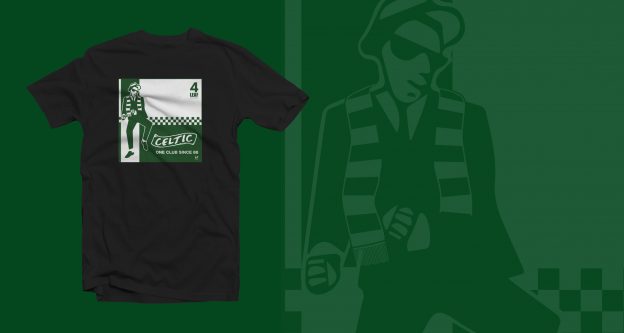
Rude Bhoys – Celtic Since 88 (Pre-Order)


Henrik Larsson – The Weekend Long Read


The Rangers fans in the pub thought it was funny. “Who the f*** ‘s this they’ve got noo?” they asked derisively at the sight of Celtic’s new substitute. Dreadlocks gave a slightly feminine look to his face, and as he was being brought on as a substitute in Celtic’s first game of the 1997/98 season, various homophobic words of scorn were heard from the ill-educated. It was against Hibs at Easter Road, and Celtic were struggling.

Even greater was the scorn of the ill-mannered lads in blue when Larsson conceded possession with virtually his first touch of the ball and Hibs ran up and scored what proved to be the winner. Celtic, who had now lost nine League championships in a row, looked as if they had taken the first step towards losing their tenth. Catatonic despair reigned among the Celtic faithful.

It had been new manager Wim Jansen who had brought Larsson to the club from Feyenoord, where latterly he had been far from happy. Celtic fans, who at the beginning of the summer had heard of neither Jansen nor Larsson, were already resigned to a season of frustration, or at least to a long period of adjustment. There had been other buys as well – Darren Jackson, Craig Burley for example – and the new manager had to be given a reasonable chance. But this new centre-forward with the funny hairstyle did not look the part.

More than 90 Minutes Issue 114 Digital Edition

It was probably too early for despair, but despondency was in the air. If ever Celtic needed a cult hero it was now. The nine years without a League title had been deeply wounding, and these dreadful times had been characterised by the rise of quite a few “false messiahs” who had threatened to become the new personality that the support all craved – only for personal, emotional or temperamental problems to get the better of them. Paolo di Canio, Pierre van Hooijdonk and Jorge Cadete, talented players all, saw the beckoning finger of Parkhead immortality. One after another, each one of them threw it all away.

So Parkhead in August 1997 was akin to a spiritual desert. Not a physical desert – a new stadium was almost completed – nor a financial one, as Fergus McCann and his share issue were pouring money into the club. What the fans craved, however, was success and a cult hero, a personality to deliver it to them. There were those who said with a straight face that they, literally, could not face the taunts of “ten in a row” that were being rehearsed at Ibrox, and that they would not stand for it. Presumably this did not mean suicide, or even emigration, but it did hint at taking up a new hobby instead of football. The stakes were high, indded.

Rangers winning ten in a row would have destroyed a great deal of what Jock Stein had done. The great Celtic team had won the championship from 1965/66 until 1973/74, and now craven, spineless and misguided stewardship of the Celtic club had thrown this record away. The stewardship of the club was now much better, but success on the field had not yet arrived. Celtic supporters could not take much more. Where was the Deliverer?

He was, in fact, the man with the dreadlocks. A brilliant flying header to score at McDiarmid Park, Perth, a few weeks after his unfortunate Celtic debut was the launch of a truly great Celtic player and goalscorer. Slowly the team recovered from its dismal start to the season, and by the end of November, silverware returned to Celtic Park in the shape of the Scottish League Cup, won at Ibrox with a competent 3-0 victory over Dundee United. Larsson had excelled that day, scoring one of the goals and always being instrumental in the creation of some fine forward play.

Annual Magazine Subscription

This had followed a European experience against Liverpool in which Celtic had proved themselves to be at least the Merseysiders’ equals, even though they had gone out on the away-goals rule. Celtic and Larsson’s day against Liverpool would come, but in the meantime there was a thrilling chase for the Scottish League Premier Division title, in which Celtic, Rangers and Hearts challenged each other with spellbinding ferocity.

It was the best Scottish season for some time. Celtic lost to Rangers in the Scottish Cup semi-final, then went down to them in the League the following week in April, and things looked distinctly gloomy. About this time Hearts blew up, as they were always likely to do, but Celtic recovered from their defeats to Rangers, and inspired by Larsson reached the penultimate week of the season needing only to beat Dunfermline at East End Park to win the League. Larsson released Simon Donnelly to put Celtic ahead, but then late in the game, the Pars scored a fortuitous equaliser to deny Celtic.

Thus it was on to the last day of the League season. Celtic still retained the initiative, but to be absolutely sure of winning the title, they had to beat St Johnstone at Parkhead. It was Larsson who scored in the first minute of the game, catching the Perth defence and the Celtic crowd by surprise with a fine goal from the edge of the penalty box, and then as nerves visibly set in among the other Celtic players and the supporters, Larsson came into his own, showing calmness and poise to control the game. In fact, it was Harald Brattbakk of Norway who scored the second and decisive goal, but who was it who was seen on Harald’s back, pointing to him and saying: “He’s done it! It’s Harald!”?

There was thus built up over that tense and exhausting season an affinity between Larsson and the Celtic hordes. Larsson was not ethnically, nor in any other sense, a “Celt” by birth, but he, like so many others, soon became one. Soon a few ditties were made up about him along the lines of:

Oh Henrik Larsson,

Henrik, Henrik, Henrik, Henrik Larsson.

He wears dreadlocks

And he hates John Knox

Oh Henrik Larsson!

Henrik presumably knew little about the 16th-century Scottish Protestant reformer (one feels that those who wrote this song had a similar lack of knowledge) but the point was that Henrik was now one of the Celts, to the extent that they made up songs about him. This clearly shows that Henrik was, indeed, a cult hero, and had in nine months come a long way from the diffident Swede who came on as a substitute and immediately gave away a goal.

Rude Bhoys – Celtic Since 88 (Pre-Order)

But his mentor Wim Jansen resigned in the flush of victory, for ill-disguised reasons of being unable to get on with another member of the management team, and Celtic then had to begin an undignified scramble for a successor before coming up with Jo Venglos, a likeable man whose best days were behind him. Season 1998/99 was a major disappointment, with Larsson still playing well but clearly frustrated and upset at the lack of success.

Venglos departed in the summer and was replaced by John Barnes. Barnes’ reign as manager would collapse in ignominy after defeat by Inverness Caledonian Thistle in February 2000, but most people agreed that the real cause of that dreadful winter of discontent happened on 21 October 1999 in Lyon when Henrik Larsson broke his leg. Memories haunt one still of TV pictures of Henrik with his tibia visibly broken and hanging in a sickening position. It remains one of the most distressing sights in a lifetime of that glorious obsession called supporting Celtic.

One would not have been surprised if this had meant curtains for the career of Henrik Larsson, but Henrik was nothing if not determined, and by the end of that season he was able to return to playing for Celtic. By the time he came back, the season had gone, and although the team had managed to win the Scottish League Cup in a dreadful final against Aberdeen, the season 1999/2000 was not a great one in the annals of the club.

It was at this point that Celtic and Larsson were at the nadir of their fortunes, but in these circumstances there is only one way to go and that is up. At long last, Celtic appointed a credible manager in Martin O’Neill, a proven winner, and with a fully fit Larsson and many shrewd buys, Celtic took off to make season 2000/01 one of the best in the long and glorious history of the club.

Larsson’s strong points were commitment and professionalism. This was in addition to his undeniable ability. Larsson, who would always give 100 per-cent for any manager, now began to give 110 per-cent for Martin O’Neill. O’Neill’s side had bounce, rhythm, determination and passion, and very soon these qualities were mirrored in the stands at Celtic Park, now a ground which could reliably house close to 60,000 every week. Celtic won the treble that year, a feat which put them in the same bracket as the men of 1907/08, 1966/67 and 1968/69, and it was appropriate that this was the year in which the Willie Maley song became common with the lyrics of “to play football in the good old Celtic way”.

More than 90 Minutes Issue 114 Print Edition (Pre-Order)

Larsson simply could not stop scoring that year. Half a century of goals came his way (putting him in the same bracket as Jimmy McGrory in 1936, and that is saying something) and although many of them were tap-ins from the excellent approach play of the others, they were not all like that. For example, one recalls the League Cup final against Kilmarnock when an injury-hit team, reduced to ten men after Chris Sutton had been sent off, still beat Kilmarnock 3-0 with Larsson scoring a hat-trick. His first was a brilliant piece of athleticism, the second perhaps a shade fortunate with a deflection, but the third was sheer class, as he picked up a ball on the halfway line, shrugged off repeated fouls, charged for goal, rounded the goalkeeper, put one foot over the ball and scored with his other foot. For this, Henrik was given the Man-of-the-Match award. It was a silver platter. Several times, Henrik made as if to throw it into the crowd as the team did their lap of honour. It was as if to say: “I am one of you”.

The Celtic fans, for their part, were singing his praises, and it was no accident that the song was borrowed from evangelical Christianity:

Give me joy in my heart, Henrik Larsson

Give me joy in my heart, I pray

Give me joy in my heart, Henrik Larsson

Keep on scoring till the end of day!

Henrik Larsson, Henrik Larsson

Henrik Larsson is the King of Kings

It alternated with another ditty, this time a parody of You are my sunshine:

You are my Larsson, my Henrik Larsson

You make me happy when times are gray

Keep your Shearer, he’s a ******

Please don’t take my Larsson away!

The offensive reference to Alan Shearer did not rhyme or scan particularly well, and no doubt would have upset the kindly Newcastle United man, who does not hide his affections for Celtic, but the Celtic songwriters, however deficient in talent, did not hide their love for the man who had done so much for them that season.

Then there was the Scottish Cup semi-final against Dundee United, when he scored with a bullet header, and the final against Hibs where he scored a good goal, then a penalty, but sadly could not notch the hat trick in a Scottish Cup final which would have made him the equal of Jimmy Quinn in 1904 and Dixie Deans in 1972. There was not a shadow of doubt about who both the journalists and the players would choose as Scotland’s Player of the Year – 2001 belonged to Henrik Larsson. Henrik Larsson was, indeed, the “King of Kings” as the fans now sang repeatedly.

Celtic Soul / Soul Bhoys Scarf

The next few seasons saw Celtic with a superb team. What a joy it used to be to go to Parkhead in those days to see a team playing in top gear with a total understanding of each other and enjoying the total love of their support. Henrik, or “Henke” as he became known, was the jewel in the crown. Supporters began to wear Henrik Larsson masks.

No longer did he have the dreadlocks. He had shed them in autumn 2000, and somehow or other, his lack of dreadlocks seemed to accentuate his lean and lithe frame, especially when a burst of speed was necessary. But his physique was strong as well. A centre-forward must not be pushed around. He must have weight in his shoulders to ward off challenges and to shield the ball when necessary.

He was fortunate in that he had loads of good players around him. He developed an understanding with Chris Sutton, he could use the speed of Didier Agathe, and exploit the fine midfield play of Stilian Petrov and that “little genius” Lubo Moravcik. He was an old-fashioned leader of the line-type of centre-forward who could distribute and feed other players, then be in precisely the right place for the return pass.

His bad days were few. The 2002 Scottish Cup final was, perhaps, one such occasion, when Larsson was less than up to his game and was marked out of the match by Rangers’ Lorenzo Amoruso. The result was a heart-breaking loss in the last minute, a disappointment that Henrik would take with him to the World Cup in Japan and Korea. Henrik would frequently say that he hated to let the Celtic fans down. He never did that totally, of course, but there can be little doubt that the 2002 Cup final was a bitter blow. It was, however, more than compensated for by the retention of the SPL Championship in 2001/02. Like the previous year, it was won very comfortably by the beginning of April and was characterised by some phenomenal football, played by the whole team.

And then we come to the tumultuous events of 2002/03. Oddly enough, it was a season in which Celtic won nothing in terms of silver (always a hard thing for Celtic fans to accept) but in which they gained everything throughout Europe, in terms of respect, affection, admiration and even love from those who would not necessarily of choice support Celtic.

In the first place they reached the final of the UEFA Cup, going down to Jose Mourinho’s Porto team of plausible divers only in extra time and after Bobo Balde had been sent off seconds after a free-kick should have been awarded for a foul on Larsson. Celtic’s two goals were scored by the head of Henrik Larsson, and had fortune smiled on Celtic that night, the result would surely have gone the other way.

One recalls the interview given by Larsson in the immediate aftermath of the Seville disappointment. While retaining his dignity, Henrik expressed his own frustration and that of the fans in a way which made everyone realise the depth there was to this man. It cannot have been easy, and the temptation must have been to lash out at the referee or the Portuguese divers or his own goalkeeper, who was badly at fault for at least one of the goals. His sorrow for the fans was so genuine and so apparent.

Celtic Soul Polo-Top | Black

Yet the fans were happy enough in their own way. Ten years previously, the suggestion of Celtic in a European final would have been bizarre. In 1993 Celtic could not even claim with any honesty to be the second best team in Scotland. Now they were a power in Europe again. The difference was Henrik Larsson.

The final had been reached with many fine performances, not least against the two English sides Blackburn Rovers and Liverpool. On both occasions, patronising comments about Celtic and Scottish football came to sudden stop, as the Larsson-inspired Celtic showed the English Premiership that it had no monopoly on successful football sides. Before one of the games, a pundit had said something along the lines of “men against boys”. After Celtic had won, Larsson gently reminded that chap in a TV interview that it might be better in future if he were “to keep his mouth shut”.

The Liverpool result was all the more remarkable as Larsson was just back from a broken jaw, sustained in a game against Livingston at Parkhead in early February. As with the broken leg of 1999, determination played a great part in Larsson’s return, far earlier than anyone dared hope. In the semi-final against Boavista, Larsson scored in the first leg at Parkhead, then had the mortification to miss a penalty, leading the cynics and the pessimists to believe that Celtic had gone far enough and that the final was an impossible dream. Not a bit of it. Henrik scored again away from home – an untidy but crucial goal, and Celtic were on their way to Seville.

The Seville experience showed Celtic at their best, even in defeat. The Celtic family was in evidence that day as the wonderful fans descended on the Spanish city in a number reckoned to be not far short of 80,000. Deservedly did they win their reward for being the best fans in the business, and it was a fascinating exercise to recall that dreadful night less than ten years previously when a fox ran on the park in a game against Kilmarnock as the previous dynasty came to grief. Things were different now. Apart from anything else, we had Henrik Larsson.

The heartbreak of losing the UEFA Cup final was compounded by the loss of the Scottish Premier League the following Sunday, simply because Rangers scored more goals against feeble opponents than Celtic did. Yet at a key point, as those who were watching two televisions simultaneously could tell, Rangers scored as Larsson hit a post. There were, of course, other reasons in missed penalties and sheer bad luck, but once again Henrik retained his dignity, applauding the fans who idolised him. While a colleague, not entirely without justification, lashed out at Rangers’ opponents for insufficient effort on the last day, Henrik, who must have been hurting just as much, kept silent counsel.

But there was a quiet determination in that summer of 2003 for more success. Henrik had decided that 2003/04, his seventh season at Celtic, would be his last. Despite all the emotional blackmail in the world in the shape of letters to the press, personal appeals and a few banners which said “Don’t go, Henrik”, he stuck to his resolution, clearly determined that the Celtic fans would have something to remember him by. Clearly he remembered the old axiom that one should go when the fans are still asking “why?” and before they begin to ask “why not?”

Quarterly Magazine Subscriptions

Apart from a draw in the first game of the season, League form bordered on the invincible, with Rangers and others regularly taken apart. In a game against Motherwell in September, Henrik’s birthday as it turned out, an erroneous, albeit courageous, referee booked him for diving. One well recalls the storm of booing and whistling that greeted this decision – not only for the insult to Parkhead’s greatest son, but also because the referee had accused him of doing something that was totally alien to the way that he played the game. Frankly, Henrik was too good to have to cheat.

Europe was a disappointment that season – although there were several superb Larsson performances, not least in a game against Lyon in which he did not score but set up two brilliant goals for Liam Miller and Chris Sutton – and once again Celtic failed to be involved after the New Year, but this allowed more time and energy for the Scottish season. The SPL was never really in doubt and was clinched one Sunday in April at Kilmarnock with loads of games to spare. The day that the trophy was presented was, ironically enough, after a defeat at the hands of Dunfermline. The defeat took some of the edge away from the occasion, it has to be said, but the Parkhead fans exulted in the sight of Henrik Larsson collecting his fourth League medal, andthen the sight of young Jordan Larsson, complete in the green-and-white hoops, scoring goals as part of the celebrations.

The Scottish Cup was also a triumphant march that year. Defeats of Ross County, who put up a brave performance at Parkhead, Hearts at Tynecastle and then Rangers at Parkhead, left Celtic to play the semi-final at Hampden against Livingston. Henrik scored at the Celtic End with a deft flick past the goalkeeper, then ran to his adoring fans and did the deft flick again just in case they had missed it the first time round. The opponents in the final on 22 May 2004 were Dunfermline Athletic. It would be Henrik’s last big game in the colours that he loved so much – sadly, however, not the hoops, but the change strip, although the hoops would be used if they had to collect the Scottish Cup.

There were still a few who hoped and prayed that he might yet be persuaded to stay for just one more year, but he was inexorable and would go to Barcelona for the following season. Thus the Scottish Cup final assumed great importance. Would Henrik go out with a bang or a whimper? In addition, the historically-minded pointed out that it was exactly 100 years ago in 1904 since the immortal Jimmy Quinn had scored his famous hat-trick in a Scottish Cup final at the same ground. Could Henrik do likewise?

At half-time, depression reigned at the Celtic End, as the Pars were one goal up. It had been a lucky goal, perhaps there had been a foul on the goalkeeper, and Celtic and Larsson should have had one when they were whistled up for offside. But Celtic were now attacking their favourite King’s Park end of the ground – and they had Henrik Larsson.

Lisbon 67 T-Shirt / Black

For a spell, all remained quiet as the Dunfermline defence grew in confidence and Celtic seemed to lack creativity. But then, a strange sound was heard as all the seats at the Celtic End of the ground tipped up simultaneously. A long ball had reached Larsson, and the fans all stood up at the same time to see their hero run on and score a somehow typical Larsson goal. We then suspected that it was to be Henrik’s day, and he scored another after some fine play. It would have been nice if Larsson had scored yet another so that he could be mentioned in the same breath as Jimmy Quinn, but it was Petrov who grabbed the third goal to seal Celtic’s 3-1 victory, and their 32nd win in the Scottish Cup. Oddly enough, perhaps, Larsson won only two Scottish Cup medals in 2001 and 2004, and in both games he scored twice.

And so Henrik was off. He had another emotional farewell in a friendly game, but then he disappeared to Catalonia, to Barcelona. There he played for two years, but was frequently injured, and was never the same player as he had been for Celtic. There were two occasions, however, when he impinged on the life of Celtic.

One was in the following season when Barcelona, as the luck of the draw would have it, were paired with Celtic in the European Champions League. It was Larsson’s fortune to score a goal – and a good one it was – against the team and the fans who still adored him. There was something almost pre-ordained about that. Certainly the media had predicted it, but his body language showed as he ran back to the centre of the field, accepting the congratulations of his team-mates in a restrained and quiet way, that he would have preferred the opponents to be someone other than Celtic. The fans reacted quietly as always happens when the opponents score. Stunned silence reigned, until everyone realised that it was Henrik Larsson who had scored, then there was the blasphemous sound of a ripple of applause to hail a goal scored against Celtic. The historically-minded could recall one previous such occasion, and that was in January 1951 when Jimmy Delaney scored for Aberdeen.

The second occasion was a far happier time for both Celtic and Larsson. It was the European Cup final of 2006 between Barcelona and Arsenal. Henrik did not score, but he played a part in both Barcelona goals in the 2-1 win. Celtic fans were obviously delighted for their former hero, but particularly so because, thanks to the labyrinthine and mystifying regulations of UEFA, it meant that Celtic, the champions of Scotland, would qualify directly into the group stages of the Champions League, rather than through preliminary rounds. Thus had Henrik Larsson done Celtic yet another great favour.

Henrik Larsson belongs to the supremely great. Celtic have had throughout their history many great goalscorers, but perhaps there are three who stand out above all the others. They are Jimmy Quinn, Jimmy McGrory and Henrik Larsson. The inclusion of Larsson in that elite bracket is deserved. Little gain can be served by arguments about which of the three was best. They played, after all, in totally different circumstances and ages, but the claims of Larsson to be considered one of the greatest worldwide at the turn of the century are substantial.

Annual Digital Subscription

He was a complete player. He was compact, a thorough professional, a great team man, gracious and encouraging to team-mates, chivalrous to opponents. He had speed, and in particular he had a turn of speed in that he could suddenly step up a gear; he was tirelessly energetic and prepared to forage for the ball if necessary.

His goalscoring ability was phenomenal. A great deal of his goals were tap-ins, but that is the hallmark of a great striker, in that he can be in exactly the right place at the right time, having read the play, then made himself available to pick up a cross from Didier Agathe or a through-ball from Alan Thompson or Paul Lambert. But also he could score spectacular goals, hammered into the roof of the net from the edge of the box, and he had some gloriously headed goals as well. “It had to be Henrik” was the cry of the commentators, as if they could not quite see, at the critical moment, who had scored. But then a split second later, they realised that no-one else could score such a magical goal.

Yet there was more to him that that. He was a good player and has done well for other clubs like Barcelona and (briefly) Manchester United, and Sweden on the international scene, but he has not been great for them. His greatness has been reserved for the seven years that he spent with Celtic. He loved Celtic and he loved Scotland, where his wife and family settled very comfortably. He was able to cope with the ignorance and the bigotry because he had the intelligence to ignore it, and he could cope with the media spotlight because, quite simply, he did all his real speaking on the field, although he interviewed well also.

He joined Celtic at the time when they were at the crossroads. The summer 1of 997 was a time when all of Celtic’s massive support was beginning to ask whether the club would ever come back, so inured were they to failure and second best. There have been times in Celtic’s history when “slave mentality” has taken over the mindset. It happened in the 1940s, the 1960s and certainly in the 1990s. Something extra special is required to convince Celtic and their supporters of their own value and worth in these circumstances. In the middle 1960s, it was Jock Stein who did just that. The late 1990s were characterised by the emergence of a truly great player.

It is also very easy to forget about Henrik’s horrendously broken leg in 1999. That would have knocked the stuffing out of many a lesser man, but we are talking here about Henrik Larsson. There was also a broken jaw in 2003, although Henrik was comparatively free of other lesser injuries. Mental toughness is a great thing to have. Henrik Larsson realised that he was lucky to be such a great footballer, lucky to earn such a fine living out of doing something that he loves. Therefore training and dedication, including something that was foreign to Scotland, namely a care about diet and nutrition, were of paramount importance.

St Margarets CSC Travel Mug

Celtic were also lucky in that Larsson was easy to get on with and a good team man. There was one incident in which Tosh McKinlay and he had a violent altercation:

“Oh Tosh McKinlay, Tosh, Tosh, Tosh McKinlay

He pit the heid upon the Swede

Oh Tosh McKinlay”

sang the Rangers fans when news of this leaked to the press, but the general opinion was that it was an isolated incident in which Henrik was less blameworthy than his protagonist. Apart from this, little scandal ever attached itself to Henrik. He was emphatically not a trouble-maker, and also co-operated with the succession of managers that he worked with – Jansen (with whom he had worked at Feyenoord), Venglos, Barnes, Dalglish and eventually O’Neill, who recognised in Larsson something really special.

A total of four SPL medals (1998, 2001, 2002 and 2004), two Scottish Cup medals (2001 and 2004) and two Scottish League Cup medals (1998 and 2001) in seven glorious years could have been more, had he enjoyed a little more luck. But it is the less tangible legacy that is more important – the memory of some tremendous goals and some tremendous football played by this valiant man. Those of us who have followed the club for over 50 years (and more) will always say, presumably, that the best Celtic team would have to be Jock Stein’s all-stars of 1967 and the few years after that, but we will scratch our heads and eventually shake them if we are asked to name a better all-round player than Henrik Larsson. “I’ve seen Patsy Gallacher” said those who were around in the 1920s. Those of us who were around at the turn of the century saw Henrik Larsson.

Born in 1948, David Potter first saw Celtic at Dens Park, Dundee in March 29. It was a 3-5 defeat, which equipped him admirably for the horrors of the early 1960’s. He had “followed” Celtic for a few years before that and recalls having been called upon to impersonate Jock Stein and receive the family silver teapot which had to do for the Scottish Cup as it was presented on April 24 1954, after he and his father had spent a nerve wracking afternoon listening to the radio!  Since then, he has “followed” every Celtic game with bated breath, and has written extensively about the club in magazines and books. His favorite team was that of 1969 (which he rates marginally better than 1967) and his favorite player was Henrik Larsson.

His ambition for Celtic is for them to keep on winning silver in Scotland and to be something in Europe once again. His other interests are cricket and drama. He is 70, a retired teacher of Classical Languages, married with three children and five grandchildren. He now travels on the Joseph Rafferty bus from Kirkcaldy. He also loves Forfar Athletic.

If you would like to support our Independent Celtic Fan Media Platform you can become a Member, Subscribe, Buy or Donate for the Price of a Pint. Your Support helps us continue to produce Daily News & Articles, Weekly Newsletter, Weekly Podcasts, Monthly Fanzine, Video Content & Live Shows.

https://celticfanzine.com/join-us/

https://celticfanzine.com/product-category/monthly-print-subscription

https://celticfanzine.com/shop/

https://celticfanzine.com/donations-page/

Thousands Are Sailing T-Shirt

t/


More than 90 Minutes Issue 114


More than 90 Minutes Issue 114 digital is now available to downlaod and read. The print edition will be available on Monday pre-order details are at bottom of page.

Download the latest edition of the fanzine for a bit of quality weekend Celtic reading. We promise more than just headlines or articles cut and pasted from the Sun & the Record. Click link below to buy, thank you for supporting Independent Celtic Fan Media.

More than 90 Minutes Issue 114 Digital Edition

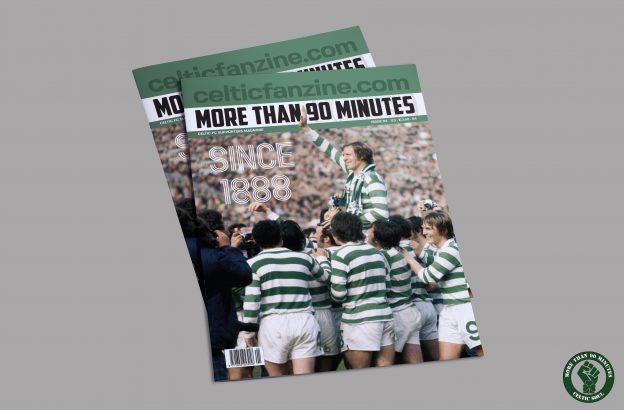
Who better than Billy McNeill to grace the cover of issue 114 of More than 90 Minutes as we celebrate our unbroken history, two x 9IAR and a Quadtruple Treble while our 9 year old neighbours struggle to understand basic Maths. Billy won more in one month than the Newco have won in 9 years. History, Maths and Social Distance Studies need to be explained to the Newco Fans.

Annual Magazine Subscription

Scoby returns with his pencil to conduct an Art lesson to the Newco also, while we look back at the last month with Neil Lennon’s departure and how nothing seems to have changed in the players mentality under caretaker boss, John Kennedy. Can we kick start the fightback on Sunday and build on a good performance and go on a Scottish Cup run all the way to Hampden?

The Editor looks back at the past month or so and voices concerns about the current state of play at Celtic. Bhoys Ultras feature in Snap while World Thai Boxing Champion, Daniel McGowan and former Celtic player, Didier Agathe join Mick Kane and Scotty Alcroft in conversation.

Jeanette Findlay from the Celtic Trust explains if we share the pain we will share the gain after the Trust’s proposal to Celtic PLC to make all season book holders shareholders. The original Celtic Holy Goalie, John Fallon returns with his no holds barred take on all things Celtic.

Rude Bhoys – Celtic Since 88 (Pre-Order)


David Potter looks at Billy McNeill’s legacy and also looks back on the remarkable Celtic career of William “Peter”McGonagle. He writes about our first post-war trophy while Potters Player this month is Bobby Hogg.

Liam Kelly writes about Nazi leader, Rudolf Hess when he crash landed in Scotland during World War 2 and the song which became subject to a Celtic fans anthem. In GOAL! Martin Donaldson looks back to Celtic Park on the 23rd of April 1988 when Chris Morris opened the scoring in a 3-0 win over Dundee to crown Celtic champions in the Centenary season.

Paddy McMenamin looks back at the career of the Mighty Atom, Patsy Gallacher and his connections to Ramelton, Golan and Milford. Ciaran Kenny is longing for a European Huddle as he looks back at Stuttgart away in 2003.

To Pre-Order the Print Edition click link below and we will stick it in the post on Monday evening when it arrives from the Printers.

More than 90 Minutes Issue 114 Print Edition (Pre-Order)

If you would like to support our Independent Celtic Fan Media Platform you can become a Member, Subscribe, Buy or Donate for the Price of a Pint. Your Support helps us continue to produce Daily News & Articles, Weekly Newsletter, Weekly Podcasts, Monthly Fanzine, Video Content & Live Shows.

https://celticfanzine.com/join-us/

https://celticfanzine.com/product-category/monthly-print-subscription

https://celticfanzine.com/shop/

https://celticfanzine.com/donations-page/

Thousands Are Sailing T-Shirt

t/


Celtic Soul – Sharing in the Club’s Future


Tune in this evening to the Celtic Soul Podcast when David Low will be joining Andrew Milne to talk about the current state of play at Celtic and the recent meeting between the Celtic Trust & Celtic PLC

David spoke on the Podcast back in January about the Celtic Trust and the part he played in the takeover of Celtic by Fergus McCann back in the mid 1990’s and his role at Celtic after the rebels won.

If you haven’t listened to the our first conversation with David and would like to before this evening show click link below.


More than 90 Minutes Issue 114 Print Edition (Pre-Order)


Since 1888


Who better than Billy McNeill to grace the cover of issue 114 of More than 90 Minutes as we celebrate our unbroken history, two x 9IAR and a Quadtruple Treble while our 9 year old neighbours struggle to understand basic Maths. Billy won more in one month than the Newco have won in 9 years. History, Maths and Social Distance Studies need to be explained to the Newco Fans.

Annual Magazine Subscription

Scoby returns with his pencil to conduct an Art lesson to the Newco also, while we look back at the last month with Neil Lennon’s departure and how nothing seems to have changed in the players mentality under caretaker boss, John Kennedy. Can we kick start the fightback on Sunday and build on a good performance and go on a Scottish Cup run all the way to Hampden?

The Editor looks back at the past month or so and voices concerns about the current state of play at Celtic. Bhoys Ultras feature in Snap while World Thai Boxing Champion, Daniel McGowan and former Celtic player, Didier Agathe join Mick Kane and Scotty Alcroft in conversation.

Jeanette Findlay from the Celtic Trust explains if we share the pain we will share the gain after the Trust’s proposal to Celtic PLC to make all season book holders shareholders. The original Celtic Holy Goalie, John Fallon returns with his no holds barred take on all things Celtic.

Rude Bhoys – Celtic Since 88 (Pre-Order)


David Potter looks at Billy McNeill’s legacy and also looks back on the remarkable Celtic career of William “Peter”McGonagle. He writes about our first post-war trophy while Potters Player this month is Bobby Hogg.

Liam Kelly writes about Nazi leader, Rudolf Hess when he crash landed in Scotland during World War 2 and the song which became subject to a Celtic fans anthem. In GOAL! Martin Donaldson looks back to Celtic Park on the 23rd of April 1988 when Chris Morris opened the scoring in a 3-0 win over Dundee to crown Celtic champions in the Centenary season.

Paddy McMenamin looks back at the career of the Mighty Atom, Patsy Gallacher and his connections to Ramelton, Golan and Milford. Ciaran Kenny is longing for a European Huddle as he looks back at Stuttgart away in 2003.

To Pre-Order the Print Edition click link below and we will stick it in the post on Monday evening when it arrives from the Printers.

More than 90 Minutes Issue 114 Print Edition (Pre-Order)

If you would like to support our Independent Celtic Fan Media Platform you can become a Member, Subscribe, Buy or Donate for the Price of a Pint. Your Support helps us continue to produce Daily News & Articles, Weekly Newsletter, Weekly Podcasts, Monthly Fanzine, Video Content & Live Shows.

https://celticfanzine.com/join-us/

https://celticfanzine.com/product-category/monthly-print-subscription

https://celticfanzine.com/shop/

https://celticfanzine.com/donations-page/

Thousands Are Sailing T-Shirt

t/


Celtic Making and Breaking Records Since 1888

Rude Bhoys Limited Edition Celtic Since 1888 T-Shirt

Our latest T-Shirt offering now available to PRE-ORDER

Can’t fight corruption with con tricks
They use the law to commit crime
And I dread, dread to think what the future will bring
When we’re living in gangster time

Rude Bhoys – Celtic Since 88 (Pre-Order)

The Weekend Long Read – JOHN “DIXIE” DEANS


“Dixie” Deans was a very special footballer, the sort of personality player that the Scottish game frankly lacks at the moment. He was given the nickname of Dixie in conscious imitation of his near namesake William Ralph Dean, who played for Everton and England between the wars. Dixie Dean did not like being called Dixie. He felt that it smacked of the Negro slave trade of the 18thcentury, and that he had been given this nickname because of his swarthy complexion and his curly hair, as if one of his forebears had been a black slave. In Liverpool, of course, that was possible. But William Dean had become Everton’s greatest player of all time.

Annual Magazine Subscription

It was, therefore, no disgrace to be given the same nickname as this great man, and John Kelly Deans, born at Linwood in 1946, was the sort of player who developed an instant affinity with the fans, a particular achievement for Dixie, whose background was anything other than Celtic minded. Not to put too fine a point on it, he was a Rangers supporter, or at least was widely suspected of so being, but was hardly the first or the last with a supposed Ibrox-inclined childhood to perform outstandingly at Parkhead. Indeed, in the team that he joined, Danny McGrain, Kenny Dalglish and a few others (not least Jock Stein himself) “suffered” from that “handicap”. It was, of course, no handicap at all.

Dixie claims that he was a St Mirren supporter in his childhood. He admits that he came from the wrong side of the city and went to a different type of school (i.e. a non-Catholic one) from the majority of the Celtic fans but, if there was any kind of problem with being accepted by the support, it was never obvious. The legend that Deans was wearing a Rangers “bunnet” at the Linwood engineering works on the day that he joined Motherwell in 1965 is related in the excellent Rhapsody In Green by Woods and Campbell (published 1990) and has never been denied. Yet he is adamant that St Mirren were the team that he loved as a boy.

He was a player whose career was going nowhere fast in the autumn of 1971. Aged 25, he had been with Motherwell for five years, but had been plagued by injury and a bad disciplinary record. He was a fine player, capable of scoring goals, but performing in a Motherwell team whose performances were mediocre, to put it kindly. He did also have a reputation for self-indulgence, a matter which became obvious when he was once dropped for a game against Aberdeen in 1971 because he “overslept”. He might have earned a transfer to Rangers in 1968, but the Ibrox men, deterred presumably by his bad disciplinary record, went to Hibs for Colin Stein instead. In 1971 his career was fizzling out to a premature ending, so much so that he was considering emigration, reckoning that in Scotland he was a marked man in the eyes of referees.

Thousands Are Sailing T-Shirt


He might even have gone to Celtic earlier, had Jock Stein not decided to go to Hearts for Willie Wallace instead. This was on 6 December 1966. On 10 December, when Wallace made his debut at Parkhead, the visitors were Motherwell. The 40,000 crowd were happy with their banners of “Oor Wullie” to celebrate Wallace’s arrival, and saw a good Celtic side beat Motherwell 4-2. They would hardly have noticed that a Motherwell man called Deans was sent off after a tussle with Jimmy Johnstone, and they would certainly never have guessed that this insignificant youth would one day become one of their greatest legends.

The catalyst for Dixie’s transfer was the shocking League Cup final on 23 October against Partick Thistle. This 4-1 win for Thistle was one of the most famous games in Scottish football history, peppered with myths like the Rangers supporters departing Ibrox at half-time in order to be at Hampden at the end to gloat. Anyone with a knowledge of Glasgow geography and transport on a Saturday afternoon will realise the logistic impossibility of all this, but the myth persists.

Certainly, however, it was a shocker. It was caused by two factors. One was the absence through injury of Billy McNeill and the other was sheer complacency, both in the defence and in the attack. Stein may well have regretted his precipitate decision to offload Willie Wallace and John Hughes to Crystal Palace, but he decided that something had to be done to shock Tommy Callaghan and Harry Hood, whose contribution in the League Cup final had been, to say the least, disappointing. No second-half comeback had happened, and new blood was required.

Dixie Deans was the target. By the following Saturday, the Celtic team bus arrived back from a lacklustre 1-0 win at Ayr to find Dixie Deans waiting at Parkhead to sign. Dixie hadn’t been playing for Motherwell that day because he was serving a six-week suspension, a factor which had no doubt helped to reduce the transfer fee to £17,500. Celtic fans were glad to see that Stein was taking action after the humiliation of the League Cup final, but they were possibly a little underwhelmed by what they knew about Dixie Deans. A stocky, chunky sort of character who could score a few goals for Motherwell, certainly, but he didn’t always look fit and he clearly had a bad disciplinary record. At 5 feet 7 inches, he also lacked height for a centre forward, it was felt.

More than 90 Minutes Issue 113 Digital Edition


Apparently Celtic were breaking some sort of regulation by signing a player who was under suspension, and were fined the not particularly inordinate amount of £50 for this breach of regulations. Clearly Stein thought that it was worthwhile, but he was determined that from now on, Deans’ discipline, both with referees and in the wider sense, would improve. This was a success, for Deans was never ordered off with Celtic, apart from once in a reserve game towards the end of his Parkhead stay and when he was sorely provoked.

Stein was just the right type of manager for Dixie. Jock’s strict, even obsessive teetotalism was exactly what was required for a man who might have strayed in the company of some of the wilder elements of the Celtic team. Deans, indeed, had an early taste of Stein. Even though he was not eligible to play, Dixie was taken to Malta the following midweek to soak in the atmosphere of Celtic playing a European tie, and to get to know the other players. If Deans had ever thought that he was in for a good time on the Mediterranean island, he was quickly disabused of the notion. He was made to train hard with the rest of the squad, and the night before the game, the social event of the trip consisted of being taken to the cinema where all the players were seated in one row, with trainer Neil Mochan at one end and the stern Jock Stein at the other. This was to make sure that nothing other than orange juice and Coca-Cola were consumed during the showing of the western Eldorado. Even a visit to the toilet was looked upon with grave suspicion!

It is often said that Stein could spot a good striker. He had less success with goalkeepers, but in the forward line, he had already chosen well with Willie Wallace and Harry Hood, and Dixie, he felt, might be what Celtic required. Deans would provide strength and aggression in the forward line, team up with the young but fast-developing Kenny Dalglish, and provide a foil for Jimmy Johnstone, with whom he had developed a friendship and affinity. In the meantime, however, the priority during what remained of Dixie’s suspension was to get himself fit. This would be achieved by the strict but enjoyable training regime for which Stein and his worthy assistants, Sean Fallon and Neil Mochan, were famous.

His suspension served, Dixie played his first game for Celtic on 27 November and scored a late and irrelevant goal in a 5-1 tanking at Firhill of Partick Thistle, ironically the team which unwittingly provoked his arrival. From then on, he was a regular goalscorer that season, teaming up perfectly with the talented but as yet inexperienced Kenny Dalglish, and almost instantly earning the love of the Celtic fans for his wholehearted approach to the game. He may have worried that “going to the wrong kind of school” might have alienated some Celtic fans from him. This was, and always had been, rubbish. Celtic fans will always accept as one of their own a player who gives his all for the club.

He scored in his next five games, one against Kilmarnock, two against East Fife, one against his old team-mates at Motherwell, then one against Hearts during a Merry Christmas followed by two against Clyde to make it a Happy New Year. The New Year of 1972 would bring immortality to Dixie Deans for the right reasons and for the wrong reasons, but it was already clear to Celtic fans that Jock Stein had turned up trumps once again in his choice of striker.

Glasgow Celtic Hoodie / Green


Celtic won the League very comfortably in season 1971/72 for the seventh year in a row, thus beating the record set by the great Edwardian Celts from 1905 to 1910. The actual winning of the title was at East Fife on 15 April, although another four games yet remained to be played. Dixie scored two that day, and his celebrations at Methil showed that there was, indeed, a great relationship between the player and the fans. He had played a great part in the club’s success and Jock Stein was fulsome in his praise of his prolific goalscorer.

But Dixie’s relationship with the fans would soon be put to the test, only four days after the capturing of the Scottish League. It was one of the most memorable nights in Glasgow’s long football history, but for Dixie it was memorable for all the wrong reasons. It was the night when two European semi-final second Legs were bring played in the city (such was the strength of Scottish football in 1972) – Celtic against Inter Milan in the European Cup, and Rangers against Bayern Munich in the Cup Winners’ Cup. Rangers duly won through, but for Celtic it was all frustration.

“Stalemate” and “war of attrition” were the phrases used, as the two teams who had drawn 0-0 in the San Siro also drew 0-0 at Parkhead, even after extra time, neither team having been able to pierce the other’s defence. Deans, often under-employed by Stein in European football, was only brought on late in the game for the tiring Kenny Dalglish. Arguably, Stein made a mistake there, because if Dixie had been on from the start he might just have upset the tight Italian defence. As it was, with the nation and the continent watching on television, the game went to Parkhead’s and Celtic’s first penalty shoot-out in a major tournament.

Ten players took penalties. Mazzola, Facchetti, Frustalupi, Pellizzaro and Jair did the business for the Italians, as did Craig, Johnstone, McCluskey and Murdoch for Celtic, while Deans was the only man who missed. He took Celtic’s first penalty but sent the ball over the bar, not “ballooned” as some glory-hunting newspapers said, but over the bar nevertheless. How Dixie suffered on that dreadful night of 19 April 1972, particularly when some morons in the crowd booed and jeered him. The emphasis is on “some” morons, as the rest of the Parkhead crowd were sympathetically, albeit silently, supportive.

Naturally the Rangers fans enjoyed this – understandably for they had had little else to cheer about for many years – but so too did some of the Scottish media, with all sorts of jokes about how Houston Space Centre had phoned Parkhead to say that they had got the ball, and a particularly unkind ditty based on Jesus Christ Superstar went along the lines of:

“Dixie Deans, Superstar

Kicked the ball over the Inter bar”.

It is the easiest thing in the world to miss a penalty. One could make a long list of players, particularly Celtic players, who have missed penalties at crucial times. Dixie’s sad miss prevented Celtic’s third appearance in a European Cup final, this time against Ajax of Amsterdam. One recalls the distraught Paul McStay in the League Cup final of 1994, and in 2006 Gary Caldwell, Kenny Miller and Evander Sno all missed penalties in a League Cup penalty shoot-out against Falkirk. And, of course, World Cups have been won and lost on penalty shoot-outs. It is the sort of thing that can ruin careers, and it is certainly a circumstance that will take a great deal of living down, particularly when the media refuse to allow the matter to go away.

Quarterly Magazine Subscriptions

But Dixie had the character to come back. He actually made the matter go away, thereby relieving a great deal of pain and hurt from himself and the Celtic fans. In the first place, on the following Saturday before a cheering crowd, Dixie scored twice against his old team Motherwell in a 5-2 win. Celtic were awarded two penalties. On both occasions, the crowd chanted his name, wanting him to exorcise the ghost of Wednesday night, but Bobby Murdoch did the needful on both occasions as Dixie politely declined.

But it was on 6 May 1972, only two and a half weeks after Dixie’s European nightmare, that immortality beckoned. The Celtic team in the late 1960s and early 1970s were openly being compared to what was generally reckoned to be Scotland’s greatest ever team, namely Willie Maley’s Edwardian Celts of Adams, McNair and Weir; Young Loney and Hay; Bennett, McMenemy, Quinn, Somers and Hamilton. Now, in a very real sense, was there an opportunity to mention Dixie Deans in the same breath as the immortal Jimmy Quinn!

It was the Scottish Cup final against Hibs, a fine team in those days with Stanton, Brownlie, Blackley, Edwards and others. Dixie scored a hat-trick against them. Only Jimmy Quinn had done that before in a Scottish Cup final, and even Jimmy’s ghost would have marvelled at Dixie that day. There are times in Celtic’s history that some unseen power seems to be at work. Billy McNeill claims that Dixie had said the night before that he fancied himself to score a hat-trick, and that if he did, he would do a somersault. He did both.

The first and third goals of the hat-trick were superb, good, strikers’ goals showing his strength and accuracy, but “divine” is hardly too strong a word to describe his second. He rounded goalkeeper Jim Herriot, seemed to lose the ball, then regained it, beat Herriot again, then another defender, and slammed home before doing the famous somersault which endeared him even more to the exultant green-and-white hordes behind that King’s Park goal. Fortunately, in this age of videos and DVDs, this goal can be enjoyed time and time again.

Jimmy Quinn’s Scottish Cup final hat-trick had happened as long ago as 1904 in a 3-2 victory over Rangers. In addition, it was claimed half-heartedly that a few players had done the same in the 19th century, including Sandy McMahon in 1892 (depending on how one reads the newspaper reports) but these claims were difficult to prove. Quinn’s was for definite, while great strikers like Jimmy McGrory had failed to emulate that feat. Now, in 1972, there could be no argument – Celtic had another Cup final hat-trick hero to boast about.

Dixie scored 27 goals for Celtic that season, more than one per game, but it was that hat-trick in their famous 6-1 win over Hibs to win the Scottish Cup for the 22nd time which erased from most memories his penalty miss. Not only that, but Dixie had also made everyone forget the Partick Thistle fiasco, and one wonders what the people in Motherwell thought of all this. A fee of £17,500 hardly made up for what they were missing.

In the following season, he hit the net 32 times. That term, 1972/73, saw the narrowest title win of the famous nine in a row. A rebuilt Rangers side, winners of the European Cup Winners’ Cup in 1972, pushed Celtic hard, and it was often Dixie Deans who would notch the vital goal, frequently at crucial times of the game when the opposition were threatening to equalise, or even go ahead. Many goals were simply the tap-ins of a born poacher, but Deans could head a goal, had a devastating shot and, surprisingly for a man of his build, had an unexpected turn of speed.

Celtic Target T-Shirt / White


Round about February, Celtic were suffering from a crisis of confidence. This was obvious in a game at East Fife in which three separate players – Dixie was not one of them – missed penalties. As a result East Fife were winning 2-1, but just at the death, Dixie appeared on the right to beat his defender and score the goal which gave Celtic a crucial point. As spring arrived Celtic’s last seven League games were all won. Just as well, as Rangers were breathing down their necks. Apart from the game against St Johnstone in which Deans was injured, he scored in every one of them.

As the season reached its breathtaking climax, Deans scored twice in the game at a packed, and not particularly well behaved Easter Road, and the title was clinched. The first was in the first half, he helped Dalglish score a second, then Dixie himself scored the goal which induced sheer delirium as the fans celebrated Celtic’s eighth successive League championship, and turned Edinburgh green and white. On the train back from Edinburgh that night, fans sang:

“Is it true what they say about Dixie?

Does the sun really shine on him?”

or the less wordy:

“Oh, Dixie, Dixie, Dixie,

Dixie Dixie Dixie Deans”

But if there was euphoria about the Scottish League, there was unhappiness in all three Cup competitions that year. Injuries to Dixie –  a bustling centre-forward like Dixie is always likely to pick up knocks – robbed Celtic of his services on two vital occasions. On 4 November against Dundee United, Deans was substituted by Harry Hood, and the slight injury to Deans persuaded Stein to go for a defensive formation on the following Wednesday against Uijpest Dosza in Hungary – a type of game for which Celtic are temperamentally unsuited when guarding a narrow 2-1 lead – and Deans was only brought on when the damage was done. Had he been fit, Stein might have gone for an early away goal to ease the pressure. As it was, Celtic simply did not cope with the loss of an early goal, and never came to terms with the game.

There was a similar tale of woe in the League Cup final where Celtic faced Hibs on the ridiculous date of 9 December 1972, far too late in the year for a major Cup final. It would have been nice to see Dixie’s hat-trick heroics of May repeated in the winter gloom. However, he had been taken off in the 6-0 defeat of Dumbarton the previous week, and was not risked for the final in which the good Hibs team got their revenge over a Celtic side deprived of their main striker, and relying too much on the as-yet-unripened talents of Kenny Dalglish to do the needful.

Hopes that Deans might reproduce his hat-trick in the 1972 Scottish Cup final a year later were to prove unfounded against Rangers on 5 May 1973. Deans had a fine game, and indeed the rest of the Celtic team had little reason to reproach themselves, but it was Rangers who scored three against Celtic’s two – and the Celts were just a little short of luck at vital points of the game. So 1972/73 came to a close with only the Scottish League on the sideboard. This was actually considered a failure!

The following season, 1973/74, Dixie even made Jimmy McGrory tremble, but with anticipation rather than fear. Jimmy had held the record for goals scored in a single match since 1928, when he had notched eight against Dunfermline. On 17 November 1973 in a game against Partick Thistle, as “Dixie! Dixie!” resounded around Parkhead, Dixie scored six, and frankly, it might have been more. McGrory, watching from the stand, would have been delighted to see his record broken, but it was “just” six. In a rare and perhaps unprecedented burst of extravagance, the Parkhead “biscuit tin economy” allowed Dixie to keep the ball and perhaps even provided the pen for the players of both sides to sign it!

The enthusiasm engendered by this fine performance had a touch of escapism about it, for late 1973 was a difficult time for the world. A Middle East war led to the price of oil being quadrupled and there was a threat of petrol rationing. In the meantime US President Richard Nixon, around whom the noose was tightening for his role in the burglary of his political opponents’ office, namely Watergate, showed every sign of cracking, putting his troops on a low-key state of nuclear alert. If this was not enough, the miners in Great Britain were on an overtime ban and threatening an all-out strike against the Conservative government. Football, and the goalscoring talent of Dixie Deans, provided some sort of welcome relief. But even in that area, the crowds were dwindling, possibly as a protest at the poor facilities and the problem of hooliganism, which no-one seemed prepared or even willing to tackle.

Annual Digital Subscription


Dixie was injured in a League Cup quarter-final at Pittodrie, and the tragedy was that he did not recover quickly enough to be fit for the final against Dundee. Thus for the second year in a row, Celtic went into a League Cup final without their star striker. For the second year in a row they lost, this time in the surreal atmosphere of a virtually deserted Hampden, hardly assisted by an unplayable pitch and a kick-off at 1.30 pm so that floodlights would not have to be used in the energy shortage. The Scottish League persisted in their moronic belief that December was a good month for a Cup final.

He celebrated his return with four goals against Falkirk on 22 December and from then on played his full part as Celtic surged to their ninth League title in a row, this time with remarkable ease as their challengers Aberdeen, Hibs and Rangers all collapsed woefully. Dixie also won his second Scottish Cup medal that season in a campaign in which he made three notable contributions – a hat trick against Clydebank which included the first goal scored in Scottish football on a Sunday, the only goal of a tight contest with his old mates Motherwell in a replayed quarter-final, and a goal almost at the death in the Scottish Cup final to make it 3-0 against an outclassed and overawed Dundee United.

Europe was a disappointment. A tense and spirited performance against the Swiss club Basle saw Celtic through to the semi-final against Atletico Madrid. On one of European football’s saddest nights, the Spanish side kicked Celtic off the park, being prepared to lose three men in the circumstances. Sadly their tactics worked, as Celtic were so put off by the violent tactics that they could not score, and the first leg finished 0-0. Deans did not play in the return leg, and the intimidated Celtic went down 0-2 in Madrid.

Deans scored 33 goals that season, and it remains a sore point that Scotland’s manager Willie Ormond did not employ him in the World Cup finals of 1974. Perhaps Ormond felt that Dixie’s disciplinary record counted against him, but Celtic supporters were mystified, particularly when Scotland went out, simply because they did not score enough goals that summer. It is hard to believe that the presence of Dixie would not have helped. Possibly he was a tad slow for international football, but on the other hand he was an unorthodox striker who might well have unsettled the Brazilians. It is certainly true, one feels, that had Deans been playing against Zaire, the goalscoring tally would not have been restricted to two.

Finally, he was given two Scottish caps the following season. He played well enough against East Germany at Hampden in October but fatally did not score in the 3-0 win. Then when Scotland lost the next game to Spain, Dixie was substituted halfway through the second period, was subsequently made one of the scapegoats by the press, and was never picked again. Dixie himself also felt that there was the influence of Jock Stein, who as Celtic’s manager was never too keen on his players risking injury with Scotland.

It was often Hibs who bore the brunt of Dixie’s scoring talent. He earned the title “the Hammer of the Hibs”. Indeed, he scored 19 times against that good Hibs defence in 14 appearances, saying that he did not “like the green jersey”. Significantly, when Hibs beat Celtic in the League Cup final of December 1972, Dixie was not playing. But he had another hat-trick to dish out to them in a Cup final, this time the League Cup final of autumn 1974. Two of the goals were strikes to be proud of, but one of them was truly phenomenal. A corner-kick came to Jimmy Johnstone at the edge of the penalty box. Jimmy drove hard for goal, the ball cannoned off a defender at full speed, and Dixie catapulted forward to head home the deflection. Exactly how quick Dixie’s reactions must have been, we do not know, but the reactions of the crowd were a little slower. There was definitely a split second on the terracing before the fans could actually believe what they had just seen.

A feature of that game was the understanding he displayed with Jimmy Johnstone. Indeed, they were very similar characters, neither of them exactly choirboys on the field or off it, but both with a heart of gold and both rejoicing in a tremendous rapport with the adoring Celtic fans, who chanted “Jinkie” and “Dixie” ad infinitum that crisp autumn day as Celtic lifted the Scottish League Cup. Dixie made a point on that occasion of talking to Joe Harper of Hibs. Like Dixie, Joe had scored a hat-trick that day, but poor Joe had ended up on the wrong end of a 6-3 scoreline.

It would turn out to be Dixie’s last big day. Injury plagued him during the 1974/75 season. He missed the Scottish Cup final against Airdrie, dropped to his intense disappointment in favour of Paul Wilson, and that was the campaign in which Celtic finally lost the League championship which had been theirs since 1966. All good things must come to an end, but the feeling was frequently expressed that if Dixie had played more games than his 18, the championship might well have been retained for yet another year, thus establishing a world record of ten in a row. He missed, for example, the crucial New Year game at Ibrox when Rangers won 3-0, and the game at Pittodrie when Celtic slid to a 2-3 defeat. On several occasions, he played only half a game, having to be withdrawn because of injury or the loss of form and fitness that being injured often brings. Europe, too, was a disappointment that year, with Celtic going out as early as October to a Greek team, Olympiakos, with whom the sterner Parkhead combination of a few years previously would have wiped the floor.

In the summer of 1975 Jock Stein was involved in an horrendous road accident, which he was lucky to survive. Thus he was out of action for a year. This was clearly a problem for Celtic, and particularly so for Dixie Deans, who lacked the firm guidance of Big Jock. Captain Billy McNeill had also retired. Assistant manager Sean Fallon tried hard, but something had gone from Celtic. The moment had passed, the magic had evaporated and Dixie was part of the general Celtic decline in 1975/76, the season in which Rangers won a treble that they would hardly have hoped to achieve over a sterner Celtic side.

Celtic Soul Polo-Top | Black


Deans was unlucky to miss through injury the League Cup final, and he would surely have made a difference to that dysfunctional Celtic forward line in the 0-1 defeat. Following the defeat in the Scottish Cup in January to Motherwell, the decline was steep, with Deans scoring only two goals (one of them a penalty) for the rest of the season. In the summer of 1976, Deans was off to Luton Town for £20,000 and then he played fitfully for Partick Thistle anmd Carlisle, and had a spell in Australia.

He will always be remembered, however, for his brief but phenomenally successful spell with Celtic. Indeed, it is salutary to remember that he played for less than five seasons as a Celt. He did seem to have been around for a great deal longer than that. He scored 125 goals for Celtic, many of them great individual efforts, more of them through the striker’s predatory instinct of being in the right place at the right time. He had speed, determination and strength – some of these qualities not immediately obvious from his somewhat chunky frame.

The memory will always remain of Dixie’s characteristic celebration, with arms raised and fist clenched, in the style of a Victorian boxer who had just knocked out an opponent. Perhaps he did not start off life as a Celt, but he very soon became one, acknowledged, accepted and admired. It was just as well, maybe, that Partick Thistle did win that dreadful League Cup final of 1971, otherwise Dixie Deans might have slowly disappeared onto the sunset, perhaps to Australia, and certainly to oblivion. He had much for which to be thankful to Jock Stein. But then again, we all have.

Born in 1948, David Potter first saw Celtic at Dens Park, Dundee in March 29. It was a 3-5 defeat, which equipped him admirably for the horrors of the early 1960’s. He had “followed” Celtic for a few years before that and recalls having been called upon to impersonate Jock Stein and receive the family silver teapot which had to do for the Scottish Cup as it was presented on April 24 1954, after he and his father had spent a nerve wracking afternoon listening to the radio!  Since then, he has “followed” every Celtic game with bated breath, and has written extensively about the club in magazines and books. His favorite team was that of 1969 (which he rates marginally better than 1967) and his favorite player was Henrik Larsson.

His ambition for Celtic is for them to keep on winning silver in Scotland and to be something in Europe once again. His other interests are cricket and drama. He is 70, a retired teacher of Classical Languages, married with three children and five grandchildren. He now travels on the Joseph Rafferty bus from Kirkcaldy. He also loves Forfar Athletic.
If you would like to support our Independent Celtic Fan Media Platform you can become a Member, Subscribe, Buy or Donate for the Price of a Pint. Your Support helps us continue to produce Daily News & Articles, Weekly Newsletter, Weekly Podcasts, Monthly Fanzine, Video Content & Live Shows.

https://celticfanzine.com/join-us/

https://celticfanzine.com/product-category/monthly-print-subscription

https://celticfanzine.com/shop/

https://celticfanzine.com/donations-page/

Quarterly Digital Subscription


Justice – Peter Hooton the Second Half


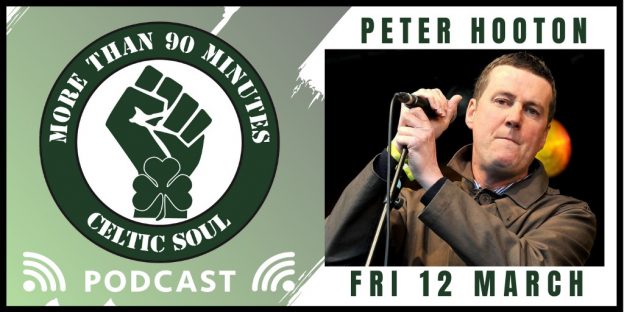
Celtic Soul Podcast Episode 57 with More than 90 Minutes, Editor Andrew Milne chatting to Peter Hooton

Peter Hooton, is a singer, songwriter and the front man of Liverpool band The Farm, he was a pioneer in what would become football fanzines when he started The End Fanzine back in the early eighties. He is a committee member of the Liverpool fans pressure group Spirit of Shankly and just to keep busy over the years he has written a couple of books and put out a documentary on the Casuals.

The second half of the conversation kicks off with Andrew and Peter chatting about the importance of supporters pressure groups such as the Celtic Trust and the Spirit of Shankly as we wait for European Super League and the influence of Billionaire owners. The Spirit of Shankly were inspired by the Green Brigade to support local foodbanks and Peter and the group have also been up to Celtic to check out the Standing Section in Celtic Park.

Annual Magazine Subscription

The second part of the chat floats between music, football and life and Peter explains how the sound the band created for the Spartacus album caught on and how football and music mixed to create the sound of The Farm and the image they created from terrace fashion and the influence it would have on the bands that followed them.

Peter chats about the friendly rivalry with the Happy Mondays and their hilarious Trip to Tipp, festival in Ireland and a session after the sound check and the shenanigans that followed before, during and after the gig.

Having followed Liverpool around England and Europe all his life, Peter stopped going into Anfield after Greame Souness gave an interview to The Sun on the anniversary of Hillsborough. Peter also touches on how some Liverpool fans were unhappy with Souness joining Rangers and are unhappy that Steven Gerard took the manager’s job at Ibrox.

Lisbon 67 T-Shirt / Black

Hillsborough is discussed and the Celtic v Liverpool game that followed and listeners can hear the pain in Peter’s voice as he remembers that day and what followed that traumatic experience.

Peter also turned out for Celtic alongside Jimmy Johnstone against Liverpool in a charity game before Ian Rush’s testimonial and he recalls how Jimmy wouldn’t pass the ball to him and Alan Hansen wouldn’t let him go by him but he did get to perform with The Farm at half time and he also speaks about returning to Glasgow to play on the Justice Tour with Mick Jones and Glasvegas. Gerry Conlon and Paddy Hill were at the gig that night and they know a thing or two about Justice!

Peter jumps in the Celtic Soul Podcast Time Machine and travels back to a Liverpool game in Europe v St. Etienne and into the Kop where he still stands to watch his team.

The story behind the song “All Together Now” is brought to life and Peter gives his opinion on the soldiers of World War 1 and the Poppy Fascism that has followed. Throughout the conversation Peter was open and honest.

If you would like to support our Independent Celtic Fan Media Platform you can become a Member, Subscribe, Buy or Donate for the Price of a Pint. Your Support helps us continue to produce Daily News & Articles, Weekly Newsletter, Weekly Podcasts, Monthly Fanzine, Video Content & Live Shows.

https://celticfanzine.com/join-us/

https://celticfanzine.com/product-category/monthly-print-subscription

https://celticfanzine.com/shop/

https://celticfanzine.com/donations-page/

Glasgow Celtic Hoodie / Green