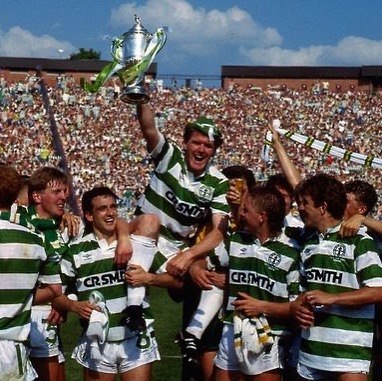
With an expected exit of many Celtic players through the exit door this summer, Shane Duffy has signed off his Celtic career with an image of the Scottish Cup trophy celebration maybe the only highlight of his difficult time in Glasgow. After a dream debut and a goal away against Ross County things started to unravel at Celtic as good performances and results were few and far between in a season where we failed to beat the Newco once.
It would be unfair to single Duffy out for the disaster of a season we have witnessed as most of his team mates failed to ignite any flame of form throughout the season. He signed off on Instagram with this message.
“Grateful for the opportunity to get the chance to play for a club that many dream about doing. Thanks to the supporters and the players for helping me through a tough year on and off the field. Not many know what goes on behind the scenes . Time to hit restart button and get myself sorted. Celtic football club will always have a place in my heart hail hail”
Best of luck to him in the future as we wait to see who the new manager will be if not Eddie Howe who he will be and who he will bring in to sort out a woeful defence who can’t defend a set piece.
Andrew Milne started More than 90 Minutes in 2001. He has written for numerous publications and online about Celtic. He is a former newspaper columnist with the Daily Ireland and the man behind celticfanzine.com. He is host of the Celtic Soul Podcast & Celtic AM pre-match events at Malone’s in Glasgow on match days and follows Celtic Home & Away. He is a season ticket holder for Celtic FC and the Republic of Ireland. He is also P.R.O. of St. Margaret’s CSC, a member of the Celtic Trust and the Celtic Graves Association.
If you would like to support our Independent Celtic Fan Media Platform you can become a Member, Subscribe, Buy or Donate for the Price of a Pint. Your Support helps us continue to produce Daily News & Articles, Weekly Newsletter, Weekly Podcasts, Monthly Fanzine, Video Content & Live Shows
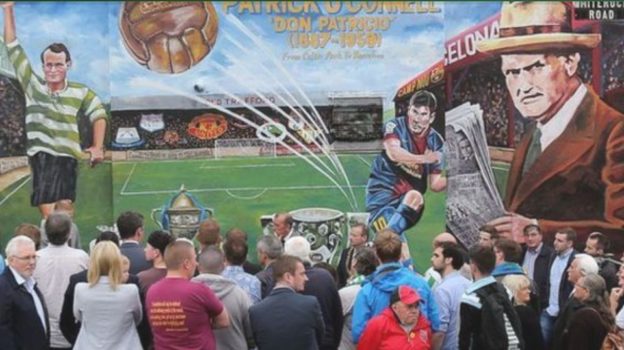
An incredible story, of how ordinary football fans brought the forgotten story of Patrick O’Connell to the World and how their hard work would lead to a 2 hour film to get the story out to a bigger audience Worldwide about the Irish man who saved Barcelona.
Celtic Soul Podcast Episode 67 with More than 90 Minutes, Editor Andrew Milne chatting to Fergus Dowd
Fergus Dowd is the Chairperson of the Patrick O’Connell Memorial Fund.. He has written for numerous publications including More than 90 Minutes, United We Stand, Beyond The Last Man, Póg Mo Goal, Nutmeg, and Football Pink. He is also the host of “A road less travelled podcast”
The conversation picks up again with Fergus telling his personal journey and how he became involved in telling the Patrick O’Connell story and how he played his part. His father called him after attending a talk on the Spanish Civil War and asked him did he ever hear of Patrick. The answer was No.
While cycling around football grounds to raise money for his friend’s charity, Scott Bell who sadly died of Motor Neurone disease. Scott played for Blyth Spartans and a game was arranged between the Spartans and FC United. Fergus arranged to get Patrick O’Connell’s family to come and tell the story to those attending the game.
After hearing the story Fergus was emotional and started writing to players to get them to sign jerseys to raise funds to give Patrick the resting place he deserved. Bertie Auld got the Lisbon Lions to sign a jersey, along with Roy Keane and others.
He then took the story back to Belfast and a mural was commissioned. In the summer of 2015 the mural was unveiled and Bertie Auld and John Clark attended along with hundreds of others before the story continues back in his hometown of Dublin where a plaque was unveiled in Patricks memory and an event was held in the Mansion House with the help of the then Lord Mayor of Dublin, Christy Burke to honour Patrick.
The story continues when a commissioned Bust of Patrick was brought to Real Betis and now sits in the club museum.
Fergus chats also about his involvement in the Tony Gregory exhibition in Dublin. Tony was an Independent politician in Dublin’s inner city and fought many fights for working class people.
The conversation continues about Irish footballers who have travelled around the globe to play football, some successful, some not and some stories end in tragedy.
Andrew Milne started More than 90 Minutes in 2001. He has written for numerous publications and online about Celtic. He is a former newspaper columnist with the Daily Ireland and the man behind celticfanzine.com. He is host of the Celtic Soul Podcast & Celtic AM pre-match events at Malone’s in Glasgow on match days and follows Celtic Home & Away. He is a season ticket holder for Celtic FC and the Republic of Ireland. He is also P.R.O. of St. Margaret’s CSC, a member of the Celtic Trust and the Celtic Graves Association.
If you would like to support our Independent Celtic Fan Media Platform you can become a Member, Subscribe, Buy or Donate for the Price of a Pint. Your Support helps us continue to produce Daily News & Articles, Weekly Newsletter, Weekly Podcasts, Monthly Fanzine, Video Content & Live Shows
Scott Brown will play his final game as a Celtic player at Celtic Park on Wednesday evening with a 6:30pm kick off time after the game was brought forward. It will also be the last game on the virtual season book. Those season books are up for renewal and conversations are now taking place within supporters clubs and supporters households as we wait to see when we will be able to return to Celtic Park and the match day experience which is much More than 90 Minutes.
Celtic fans will get the opportunity to pay tribute to Scott Brown. From Saturday May 8 till Monday 10 supporters can drop off flags and banners etc (from 10am- 4pm) at the Clyde Gateway Car Park adjacent to the Jock Stein Stand.
The Celtic FC Foundation have also brought out a Broony Badge for £2 plus postage and packaging. Celtic Fan Media have also been invited to a press conference with Scott early Thursday afternoon.
After 14 years and 24 winners medals Scott Brown will sign off against Hibs at Easter Road next Saturday.
Andrew Milne started More than 90 Minutes in 2001. He has written for numerous publications and online about Celtic. He is a former newspaper columnist with the Daily Ireland and the man behind celticfanzine.com. He is host of the Celtic Soul Podcast & Celtic AM pre-match events at Malone’s in Glasgow on match days and follows Celtic Home & Away. He is a season ticket holder for Celtic FC and the Republic of Ireland. He is also P.R.O. of St. Margaret’s CSC, a member of the Celtic Trust and the Celtic Graves Association.
If you would like to support our Independent Celtic Fan Media Platform you can become a Member, Subscribe, Buy or Donate for the Price of a Pint. Your Support helps us continue to produce Daily News & Articles, Weekly Newsletter, Weekly Podcasts, Monthly Fanzine, Video Content & Live Shows
We have the fifth Glasgow Derby of the season on Sunday and I don’t think there has ever been such a low key run up to a derby.
The sooner this season is consigned to history the better, been a disaster from start to finish and could see us not win a derby game the whole season.
Too many players have looked disinterested, with some looking like they are already expecting to be somewhere else next season. Should John Kennedy play people who don’t want to be here or are not going to be here. Kenny, Laxalt, Elyounoussi, are likely to be returning to their parent clubs, Edouard has not been interested for months, Brown is going to Aberdeen. Should Griffiths, Ajeti, Soro get game time, maybe guys who could be be fighting to remain at the club and put in a performance.
In the cup game, we had several chances but took none and Sevco even seemed to be playing at a lower pace but they know they have the beating of Celtic this year. Get guys in who are hungry, even if its fringe players, youth players, what does it matter now, the season is all but done.
For weeks we have hoped the announcement of a new manager would give us a boost, but like the rest of this season this is turning into a rigmarole. No communication from the club, no statement to even say we have whittled it down to a preferred short list. All we have is rumours, Maresca, Keane then Howe have all been heavily linked then it goes quiet. Hopefully the club have somebody, I’d prefer Howe, signed but can’t be announced for whatever reason and they are organising behind the scenes as we are getting closer and closer to the Champions League qualifier.
Can Celtic stop Sevco from going the league season unbeaten? We will find out today, noon kick off. Last Chance to Dance
Mick Kane hails from Glasgow. He has been hooked on Celtic since he went to his first game when he was 7. Celtic beat Hamilton 8-3 at Celtic Park on the 3rd of January 1987. His favourite player at the time, Brian McClair scored four goals.
He started going regular as a 16 year old when Celtic played at Hampden for the season, being a Southsider it meant a short train journey to get to Hampden. From then he has had a season ticket travelled around Europe for games as Celtic became the dominant force in Scottish football again. A nice change from growing up during Rangers run to 9 in a row.
If you would like to support our Independent Celtic Fan Media Platform you can become a Member, Subscribe, Buy or Donate for the Price of a Pint. Your Support helps us continue to produce Daily News & Articles, Weekly Newsletter, Weekly Podcasts, Monthly Fanzine, Video Content & Live Shows
Celtic Soul Podcast Episode 66 with More than 90 Minutes, Editor Andrew Milne chatting to Fergus Dowd
Fergus Dowd is the Chairperson of the Patrick O’Connell Memorial Fund.. He has written for numerous publications including More than 90 Minutes, United We Stand, Beyond The Last Man, Póg Mo Goal, Nutmeg, and Football Pink. He is also the host of “A road less travelled podcast”
While researching an article on the formation of the Football Players Union in England he reached out to the striking Debenhams workers to find out their stories and he chats to Andrew about how he started to document their stories and the support they have received from players, musicians and authors.
The quality of the articles Fergus writes speak for themselves and unlike many of todays websites who are more interested in cut and paste articles taken from the tabloids. The research he carries out is second to none and he touches on his latest article which covers a lot from Victor Jara, the 1962 World Cup, Garrincha, Pinochet & the horrors of the Estadio Nacional.
The story of Patrick O’Connell is amazing with so many highs and lows which Fergus goes into great detail to share the story with the listeners of the Dublin footballer who died a penniless alcoholic on the streets on London after saving FC Barcelona from Franco, winning La Liga with Real Betis as manager 81 years ago this week. Their first and only title win.
The story of Patrick O’Connell is amazing with so many highs and lows which Fergus goes into great detail to share the story with the listeners of the Dublin footballer who died a penniless alcoholic on the streets on London after saving FC Barcelona from Franco, winning La Liga with Real Betis as manager 81 years ago this week. Their first and only title win.
An Irish international player who played his club football with Belfast Celtic and Manchester United who paid £1000 which was a massive amount of money at the time. Out of that transfer his family received £4.
Outside football O’Connell ran guns from London to Dublin to be used in the 1916 Easter Rising in his hometown. He played for two seasons in Scotland for Dumbarton and his first game for them was against Celtic at Celtic Park where he marked the great Patsy Gallacher.
An incredible story, give it a listen you will not be disappointed.
Andrew Milne started More than 90 Minutes in 2001. He has written for numerous publications and online about Celtic. He is a former newspaper columnist with the Daily Ireland and the man behind celticfanzine.com. He is host of the Celtic Soul Podcast & Celtic AM pre-match events at Malone’s in Glasgow on match days and follows Celtic Home & Away. He is a season ticket holder for Celtic FC and the Republic of Ireland. He is also P.R.O. of St. Margaret’s CSC, a member of the Celtic Trust and the Celtic Graves Association.
If you would like to support our Independent Celtic Fan Media Platform you can become a Member, Subscribe, Buy or Donate for the Price of a Pint. Your Support helps us continue to produce Daily News & Articles, Weekly Newsletter, Weekly Podcasts, Monthly Fanzine, Video Content & Live Shows
Robert “Roy” Aitken was one of Celtic’s best ever triers. He was, by no means, their best ever player, but there was never any doubt about his commitment, determination and leadership. In the 15 years that Roy was at Parkhead, from 1975 until 1990, his influence was decisive on many occasions. He led the team to many successes but also steered them through many troubles in the 1980s, until in 1990 things eventually got too much for him. His departure in the early part of that year was sad, and a certain amount of Celtic left with Roy Aitken.
The departure needs to be analysed. Roy left his spiritual home in a cloud of unhappiness, alleging all sorts of unfair treatment at the hands of referees, media and his critics on the terracing. Referees are referees, and a totally committed player like Roy Aitken is often liable to be in trouble. As we shall see, the 1984 Scottish Cup final against Aberdeen involved a piece of over-reaction from a referee to a robust challenge from Roy, who saw a red card five times in his Celtic career. The media were frequently on his back. In particular, there was a none-too-subtle personality clash between himself and journalist Gerry McNee, who saw fit to single Roy out for a few disappointing performances for Scotland and lost no opportunity to do Roy down.
Yet referees and the media, like the poor, are always with us. It was the third source of Roy’s problems, the boo boys on the Parkhead terracings, which caused the most distress. To an outsider the thought of the wholehearted Aitken being jeered by his own fans was more than a little incomprehensible. True, Roy could be careless and his ball distribution was not always of the best, but these were honest errors, such as could be made by anyone. Why then did the Parkhead crowd, in that awful season of 1989/90, turn on Roy, someone who was so recognisable as one of their own, and to whom they owed so much?
The answer can only be seen in the context of what had happened at Celtic Park in the previous year and a half. The centenary season, 1987/88, had been a great experience for the Celtic fans as a League and Cup double had been landed. Aitken had not only been part of that, he had driven Celtic to it, rescuing lost causes, and cajoling, bullying and forcing the rest of the team to perform. “The man’s unbelievable” said Paul McStay.
Things had looked good in that glorious summer of 1988 as the Glasgow Garden Festival, within spitting distance of Ibrox, had featured Celtic flowerbeds to commemorate 100 glorious years of the club, in the same way that the Empire Exhibition of 1938 (and its trophy that Celtic had won) had done so much to typify the first great 50 years. The future had looked fine.
Sadly it did not work out that way, as Celtic suffered a major setback early in the following season with a 1-5 defeat at Ibrox. Defeats, even 1-5 defeats, had been sustained before and had been got over. This one was different, though, because the team plunged into a lethargy and depression which could not be understood or rationally explained. Bright hopes of Europe were dashed, any League challenge fizzled out piteously, and what was more and more apparent was that Celtic FC were in the hands of people who seemed to lack the will or the resources to tackle Murray and Souness’s millions at Ibrox.
There had been one bright moment in the winning of the 1989 Scottish Cup, a 1-0 victory over Rangers. Roy had played well that day and it had been he who had collected the Scottish Cup for the 29th time in the club’s history, the TV cameras catching him winking to a fan in the crowd as he ascended the steps. But it had been no accident that the one isolated and spectacular success, however welcome, had come on the one weekend of 1989 when Celtic had, politically and diplomatically, seemed to get the better of Rangers. It was the day after Maurice Johnston had declared himself a Celtic player. He said he was glad to be back and, yes, famously, he described the Celts as “the only team I ever wanted to play for”. A month or so later, Johnston had joined Rangers, to the fury of the Celtic fans and to the visible distress of the Celtic players, Aitken as much as anyone.
Thus at the start of season 1989/90, Celtic supporters were pessimistic and unhappy. That their mood was justified was soon apparent when on two successive midweeks in September, Celtic crashed out of the League Cup and European competition. For both these disasters, Aitken must take a share of the blame. In the semi-final of the League Cup against Aberdeen, Roy was sent off for over-commitment and a certain amount of rashness. That was bad enough, but worse came the following Wednesday night when Celtic went out of Europe to Partisan Belgrade on away goals when the final aggregate score was 6-6. The defence was non-existent at times, and it was the old, old story of naive defending. Fingers were justifiably pointed at Roy that night.
Thus as winter approached, gloom was the order of the day. There was the odd good result to show what life might have been like, but the main fare was mediocrity and poor defending. Everyone knew that Rangers were going to win the League. The fault lay with the Celtic directors, who had singularly failed to invest in the team. In fact, we were seeing the first stages of the disasters that were to lead to the board’s ignominious collapse in 1994, but the fans, embittered and disappointed in the events of the past 18 months, were looking for someone closer at hand than the distant directors. Roy’s unfortunate run of form came at exactly the wrong time.
There was too, it must be said, an element of paranoia in Roy’s attitude about all this. Although there was an element of “Roy must go” in some of the support, particularly those who wrote volubly and persuasively in Celtic fanzines, the majority of the support still wanted him to stay. Disappointment at what was seen as a temporary loss of form was certainly not the same as wanting him to leave the club. The complaints of a friend are very different from the invectives of an enemy, after all. But for one reason or another, Roy decided that enough was enough and went off to Newcastle United in January 1990, leaving a support even more bewildered and upset than previously.
The supporters had every reason to remember Roy’s Celtic career with pride and gratitude. He had served the team for well over a decade. He had never given less than total commitment. There had been at least two games in which Roy’s performance had been the difference between victory and defeat. One such occasion was the Scottish Cup final of 1985. It was in this game that we saw, not for the first time, the true grit of Roy Aitken. It is necessary to examine this game in perspective.
The previous two years had been disastrous. Since the departure of Charlie Nicholas, then manager Billy McNeill in 1983, Celtic had struggled. 1984 was Orwell’s vision of a dreadful impersonal world in which Big Brother watched everyone, and 1984 for Celtic was scarcely any better. Two Cup finals were lost, one affecting Aitken intimately; Celtic were cheated out of Europe by a dreadful outfit called Rapid Vienna, and in both 1983/84 and 1984/85, Celtic finished up second best to Alex Ferguson’s Aberdeen in the Scottish League.
There remained the 1985 Scottish Cup final to save the job of manager Davie Hay and, indeed, the Celtic careers of many players. The opposition were Dundee United, Jim McLean’s well drilled and boringly effective side, who knew how to kill a game once they went ahead. Early in the second half, this was exactly what happened, with Aitken at least partly to blame for Dundee United’s goal.
The second half continued with Celtic, predictably, unable to break down the Tannadice men’s stubborn defence. Hampden had lapsed into brooding, introverted silence, the green colours and favours sagging in tune with the fading hearts. The songs of triumph were no longer heard, even the anthems of defiance had disappeared. Watches were looked at, and a few of the weaker brethren were beginning to think of an early departure.
Tommy Burns had already been taken off, and with only 15 minutes to go, Davie Hay took a desperate gamble. He took off Paul McStay and replaced him with the little known defender Pierce O’Leary. This move flummoxed the TV and radio commentators until the lumbering frame of Roy Aitken was seen to be moving forward to the centre of the field. The supporters booed at the loss of Paul McStay (in truth, it had not been one of Paul’s better performances) and Davie Hay was reviled even more than he had been previously. His predecessor and successor as Celtic manager, Billy McNeill, in the BBC commentary box said: “There are times when a manager just has to be unpopular . . . he’s gambling now”.
Aitken’s arrival in the midfield immediately galvanised the dysfunctional Celtic side. Within a minute, a free-kick had been won on the edge of the penalty box. Davie Provan took it and scored. Aitken was now like a man possessed as he charged about the Hampden turf, shouting, cajoling, encouraging, gesticulating. Five minutes remained when Aitken picked up a loose ball on the right, made ground and crossed a ball right on to the head of Frank McGarvey to win the Scottish Cup for Celtic.
It was very definitely Aitken’s Cup and he revelled in it all, speaking in that fast staccato way of his (“he speaks as if someone had stuck a red-hot poker up his bum” a veteran supporter said) to the reporters and TV commentators, as the supporters sang his praise. “Look round the stadium and see what this Cup means for Celtic” said Roy. But the previous year it had been a totally different story.
Aitken had been sent off. It was not the first nor the last time in his Parkhead career, but this dismissal was high-profile, controversial and, in view of later events, redolent with irony. The Scottish Cup final of 1984 was played between Celtic and League champions Aberdeen. The Dons, under Alex Ferguson, were tough and brutally professional, not without a touch of cynicism. The referee was Bob Valentine of Dundee, the same referee who had awarded Celtic a crucial penalty in Aitken’s first Cup final, in 1977 against Rangers, and who was so unpopular with Rangers supporters as a result that he was called “Bob Vatican”.
The game was, as one would have expected, fast and furious. Aberdeen went ahead through Eric Black, a goal which video evidence would indicate had at least two things wrong with it. Celtic were clearly nursing a sense of grievance as half-time approached, as a few other decisions seemed to be going against them. Aberdeen broke and the ball came to Mark McGhee. Aitken crashed into him. It was a foul, and possibly even a yellow card for Aitken’s over-enthusiasm, but McGhee knew what he was doing and stayed down. At this point, Gordon Strachan appeared on the scene, told McGhee to stay down and persuaded Valentine that the tackle was worth a red card. Valentine obliged and Roy walked.
One could not, in all honesty, say that Valentine was outrageously wrong in his decision, but in a Cup final a little discretion might have been used. The decision gave the Scottish Cup to Aberdeen, because although Celtic, even without the inspirational Aitken, fought bravely and equalised in the 90th minute, Aberdeen’s 11 men were too much for Celtic’s ten in extra time. McGhee, having marvellously recovered after seeming half dead an hour previously, scored the winner. The sight of him charging up the field in triumph was particularly difficult for the lovers of Roy Aitken.
It was only the first in a series of ironies. McGhee joined Celtic some 18 months later, Aitken himself joined Aberdeen as player and manager a decade or so down the line, and then two decades on Gordon Strachan became manager of Celtic. Bob Valentine retired, became a referee supervisor and is generally regarded (rightly) as being one of Scotland’s better referees. Those of us, however, who loved Roy Aitken felt that Bob Valentine may have made a mistake that day.
This was the only Scottish Cup final that Roy lost. He pocketed a winner’s medal in 1977, 1980, 1985, 1988 and 1989, in each game playing a heroic part. Three of his victories were against Rangers, nerve-tingling games for the supporters, but Aitken was a man who seldom showed the slightest sign of nerves. The 1989 Cup final was coming to an end with Celtic holding on grimly to a 1-0 lead. Aitken, by now the captain of the team, had won a free-kick near the Rangers corner flag. The Celtic end fully expected that he would hold on to the ball, possibly trying to win a corner, but suddenly Aitken belted the ball over the touchline to give Rangers a goal kick.
For a while, the Celtic fans wondered if he had taken leave of his senses, but then realisation dawned that it was all to win Celtic more time. It took a while for the ballboys to get the ball back. By that time Aitken himself was back on the halfway line to marshall the defence and crucially to win the ball. Had he not done that, he might have lost possession and he himself would have been stranded down by the corner flag while Rangers might have run up and scored.
A year previously, Roy had received the Scottish Cup from Prime Minister Margaret Thatcher after beating Dundee United in a replica of the 1985 Cup final. In 1988, of course, Celtic celebrated their centenary, and how fitting it was that Roy Aitken led the club to a glorious double. Mrs Thatcher, not exactly the most loved Prime Minister in Glasgow, had bravely attended the game – say what you want about the old dear, but she did not lack courage – and stooped briefly as she handed the Cup to Roy Aitken. It was a fine moment, but one had to spare a thought for a man who had managed to wangle for himself a hospitality ticket and was seated yards away from the Cup presentation. You see, not only did he support Rangers, but he was also a member of the Labour Party Margaret and Roy were not a good combination for him!
Roy, (or to give him his proper name, Robert) was born in 1958 and joined Celtic in 1975. He was a talented young man gifted in other things as well as football. He was a more than competent piano player, having gained a diploma from the London Royal Academy of Music, a body which did not exactly throw its diplomas around like confetti. He was also a basketball player, having captained his school St Andrews Academy, Saltcoats, to victory in the Scottish championships of 1973 and represented Great Britain schoolboys at that sport.
Jock Stein had been very impressed by the youngster, but it was not Jock who gave him his debut in September 1975. The manager had been involved in a nasty road accident in the summer of 1975 and was out of action for a year. Thus it was Sean Fallon who was in charge, and Roy made his debut for the first team at the unlikely venue of Ochilview Park, Stenhousemuir, in a League Cup game in September 1975. It was in February of the following year that Roy became a regular. It was an unfortunate season for Celtic, as they were in transition, and had no Jock Stein. They had already gone out of the Scottish Cup and the Scottish League Cup, and stuttered badly towards the end of the League campaign. It was the first year since 1964 that Celtic had ended the season trophyless.
A certain amount of humour in an otherwise grim experience was engendered in the trip to East Berlin to play Sachsenring Zwickau. Aitken, not yet 18 and still a schoolboy, was technically a minor and the very strict East Germans, ever worried about things like child abduction, insisted that the young man was “adopted” by Sean Fallon!
Yet even though 1975/76 was a dismal season, Aitken was young enough to learn. He made his mistakes, but these were forgiven by the Parkhead crowd, who sensed that in this youngster Celtic may have found someone special. He was tall (and one could see why he was good at basketball) but he was not unduly thin, and he looked as if he wanted to play the game and to play it well. It was immediately apparent to opponents that the young Roy Aitken was no pushover who could be easily bullied. He could tackle courageously and fiercely.
It was the following season that made Roy Aitken. Jock Stein came back and liked what he saw in the strapping Ayrshire lad. Jock also had one of his brainwaves in going to Hibs for the ageing but still superbly organised Pat Stanton. It was Stanton’s job to prevent goals being scored, thus allowing Aitken to move further forward. All through Aitken’s career, he could play either in defence or in a more aggressive midfield position. Jock decided that, at this stage, Aitken was a better midfielder.
There were disappointments in the early stages of the season in the shape of a European exit and a gallingly unlucky defeat in the League Cup Final to Ally MacLeod’s Aberdeen. But slowly the Celtic team took shape and soon after New Year they began to exert dominance. Aitken had played brilliantly in a 4-3 win over Hearts in November at Tynecastle, and soon afterwards one began to hear the Celtic fans calling him “The Bear”. He was so called because of his size and his frizzy hair, presumably, and he was flattered to have the same nickname as John Hughes. Less pleasant or wholesome were the words of the song:
Feed The Bear, The Bear, He’s every f***in’ where, Feed the Bear
but no-one judged Roy by the inanity of the words of his song. They were far more impressed by his play.
That Aitken had arrived as a true Celtic great and cult hero was proved by his superb performances against Rangers in 1977. On 11 January, he pulled off a magnificent goal-line clearance at Parkhead to deny Rangers a draw, and then he scored both goals at Ibrox on 19 March to earn Celtic a 2-2 draw. This was the game that Rangers really needed to win to give themselves any kind of chance in the League race. It was fast and furious, as such games invariably are and should be, and in this case moronic crowd behaviour added to the cocktail of tension and excitement.
Rangers had gone ahead 2-1 with ten minutes to go. A certain amount of ill feeling had been engendered by what looked like a foul on Celtic’s goalkeeper Peter Latchford, and there had been a pitch invasion by the less well educated elements from the Celtic end. After a delay in which the police and the Celtic management team persuaded everyone to resume their places, Celtic won a free-kick. Johnny Doyle took it and Aitken was on hand to hammer home.
The BBC footage of that goal is priceless. It was scored at the Rangers end of the ground. The backdrop was one of blue scarves in the air and songs of religious intolerance. The goal goes in and the terracing behind the goal goes immediately and deathly quiet as the blue scarves come down and are stuffed into coat pockets as complaints about the inadequacy of the Rangers team take over. “No Surrender” in fact gives way to “No Defenders”. Meanwhile, Aitken is feted as the new Celtic hero.
The League championship was won, as was the Scottish Cup in 1977 in an Old Firm Final. This was no showpiece occasion, however, in the Hampden rain. Once Celtic went ahead, they defended with fierce determination and stern concentration. Aitken’s role was an unspectacular one, but the game itself was anything but spectacular. It was Celtic, however, who collected the Scottish Cup for the 25th time, and Aitken now had his first Scottish Cup winner’s medal.
Next season would see the other side of the coin. It would be a salutary lesson for the young Aitken that success, even at a club like Celtic, does not come automatically. Celtic shot themselves in the foot even before the season started by selling Kenny Dalglish, a blow from which they never recovered. Stein, perhaps feeling guilty at the blunder he had committed, lapsed into what looked to all outsiders very like a depressive illness, and Celtic never really got going that season. Injuries came early on as well, and at one point Aitken was made captain as most of those bought to replace Dalglish flopped miserably.
That the young Aitken was not yet up to the captain’s job was proved in the infamous Scottish Cup tie at Kilmarnock, in which he was sent off. A few days after that, just to prove that it never rains but it pours, Celtic lost the League Cup final to a Rangers team who were scarcely their superiors but who managed a goal in extra time, putting an end to a game universally described as mediocre.
Had 1978 been a more successful season for Celtic, Aitken might well have made it to Argentina for the World Cup. He probably did well to avoid that disaster, and his moments of Scotland glory were not far away, but for the present, he took all the misfortunes on the chin and buckled down to his task. It seemed likely that 1978/79 would be a similar dismal flop for Celtic, until the very end of the season when Roy took charge and played his greatest 90 minutes in a Celtic shirt.
The Scottish League campaign, much punctuated by postponements, had been a mundane and uninteresting one until the very last game on 21 May. A win for Celtic over Rangers at Parkhead would mean that the League championship went to Celtic Park. Any other result would favour Rangers. On occasions like this, greatness and destiny beckon. Ian Paul in the Glasgow Heraldstates quite blandly: “… they (the fans) had seen a performance by Roy Aitken which must rank among the finest by any Celtic player in a 90-minute spell”.
That simple tribute by Ian Paul, extravagant and lavish though it was, was no hyperbole. Aitken really was immense, and Gallacher and McGrory of old would have been delighted to have been linked to him in this way. The facts of this tremendous encounter, famed as the “Ten Men won the League” game, are well known. Celtic one down, Johnny Doyle sent off, then equalize, go ahead, Rangers equalised, then Celtic scored twice to send three-quarters of Parkhead into delirium and the other quarter into catatonic silence. What is more difficult to quantify is the sheer, almost superhuman effort that Aitken put into that game. He revelled in it, he relished the fight, and he won the day in a way that almost defied analysis.
A foolish union dispute prevented even highlights of the game being shown on either STV or BBC, so we are dependent to a large extent on still photographs to re-create that glorious Monday night. Surely the best photograph of them all is Aitken coming off the field with a supporter’s tammy on his head. In a picture taken in the dressing room, the tammy is still there. Could there be any greater indication of the symbiosis between Aitken and the support? The fans went home that night, many of them having to work the following day. Work would be a glorious experience that day, not only because of a brilliant performance to win the League over the great rivals. More importantly, they had a new hero. And unlike Dalglish, he had no desire to move. He loved the Celtic.
By 1981, Aitken, always a home-loving man, was telling Rodger Baillie of the Sunday Mirror: “If everything goes alright, I would be quite happy to stay at Parkhead. By that I mean as long as I was still playing first-team football. But really the thought of moving anywhere had not crossed my mind, and I mean anywhere, not just England. At the end of the day I reckon Celtic will look after a player as well, if not better, than any other team”. Comforting words they were for the Celtic fans, and a total contrast to the mercenary behaviour of so many others.
Aitken and Celtic won the League championship in 1977, 1979, 1981, 1982, 1986 and 1988. Three of these titles “went to the wire”, as the pundits would have it, in that they were won on the last day. Seldom, however, can the last day of a League season have produced such excitement as 3 May 1986. Celtic, frankly, had little chance. They had to beat St Mirren at Love Street by four goals and hope that Dundee could beat Hearts at Dens Park. Aitken, who now shared the captaincy with the venerable Danny McGrain, realised that, football being the psychological game that it is, if Celtic played well in the first half and were well on top, this would create panic in the Hearts ranks. He hammered home this message to his men.
By half-time, Celtic were 4-0 up. The goals had been superb, Aitken had been inspirational and Celtic, playing in their lime-green strip, looked unstoppable. The news was, indeed, relayed over the air waves to Dens Park, hard though the Hearts management team tried to stop it reaching their players. It was still goalless on Tayside. Concern first, then uneasiness, then panic began to set in for a team which had not won anything for 24 years.
Meanwhile at Love Street, Celtic had scored another and then eased off. Their job was done for the day. There was nothing more that they could do – other than support Dundee! The crowd grew quiet as the standard of play visibly dropped, with one or two Celtic players asking fans if it was still 0-0, and the St.Mirren players, many of them unrepentant Celtic fans, clearly wanting to go home. Home was where some of the spectators were beginning to troop as well, when the crowd erupted in glee at what looked like a perfectly ordinary picking up of the ball by St Mirren’s goalkeeper Jim Stewart. BBC Radio Scotland had told Love Street that Albert Kidd had scored for Dundee.
Aitken’s face relaxed as he exchanged a few glances with other players. Then he remembered that he was a professional, and he returned to the game in hand. The crowd roared again – Albert Kidd, the angel of deliverance, had scored another. Aitken now smiled before resuming the fray. Then the crowd, now in uproar, raised the roof, as the full-time whistle had gone at Dens Park and Dundee had won 2-0. A minute or so later, the game at Love Street finished, and Aitken’s Celtic were champions.
This was unbelievable, romantic stuff that really belonged to the world of Boys Own, with its “thrilling ties” and “gnawing anxiety” and “rip-roaring action”. One would not really have been able to make this up, but it had happened. Instead of Roy of the Rovers, the legendary star of Melchester Rovers, being the hero, this was our own intrepid Roy – Roy Aitken of the Celtic, who was being feted and honoured for bringing glory to his side.
Roy did pack a great deal into his years with Celtic. European forays were generally a failure, although they did beat Real Madrid in the Parkhead leg of the European Cup quarter-final in 1980. The Scottish League Cup was never a favourite trophy of Celtic’s. Aitken has only one winner’s medal in that tournament, although he took part in another four League Cup finals, three against Rangers and one against Aberdeen, all of which resulted in narrow, unlucky defeats after which Aitken shared the despondency of the fans. He also managed to play 57 times for Scotland, although his last few caps were after he had moved on, participating in the World Cup finals of 1986 and 1990. Those who had no reason to love Celtic would often single out Aitken for censure after a bad Scotland performance, but Roy had nothing to be ashamed of in his games for his country, which he served with as much passion as he did his club. It was clear from the position that Aitken played for Scotland that Jock Stein believed he was a better midfielder than a defender. It was an opinion shared by many Celtic fans, but it mattered little, as Aitken gave his all wherever he played.
After the sad departure of Aitken from Celtic Park in early 1990 to Newcastle United – another club who crave a cult hero to bring them some success – things were never quite the same again. His years at Newcastle and St Mirren were not as happy as his time at Celtic. When he moved to Aberdeen as manager, he was responsible for their capture of the League Cup in 1995, but he very soon went the way of all Aberdeen managers since Alex Ferguson, unable to satisfy the demands of a potentially very large support.
In recent years he has flirted with Leeds United and Aston Villa, before in January 2007 becoming assistant manager to Eck McLeish in the Scotland job. But to those who saw Celtic in that tumultuous decade of the 1980s, with all its glories and disasters, Roy Aitken will always be associated with no team other than Celtic. He was, and remains, a Celtic cult hero.
Born in 1948, David Potter first saw Celtic at Dens Park, Dundee in March 29. It was a 3-5 defeat, which equipped him admirably for the horrors of the early 1960’s. He had “followed” Celtic for a few years before that and recalls having been called upon to impersonate Jock Stein and receive the family silver teapot which had to do for the Scottish Cup as it was presented on April 24 1954, after he and his father had spent a nerve wracking afternoon listening to the radio! Since then, he has “followed” every Celtic game with bated breath, and has written extensively about the club in magazines and books. His favorite team was that of 1969 (which he rates marginally better than 1967) and his favorite player was Henrik Larsson.
His ambition for Celtic is for them to keep on winning silver in Scotland and to be something in Europe once again. His other interests are cricket and drama. He is 70, a retired teacher of Classical Languages, married with three children and five grandchildren. He now travels on the Joseph Rafferty bus from Kirkcaldy. He also loves Forfar Athletic.
If you would like to support our Independent Celtic Fan Media Platform you can become a Member, Subscribe, Buy or Donate for the Price of a Pint. Your Support helps us continue to produce Daily News & Articles, Weekly Newsletter, Weekly Podcasts, Monthly Fanzine, Video Content & Live Shows
Jeanette Findlay from The Celtic Trust joins Andrew Milne to talk about the State of Play on Talk from the Terraces after a week of Super League moves and British League tabloid talk. Jeanette has been a tireless worker on behalf of Celtic fans and was one of the main movers in FAC.
The question is what do we want as Celtic fans going forward?
Do we want to be customers of a Global brand or do we want to be football fans?
Jeanette talks passionately about her position and where she stands and it is not being part of a global brand, it is about being part of a club with it’s heart and soul in the community it was founded for.
A move to a bigger league would be costly and would hit fans in the pocket and price many Celtic fans out who regularly attend games in Scotland but more importantly it would make Celtic more appealing to foreign investors and the likes of the Glazier family types.
It took the Gary Neville’s of the media World and Sky Sport pundit types about 16 years to realize the Glaziers had ripped the heart and soul out of Manchester United and it’s fans and now these parasites are ready to play their part in ripping football further away from the working class.
Sky Sports are responsible for moving kick off times and days from the traditional 3 o’clock Saturday afternoon games to Sunday at Noon and Monday Evening without a thought for the miles that fans have to travel to away games or the time they would have to take off work to attend these games.
If Sky Sports were part of the Super League deal they would be already rebranding to launch a new all singing and dancing cheer leading football soap opera and when UEFA rebrands and backs the Super League (Champions League for more non Champions), Gary and Sky will be there to kick the football fans further down the chain and embrace games played in the USA, UAE and China to increase the Global brand without a care in the World for the heartbeat of every club, the fans.
We should remember that LinSELL Train are here to increase the value of their shareholders and own 18.6% of Celtic. The Celtic TRUST wants to keep Celtic values and increase the fans shareholding in the club to 20% by growing the Trust and getting as much small shareholders to come together.
As a kid I used to watch a programme on TV called The Flashing Blade, the theme tune was “Its right to fight for what you want than not have fought at all”. Celtic, it’s history and what it stands for is worth fighting for. Join the fight and join The Celtic Trust.
Andrew Milne started More than 90 Minutes in 2001. He has written for numerous publications and online about Celtic. He is a former newspaper columnist with the Daily Ireland and the man behind celticfanzine.com. He is host of the Celtic Soul Podcast & Celtic AM pre-match events at Malone’s in Glasgow on match days and follows Celtic Home & Away. He is a season ticket holder for Celtic FC and the Republic of Ireland. He is also P.R.O. of St. Margaret’s CSC, a member of the Celtic Trust and the Celtic Graves Association.
If you would like to support our Independent Celtic Fan Media Platform you can become a Member, Subscribe, Buy or Donate for the Price of a Pint. Your Support helps us continue to produce Daily News & Articles, Weekly Newsletter, Weekly Podcasts, Monthly Fanzine, Video Content & Live Shows
Jeanette Findlay from The Celtic Trust joins Andrew Milne to talk about the State of Play on Talk from the Terraces after a week of Super League moves and British League tabloid talk. Jeanette has been a tireless worker on behalf of Celtic fans and was one of the main movers in FAC.
The question is what do we want as Celtic fans going forward?
Do we want to be customers of a Global brand or do we want to be football fans?
Jeanette talks passionately about her position and where she stands and it is not being part of a global brand, it is about being part of a club with it’s heart and soul in the community it was founded for.
A move to a bigger league would be costly and would hit fans in the pocket and price many Celtic fans out who regularly attend games in Scotland but more importantly it would make Celtic more appealing to foreign investors and the likes of the Glazier family types.
It took the Gary Neville’s of the media World and Sky Sport pundit types about 16 years to realize the Glaziers had ripped the heart and soul out of Manchester United and it’s fans and now these parasites are ready to play their part in ripping football further away from the working class.
Sky Sports are responsible for moving kick off times and days from the traditional 3 o’clock Saturday afternoon games to Sunday at Noon and Monday Evening without a thought for the miles that fans have to travel to away games or the time they would have to take off work to attend these games.
If Sky Sports were part of the Super League deal they would be already rebranding to launch a new all singing and dancing cheer leading football soap opera and when UEFA rebrands and backs the Super League (Champions League for more non Champions), Gary and Sky will be there to kick the football fans further down the chain and embrace games played in the USA, UAE and China to increase the Global brand without a care in the World for the heartbeat of every club, the fans.
We should remember that LinSELL Train are here to increase the value of their shareholders and own 18.6% of Celtic. The Celtic TRUST wants to keep Celtic values and increase the fans shareholding in the club to 20% by growing the Trust and getting as much small shareholders to come together.
As a kid I used to watch a programme on TV called The Flashing Blade, the theme tune was “Its right to fight for what you want than not have fought at all”. Celtic, it’s history and what it stands for is worth fighting for. Join the fight and join The Celtic Trust.
Andrew Milne started More than 90 Minutes in 2001. He has written for numerous publications and online about Celtic. He is a former newspaper columnist with the Daily Ireland and the man behind celticfanzine.com. He is host of the Celtic Soul Podcast & Celtic AM pre-match events at Malone’s in Glasgow on match days and follows Celtic Home & Away. He is a season ticket holder for Celtic FC and the Republic of Ireland. He is also P.R.O. of St. Margaret’s CSC, a member of the Celtic Trust and the Celtic Graves Association.
If you would like to support our Independent Celtic Fan Media Platform you can become a Member, Subscribe, Buy or Donate for the Price of a Pint. Your Support helps us continue to produce Daily News & Articles, Weekly Newsletter, Weekly Podcasts, Monthly Fanzine, Video Content & Live Shows
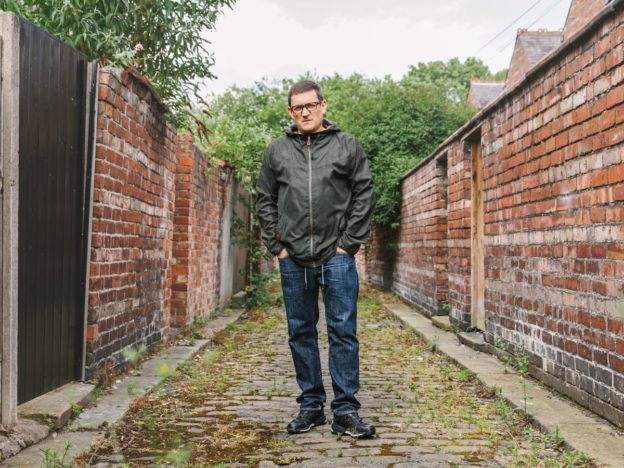
Paul Heaton is a true Working Class Hero who has never forgotten who he is. Fame and Money never changed him and he continues to live within the community. Paul is more push bike and public bus than Limousine and Security Guards in dark glasses.
Celtic Soul Podcast Episode 64 with More than 90 Minutes, Editor Andrew Milne chatting to Paul Heaton
Sheffield United fan, Paul Heaton is a singer/songwriter who has never hidden behind the door when it comes to speaking out about politics and social issues. His CV of work and hit records is vast from The Housemartins to The Beautiful South to his solo career and to his reunion with Jacqui Abbot in more recent years.
The conversation picks up again when the lads chat about Italian football and Paul’s knowledge of football in Italy from the mid-eighties to the mid-nineties when the three foreigner rule was in play. Paul also remembers seeing Maradona when he was lighting up the league with Napoli.
Partick Thistle v Celtic and the area around Thistles ground gave Paul a chance to see another part of Glasgow as they drift into chatting about Celtic. Paul is certainly not a fan of modern football and his love of Sheffield United is a pure and honest love.
Paul has done so much good work for his community and has paid workers who have lost their jobs including the Q magazine workers who lost their jobs during the pandemic. He gets a little embarrassed when talking about this but Andrew feels that it should be noted on the Podcast.
Politics, Red Cards, Fame and Money all get touched on in the conversation including Lazio’s visit to Glasgow and the Green Brigades response.
As with every guest on the Celtic Soul Podcast, Paul jumps into the time machine and travels back to his teenage years and a Frankie Vali concert with his Mam and an early Housemartins gig when they played in front of two people and a support slot in those early days with Madness.
Paul Heaton is a true Working Class Hero who has never forgotten who he is. Fame and Money never changed him and he continues to live within the community. Paul is more push bike and public bus than Limousine and Security Guards in dark glasses.
Andrew Milne started More than 90 Minutes in 2001. He has written for numerous publications and online about Celtic. He is a former newspaper columnist with the Daily Ireland and the man behind celticfanzine.com. He is host of the Celtic Soul Podcast & Celtic AM pre-match events at Malone’s in Glasgow on match days and follows Celtic Home & Away. He is a season ticket holder for Celtic FC and the Republic of Ireland. He is also P.R.O. of St. Margaret’s CSC, a member of the Celtic Trust and the Celtic Graves Association.
If you would like to support our Independent Celtic Fan Media Platform you can become a Member, Subscribe, Buy or Donate for the Price of a Pint. Your Support helps us continue to produce Daily News & Articles, Weekly Newsletter, Weekly Podcasts, Monthly Fanzine, Video Content & Live Shows
The Super League had only been put to bed and now the tabloid types are talking about a British Super League with Celtic and the Rangers joining. This is old ground as we have been linked with joining the Premier League, Atlantic League and if memory serves me correct one called the Phoenix League.
We all love a trip down South to play English teams and we all love an away day in Europe, and I have no doubt that Dermot Desmond and the board would jump at a chance to join a wealthy league, but the money down south is driven by TV money and corporate sponsorship where avoiding relegation has become more important to clubs than winning a Cup.
A run in the Cup and a final is a dream for fans whose team cannot compete with the bigger clubs in the league it is the stuff of dreams, but these dreams have been taken away from football fans due to the global interest in England’s and Europe’s big clubs due to massive marketing budgets.
Money has been flooding into English football for decades, while Italian football has suffered and the big two in Spain are supposed to be broke and they now want a bigger slice of the Champions League pie. I don’t think the Super League idea is dead and buried it is only sleeping now it maybe that UEFA are involved with the wantaway clubs next time around.
At Celtic we need to continue to support the Celtic Trust by joining and turning our membership money into shares. I have no doubt that the Lindsell Trian Ltd. that owns in and around 18.6% of our club should we move to a bigger league I have no doubt that they would try to increase their shareholding and try take over the club and leave us in the mess that Man United fans found themselves in when the Glaziers took over.
Let’s compare what the Global Equity Fund, Lindsell Train Ltd stands for and what the Celtic Trust stands for.
Lindsell Train “To increase the value of Shareholders’ capital over the longer term from a focused portfolio of global equities, primarily those listed or traded on Recognised Exchanges in developed countries world-wide. The Fund’s investment performance is compared with the MSCI World Index (Developed Markets) and is reported in Sterling. The fund is not constrained by the benchmark (MSCI World Index) and will take positions in individual stocks that differ significantly from the Index with the aim of achieving a return in excess of the benchmark.”
The Celtic Trust “For many of us being a Celtic fan is a family and social tradition. From parent to child, it was a rite of passage to attend your first match at Parkhead, first cup final or first league flag and many supporters answered the call and bought shares in the club in the 1990s.
While fans responded wholeheartedly to this, sales to the City and investment groups – such as our current principal shareholder, Dermott Desmond – far outweighed the shares bought by the individual fan.
Despite the best intentions, Celtic Football Club is no longer owned by shareholding fans but by a single group, and in danger of any hostile takeover.
The Celtic Trust exists to prevent the scenario ever becoming a reality.
Our ultimate aim is for Celtic Football Club to be owned and run by its own supporters in the best interests of the team on the pitch and in line with the values and activities of its charitable history.
To that end the Celtic Trust also buys shares in the club collectively in the name of the Trust.
We can also act as a proxy for individual shareholders who can pass their voting rights to the Trust for Celtic PLC AGMs. As a democratic fan organisation, the Celtic Trust has regular face-to-face meetings with Celtic PLC where it campaigns on behalf of supporters and shareholders.
There is a minimum of four members meetings each year and an Annual General Meeting takes place in April/early May.
Subscription to the Celtic Trust is a minimum of £5 per month.
Please add the site to your bookmarks now, and watch us grow.
It’s our club; let’s own it!”
I know who I trust . We as Celtic fans need to pro-active and not re-active. Please give serious consideration to joining the Celtic Trust. It can be done!
Andrew Milne started More than 90 Minutes in 2001. He has written for numerous publications and online about Celtic. He is a former newspaper columnist with the Daily Ireland and the man behind celticfanzine.com. He is host of the Celtic Soul Podcast & Celtic AM pre-match events at Malone’s in Glasgow on match days and follows Celtic Home & Away. He is a season ticket holder for Celtic FC and the Republic of Ireland. He is also P.R.O. of St. Margaret’s CSC, a member of the Celtic Trust and the Celtic Graves Association.
If you would like to support our Independent Celtic Fan Media Platform you can become a Member, Subscribe, Buy or Donate for the Price of a Pint. Your Support helps us continue to produce Daily News & Articles, Weekly Newsletter, Weekly Podcasts, Monthly Fanzine, Video Content & Live Shows