Author Archives: celtic

Hail Hail Cesar Forever Our Leader

Before I pay tribute to Billy McNeill on the anniversary of when he delivered the Scottish League in our Centenary Season 32 years ago and a day after the anniversary of his passing. I would like to extend my condolences to the McNeill and McCombe family who are mourning the recent loss of Billy’s grandson Matthew.

Issue 107 Print Copy

This morning and all day yesterday a quick look at social media reminded me of how loved and respected Billy was by the Celtic fans. There are lovely tributes and some cracking photos with Billy and I look forward to reading more tributes to Billy from his former team mates and those who played under him during both his stints as manager and especially the stories getting shared by Celtic fans over the next few days.

I was lucky enough to meet Billy on a number of occasions. If memory serves me right I first met him when he was Man City manager in the mid- eighties when I was a young teenager and part of a boxing team taking part in a tournament over there.

I would later meet him again in the late-eighties when once again I was boxing, this time in Glasgow. He always had time for the fans.

Annual Magazine Subscription

The first time I got to have a conversation with him was at a drinks reception at the NAFCSC gala dinner in Las Vegas back in 2000 and over the the years he would be a regular at the convention and I was lucky enough to spend a week in his company at a convention in Windsor Canada where we were entertained by a young Kevin Bridges.

In 2009 I had the pleasure of picking BIlly and Tommy Gemmell up at Dublin Airport and taking them to LMFM radio station for an Interview, before lunch in Scholars Hotel in Drogheda.

That night they were in Duleek as guests of St. Margaret’s CSC and the following day they shared their memories with us at a lunch in Drogheda.

More than 90 Minutes Celtic Ezine Quarterly Digital Subscription

The lunch was held upstairs in Tommy Hanrattys bar which is spitting distance from my house and I passed the pub while out walking the dog early this morning, the name of the bar has changed but the memories from that day will be treasured by all who were lucky enough to attend.

A year ago when the news broke that Billy had sadly passed away I was so glad that we had so many platforms of media available to enjoy the legacy and greatness of King Billy as tributes flooded in.

On TV last year after his sad passing we had tributes from his teammates, opponents, fans and the players who he had managed. Every emotion was expressed, John Clarke was hurting when he spoke, Charlie Nicholas was tearful and Bertie Auld broke into song.

Celtic Soul T-Shirt | Black

On radio, along with tributes, old interviews with Billy were revisited, in the Newspapers tributes were paid by journalists, in the days and weeks that followed the mainstream football publications and the Celtic fanzines all paid tribute as did the online bloggers from various fan websites who contributed many words as they paid their own tributes.

Billy lifting trophies, scoring goals, managing winning Celtic teams and interviews were all plucked from the vaults of YouTube and shared on all social media platforms

Social Media also gave everybody from the Celtic family and beyond including numerous football clubs a chance to pay homage to this giant of a man.

Quarterly Magazine Subscriptions

Facebook gave everybody an opportunity to share a picture and story of when they met Billy among all their friends. To me these were special and showed just how many supporters functions Billy had attended and how close he was to the ordinary fan on the street. He lived our dreams and made those dreams come true on so many occasions.

Over the years I have had the pleasure of interviewing many of the players who played with him and also those who played for him. At recent Celtic AM events in Malone’s strikers Frank McAvennie, Joe Miller and Frank McGarvie all spoke about their former Gaffer.

Billy may have been a Legend and a Celtic Icon but he was also a husband, a father and a grandfather and it cannot have been easy for those closest to him to see him suffer from Dementia.

More than 90 Minutes Celtic Ezine Annual Digital Subscription

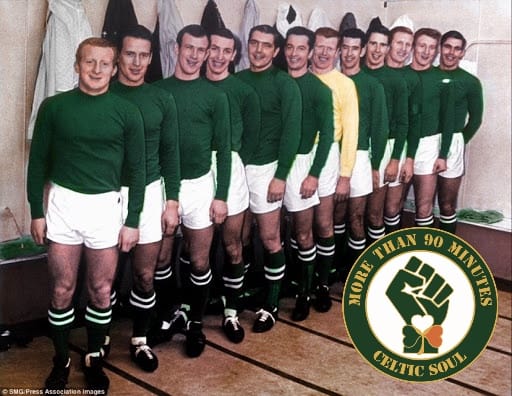
To the Celtic family he was everything rolled into one, the player who would play for nobody else but his beloved Celtic, joining the club in 1958 and retiring from football and the Hoops jersey in 1975. He was our 9IAR captain who would conquer Europe and all before him in Scotland.

He was our manager, guiding the team to a dramatic 4-2 win with 10 men to clinch the league, he was the returning Leader to lead us to a Centenary double, he was the Ambassador a true footballing statesman.

His statue on the Celtic Way at the stadium will be an everlasting reminder of what he achieved at Celtic for generations to come and soon the locals of Bellshill will also have a statue to remind them of their local hero who would conquer Europe.

Hail Hail Cesar

Forever Our Leader

Andrew started More than 90 Minutes in 2001. He has written for numerous publications and online about Celtic. One of his essays featured in Celtic Minded 2 and he is a former newspaper columnist with the Daily Ireland and the man behind celticfanzine.com. He is host of Celtic AM pre-match events at Malone’s in Glasgow on match days and follows Celtic Home & Away. He is a season ticket holder for Celtic FC and the Republic of Ireland. He is also P.R.O. of St. Margaret’s CSC, a member of the Celtic Trust and the Celtic Graves Association.

Issue 107 Digital Edition


Rangers’ Europa League tie could be what ends talk of “tainted title”


It’s funny how things work out, isn’t it?

Last week we had accusations that the SPFL and Celtic are trying to end the league now so they can be handed the title immediately.

Deep down, many Rangers fans will want that to happen so they can continue the narrative that the current campaign would be somehow “tainted”, despite Celtic being 13 points clear with eight games to go.

More than 90 Minutes Celtic Ezine Quarterly Digital Subscription

If the season continues, Celtic will no doubt go on to win a ninth consecutive title – something which’ll hurt rival supporters more. They’d have nothing to moan about then.

Following the resolution vote, the SPFL now holds the power to end the current Premiership season, only if they believe that games cannot be completed.

But at the moment, they are hamstrung – even if they wanted to.

Yesterday UEFA announced plans to produce guidelines for leagues who wanted to end their seasons early, BUT strongly advised all of Europe’s top leagues to complete their seasons when it’s safe to do so.

Associations are mindful that proceeding without UEFA’s permission risks its clubs being prevented from qualifying for next season’s Champions League and Europa League.

Issue 107 Digital Edition

No league which has qualification to the Champions League and Europa League asked UEFA for permission to end their season early during yesterday’s conference call, but that doesn’t necessarily mean associations and clubs don’t want to call it now – everything could change when UEFA’s proposals are formally announced.

The Belgian Pro League was the first major European league to propose ending their season early – and awarding the title to Club Brugge – but a decision by their general assembly has been delayed until UEFA announces its guidelines.

As it stands the SPFL is in a tricky situation – one which is far more complicated than the likes of Belgium and other European counterparts.

As I revealed on Sky Sports News yesterday,

the issue they face at this stage is that Rangers are still in the Europa League.

https://www.skysports.com/football/news/11781/11976706/scottish-footballs-complex-future-could-become-clearer-when-uefa-executive-committee-meets

To complete their second leg tie with Bayer Leverkusen, Rangers need their current Europa League squad, which was registered all the way back in January.

If the Scottish Premiership ends early, player registrations and contracts will expire on June 30 and they would not be covered under the FIFA contract extension rule. Rangers would face losing a number of key players.

Also, the transfer window in Scotland would be expected to operate as normal.

With this scenario, to play the second leg of their Europa League tie, it would require Rangers to operate in two separate seasons at the same time – a situation UEFA are extremely unlikely to support.

More than 90 Minutes Celtic Ezine Annual Digital Subscription

If the Premiership season resumes, Rangers can use the FIFA contract extension rule to negotiate with players whose deals are due to expire on June 30, for them to continue in domestic and European competition.

Ultimately, this is what is blocking the season ending early in Scotland at this moment in time – not that there’s any sign they want to.

This could all change after tomorrow’s UEFA executive committee meeting, but as I have explained Scotland’s situation is a lot more complicated.

Quarterly Magazine Subscriptions

Neil Lennon came out yesterday and said he wants to finish the season on the pitch. An astonishing statement, considering some rival fans were claiming quite the opposite.

Hopefully it can be completed, whenever it is safe to do so, as it will give fans a chance to witness history being made – memories which will last a lifetime.

Completing the season suits Celtic, Rangers, Hearts… and the SPFL’s lawyers. But in the long run it wouldn’t suit some Rangers fans, as it would obviously end any talk of a “tainted” title.

Celtic Soul T-Shirt | Black


Anthony Joseph is an award-winning Scottish journalist in London. He is currently a News Editor for Sky Sports News, having previously worked for KICCA Media, MailOnline and Aberdeen Evening Express. He is a regular guest on The Totally Scottish Football Show and is a lifelong Celtic fan and Tartan Army member. 

Ladies Celtic Soul T-Shirt

Billy McNeill My Captain – John Fallon a Personal Tribute

It’s a year on from the death of my friend and teammate Billy McNeill after a long battle with Alzheimer’s. Billy never shouted and bawled in the dressing room before games. That was always Big Jock who did that. Billy’s shouting on the park came more from a positional and encouragement point of view.

Annual Magazine Subscription

He was a great Captain and leader and commended great respect from all his teammates. I’ve known Billy since we played against each other in our early teens in the Boys Guild leagues and then going on to sign for Celtic within a year or each other.

It’s also fair to say that he was involved in the two moments that really changed Celtics history. His winning headed goal in the 1965 Scottish Cup Final from a Charlie Gallagher corner was the start of a Golden Era under Jock Stein. His last minute headed winner, also from a Charlie Gallagher corner in the European Cup, was the springboard for going on to win the big cup.

I have great memories my time playing with a great player, leader and friend. It was a fitting tribute last season when Celtic went on to win an historic Treble Treble on the historic date of the 25th May.

John Fallon has been writing for this Celtic fanzine since 2002. The original Holy Goalie has won every honour with Celtic and played his part in the greatest ever era in the history of the famous Glasgow Celtic. John is ever present at Celtic games home and away and at Celtic supporters functions.

Issue 107 Print Copy


The Celtic Trust 20 years on


Like every anniversary, the 20th anniversary of the founding of the Celtic Trust was a time for reflection, for assessment, for remembering and to think about the next step.  In our case, the year running up this occasion was also marked with the sadness of the loss of our Chairman Tommy McGonigle, who died after a short illness having served the Trust with energy and determination and who, to this day, is greatly missed.  There was also a sense that we had reached a point where we needed to think about what we were really about and whether we served the purpose that we set out to serve two decades ago. On top of all of that, we there was a sudden realisation that those Celtic Supporters below the age of 40 were very unlikely to know exactly what the Celtic Trust is and how it differs from other Celtic supporters’ organisations.

More than 90 Minutes Celtic Ezine Annual Digital Subscription

The period from the inception of the idea of the Trust (the first supporters’ trust in Scotland) to its inaugural meeting in 2000 was a lengthy one – almost two years – during which we worked very hard to ensure that the legal framework for the Trust was watertight.  The Trust was never intended to be like any other organisation because what it actually was meant to be, and what it remains to this day, is a legal and financial vehicle which would allow the Celtic support to be the legal owners of Celtic. It was intended to be the mechanism to combine and mobilise the shareholding of Celtic supporters in common to ensure a meaningful say in the running of the club which we all love.

It is registered as an Industrial and Provident Society and is overseen by the Financial Conduct Authority – in plain language it is a mutual and all its assets (ie shares in Celtic) are held in common by its members whose democratic rights are enshrined in its lengthy and detailed constitution.   In those early years, we spent a huge amount of time explaining this to the Celtic support, many of whom were very suspicious of this newcomer on the block. It was a case of saying, no we are not saying we will own Celtic; we are saying we all will!

I would like to think we overcame the suspicions initially aroused – many of which focussed on which one of us they thought was angling for a seat on the board!  In the intervening years, I would also like to think that we have established ourselves with the Celtic support (and with the Celtic board) as a truthful, honest, credible organisation with a reputation for integrity and an openness to working with other Celtic organisations and individuals, and Celtic, in a spirit of mutual respect.

Annual Magazine Subscription

It is fair to say that we have also become known as more of a campaigning organisation than as one which focussed on representing (small) shareholders.  We make no apologies for that and take great pride in some of our achievements such as being a founding member and a driving force behind the phenomenally successful, Fans Against Criminalisation campaign; our work on the Living Wage; being  the original proponents of the standing section; our contribution to the development of the disciplinary policy and the European away ticket scheme; our work in relation to the review of facilities for disabled Celtic supporters and the longstanding, day-to-day, behind the scenes, role in representing fans who get into difficulties with the club.

At this point though, and on reflection, we realised that the original aim of the Trust was still valid and that our Club, being a PLC,  remains vulnerable at any point to what we might call, a malevolent takeover. We are not saying that such a thing is imminent – although there are some interesting, recent incursions by American money into UK football.  However, should we be able to mobilise a significant proportion of the small shareholdings owned by those who purchased shares in the 1994 (McCann) issue, we could still function as barrier against any move on our club by those with no understanding of the nature and history of Celtic.

For that reason, we  have decided to relaunch the Trust by focussing on that aim ie to encourage small (and large) shareholders to vote their shares with us on matters of great importance and to further aim to build our own shareholding in the club – a shareholding which will be held in common by all members of the Trust present and future.

To that end, and under the direction  of our new Trustee Board, led by our new Chairman, David Low, we now have a new website under development and we will be embarking on a significant membership drive over the coming months with the sole aim of building up our ownership stake in Celtic.  As a service to Celtic supporters, we will be operating a share certificate recovery service for those of you who have lost your original certificate; we will be offering advice and guidance to those of you who have any difficulties administering your shares – bearing in  mind that, for most of us, Celtic shares are the only shares we ever have, or ever will, own.

Issue 107 Digital Edition


Unlike other supporters trusts which came after us, the Celtic Trust has never achieved the membership we would have hoped for.  In part, we are the victims of Celtic’s success. Most large Trusts have built their membership on the basis that their club was in crisis and they rallied supporters to the cause.  We have the luxury of never having had a crisis during our existence and long may that continue to be the case. However, we need members in order to raise funds, in order to increase our ownership stake in Celtic so that we can be in a position to defend our club should the need arise.

We won’t be giving up our campaigning or representative role.  Indeed, at our 2020 AGM we voted to support and take forward the Twenty’s Plenty campaign initiated by The Bhoys in order to argue for more reasonable and affordable ticket prices.  However, we do want to go back to our original purpose to a greater extent because we still think that this is the best way to protect our club and the interests of supporters in general.

We look forward to the next twenty years and to updating our friends at More than 90 Minutes on our various activities as we move forward.  As always, if you want to find out more or to join us please contact us via our website www.celtictrust.net or email us at trust@celtictrust.net. You should be able to join directly online very soon and we hope you will seriously consider doing so.

Thanks and here’s to the next 20 years!

More than 90 Minutes Celtic Ezine Annual Digital Subscription

Jeanette Findlay is a founder member of the Celtic Trust.  She travels to all domestic home and away games with the Dennistoun No 1 CSC and, now that her weans are becoming ‘less dependent’ she hopes to get back to going in Europe also.  She was active in FAC until the repeal of the Offensive Behaviour Act, is part of the Coiste Cuimhneachain An Gorta Mór which is planning to build a memorial to An Gorta Mór in Glasgow and she is part of the Call it Out campaign against anti-Irish racism and anti-Catholic bigotry.  Once the memorial is up and there is peace and harmony between all religions and races in Scotland she hopes to retire from campaigning and just enjoy the fitba!

Quarterly Magazine Subscriptions


Celtic 1920 – Football, Black & Tans and the Spanish Flu

1920 is a hundred years ago. Like 2020, it was a strange time. The world was upset, in chaos, disorder and tumult. A better world was possibly emerging, but it didn’t necessarily look like that at the time

The main definition of the age remained the Great War. It had been over for more than a year now but its effects were everywhere. Injured men, sometime hideously so, war widows, orphans, disorientated people – and this was in the country which was reputed to have won! Glasgow had been hit hard. Being Glasgow, it was fighting back, but it was a struggle.

The economy had been devastated. Rebuilding would take a long time. The men who had survived the war were by early 1920 now more or less, all home – but so often there wasn’t a job for them. This was no “land fit for heroes to live in”. The slums were still there – the filth, the overcrowding, the squalor – the very things that had made it so superficially attractive in 1914 for young men to “join up” to get away from, but now having seen the hell of war, the same young men (other than those who were left lying in France) came back to see the same hovels.

And there was the ‘flu, called for xenophobic reasons the Spanish flu but it had affected everyone throughout the world. It was now well past its peak but it was still there and still causing havoc.

And Celtic supporters had their added source of angst. It was called Ireland, a bleeding sore throughout the Victorian ages, and now reaching its violent and bloody conclusion. Following their sweeping victory in the 1918 General Election, Sinn Fein had refused to sit in Westminster and had set up their own Dail in Dublin, declaring themselves a sovereign nation.

This had not gone down at all well in London, and 1919 had seen much bloodshed all over the island of Ireland. But there was now a sinister development when “ex-servicemen” and convicts were being invited to join an auxiliary force to supplement the Royal Irish Constabulary. They were the men who would in time become known as the Black and Tans, from March 1920 onwards they began to arrive in Ireland. They were the men who had enjoyed the violence of the Great War, and they wanted more!

All these factors were very much alive as season 1919/1920 approached its conclusion. This was the season in which the “boy wonder” Tommy McInally made his appearance. The team had won the Glasgow Cup in the autumn, but Maley had made the bad mistake of not playing McInally against Rangers in the quarter final of the Scottish Cup, and Celtic had gone down 0-1. But there was still the League to play for. Celtic were the more sparkling team with better players, but Rangers had the consistency and the ability to grind out result

Several things strike one about the match reports of spring 1920. One was Celtic’s inability to put out a settled forward line. In Patsy Gallacher and Tommy McInally, they had the best two forwards in the business, but they didn’t always function together well, and were both prone to injury problems, the occasional suspension and “temperamental clashes” either with each other or with Willie Maley.

In addition, it was now believed (wrongly as it turned out) that Jimmy McMenemy was finished. Yet in spite of all that, form was good. Six games in a row were won and won well between mid March and mid April, and a belief grew that Celtic could repeat last year’s League championship success.

The other thing that was apparent was that the crowd were boisterous, numerous but not always very well behaved with reports of bottle throwing and other disturbances at away grounds. And so many of the culprits were young men – lacking in so many cases the father

David Potter RIP


NINE IN A ROW – THE FIRST TIME ROUND 1966 – 1974


Prior to 1966, the Scottish League and Celtic were hardly on speaking terms! Since the Second World War, the League had been won only in 1954. What was even more disturbing was that only in 1955 were Celtic even second in the Scottish League. In other words, we were never even close! But 1966 changed all that and changed it for ever.

Celtic Soul T-Shirt | Black

We now went into a phase in which no-one other than Celtic won the League – nine long years of plenty after so many years of famine. And it was all about Jock Stein! A remarkable fact was that not a single one of the nine-in-row was clinched at Celtic Park – Fir Park, Ibrox, Dunfermline, Kilmarnock, Tynecastle, Hampden, Bayview, Easter Road and Brockville – but never Celtic Park, although it would have been Celtic Park in 1971 had Celtic not temporarily been playing at Hampden.

1965-66 Celtic 34-57, Rangers 34-55. A close race, possibly even the closest of the nine with Celtic behind at one point in early 1966 after defeats at Aberdeen, Hearts and Stirling Albion. Things looked bad after losing to Liverpool in the Cup Winners Cup, and then to Rangers in the Scottish Cup final, but the team rallied to beat Morton in the third last game at Cappielow, then Celtic won a very difficult fixture against Dunfermline at Parkhead before finishing it off at Motherwell on May 7.

1966-67 Celtic 34-58, Rangers 34-55. Won at Ibrox in the rain in a 2-2 draw on May 6 in a curious game which saw one spectacular goal and one scrappy one for each side. But Celtic had blown up badly to Dundee United at Parkhead on the Wednesday night (and some of us wondered whether this was all just so that we could win it at Ibrox – we had another game at Kilmarnock in any case) and in fact this race was not as close as it sounds, but full marks to Rangers for staying with the Lisbon Lions for so long!

More than 90 Minutes Celtic Ezine Quarterly Digital Subscription

1967-68 Celtic 34-63, Rangers 34-61. Phew! The tightest race of them all, and a tribute to the magical powers of Jock Stein who could take points off Rangers, even when Celtic were not playing them! Celtic looked down and out after they could only draw to Rangers at Parkhead at the New Year. Two points behind, and no other chance to play Rangers! But enter Stein and the mind games. Celtic started to play some brilliant football, and somehow or other in the face of it, Rangers creaked, creaked and eventually cracked. A point dropped at Dundee United, another at Morton, a cowardly withdrawal from the Glasgow Cup which won them few friends (they were afraid of Celtic!), and then on the last day, insisting on playing their game in opposition to the Scottish Cup final. And they blew up against Aberdeen! Celtic then went to Dunfermline on the Wednesday night, more or less Champions unless they lost 16-0, and in front of a huge crowd duly won 2-1.

1968-69 Celtic 34 – 54, Rangers 34 – 49. In spite of losing both games to Rangers, Celtic emerged triumphant as the more consistent side throughout the season. Celtic had a lot of other commitments this season, winning a domestic treble and going down to AC Milan in the European Cup quarter final, but won the League on Tuesday April 22 when Rangers lost to Dundee at Dens Park.

Quarterly Magazine Subscriptions

1969-70 Celtic 34 – 57, Rangers 34 – 45.  The easiest win of the lot. The League was won as early as March 28 with a 0-0 draw at Tynecastle, allowing Celtic time to concentrate on other matters. Rangers were at sixes and sevens throughout the season, sacked Davie White as manager and appointed Willie Waddell, but were never close to challenging Celtic

1970-71 Celtic 34- 56, Aberdeen 34-54. For a change it was Eddie Turnbull’s Aberdeen who challenged Celtic this year, but Celtic drew the key game 1-1 at Pittodrie on April 17, and eventually won the League on April 29 when they beat Ayr United at Hampden. This was a new emerging Celtic side, following the major disappointment of losing last season’s European Cup final to Feyenoord.

1971-72 Celtic 34-60, Aberdeen 34-50. Again Aberdeen chased hard, until they made the astonishing decision in February when they were still in the race, to sell Martin Buchan to Manchester United! It was like Winston Churchill selling the spitfires in the middle of the Battle of Britain! Celtic could hardly believe their luck, and won their 7th title on April 15th at Methil against East Fife. Celtic had now surpassed the achievement of their Edwardian predecessors who “only” managed six League Championships in a row.

1972-73 Celtic 34-57, Rangers 34-56. Close! A strong Rangers team fought hard this season, and Celtic were a little off the boil, particularly in midwinter. It all came down to the last day of the League season at Easter Road, but Celtic won 3-0 against a strong Hibs team to win the League for the 8th year in a row. It was a hard-working and determined, rather than a brilliant Celtic side.

More than 90 Minutes Celtic Ezine Annual Digital Subscription

1973-74 Celtic 34-53, Hibs 34-49. A strange season with games played on Sundays for the first time ever, but Celtic won fairly easily by four points over Hibs who challenged well all season. The League was won at Brockville with a game or two to spare, but again it was admitted that Celtic were not as good as they had been in the past, and a strong challenge might cause them problems. But they had established themselves as the “natural” champions of Scotland, and had created the agreeable habit of psyching out opponents, including Rangers!

Season 1974/75 was in every sense an ugly season. It was an age of dreadful fashions in clothes, ubiquitous straggly long unkempt hair, inflation getting out of control, normally docile people like teachers and dustbin men on strike, and a Celtic team that could only be described as “ordinary” (even though they did win back some pride by capturing the two domestic trophies. Nevertheless they exited Europe meekly in October, and as early as January it was apparent that the League challenge was evaporating. A 3-0 defeat at Ibrox told its own story, and it was followed by a dreadful 3-2 defeat at Parkhead by Motherwell, and there was no way back after that.

Only three players could be said to have played regularly in all nine seasons – Billy McNeill, Bobby Lennox and Jimmy Johnstone. It was a wonderful achievement.

Born in 1948, David Potter first saw Celtic at Dens Park, Dundee in March 29. It was a 3-5 defeat, which equipped him admirably for the horrors of the early 1960’s. He had “followed” Celtic for a few years before that and recalls having been called upon to impersonate Jock Stein and receive the family silver teapot which had to do for the Scottish Cup as it was presented on April 24 1954, after he and his father had spent a nerve wracking afternoon listening to the radio!  Since then, he has “followed” every Celtic game with bated breath, and has written extensively about the club in magazines and books. His favorite team was that of 1969 (which he rates marginally better than 1967) and his favorite player was Henrik Larsson.

His ambition for Celtic is for them to keep on winning silver in Scotland and to be something in Europe once again. His other interests are cricket and drama. He is 70, a retired teacher of Classical Languages, married with three children and five grandchildren. He now travels on the Joseph Rafferty bus from Kirkcaldy. He also loves Forfar Athletic.

Ladies Celtic Soul T-Shirt


Lockdown Chat with John Fallon – The Original Holy Goalie

Growing Up A Celtic Fan?

I was brought up in a family of Celtic fans, my father and brothers all supported Celtic, The first game I can remember was against Cylde in the 1947/48 season and that’s when I got the bug for Celtic and it has never left me.

Joining Celtic?

I joined Celtic officially in December 1958. I started off my underage football journey as a centre forward and then moved into midfield as an under age player and only started playing in goals when I was in my late teens.  

Who signed you at Celtic?

I was signed by the great Jimmy McGrory, he was a complete gentleman but not that much of a manager I’m afraid.

More than 90 Minutes Celtic Ezine Quarterly Digital Subscription


Settling In?

I found settling in easy and it was not bad because of my previous experience training with players as part of the Kelly Kids.

Team-mates?

Big Billy (McNeill) , (Luggi) John Clark, Charlie Gallagher, (chopper) Bobby Murdoch, Bobby Carroll and John Divers were really good mates from the Kelly Kids and the Crabbit One, Paddy Crerand, he would fight with his shadow if things went wrong.

Nights Out ?

We did not have many nights out I am afraid, we were under constant watch back in those days. Celtic fans would report to the boss if you went into a bar. I walked into a bar with my mates from the street and asked for a half pint of shandy. I must have been 18 going on 19, the barman asked, “Are you the boy who signed for Celtic?” I shrugged my shoulders, stuck out my chest and proudly looked at mates and said YES and he just looked at me and said “See that door you came in well get the f**k out before your kicked out”

Celtic Soul T-Shirt | Black

1965 Cup Final?

1965  Cup Final well that’s the year everything started when we won the Scottish cup that year, Jock Stein came back as Celtic manager and the rest is history, We went on to win leagues, cups, doing trebles along the way and winning the big cup in Lisbon.


Your Greatest performance between the sticks?

It is difficult to single out one game. I loved the experience of playing in Madrid (see highlights footage of the game below and John pulling off  two great saves)  Both League and Scottish Cup finals I played in (2 Scottish Cup Finals & 3 League Cup Finals) all were special and also playing in the World Club Final against Racing Club. 

I treasured every game I played for Celtic.


Leaving Celtic?

I was heartbroken leaving Celtic against my wishes but before I knew it I was a Motherwell player.

John Fallon was in Coversation with Andrew Milne, Read John’s Column in every issue of More than 90 Minutes.

Andrew started More than 90 Minutes in 2001. He has written for numerous publications and online about Celtic. One of his essays featured in Celtic Minded 2 and he is a former newspaper columnist with the Daily Ireland and the man behind celticfanzine.com. He is host of Celtic AM pre-match events at Malone’s in Glasgow on match days and follows Celtic Home & Away. He is a season ticket holder for Celtic FC and the Republic of Ireland. He is also P.R.O. of St. Margaret’s CSC, a member of the Celtic Trust and the Celtic Graves Association.
Annual Magazine Subscription

Scottish football CIVIL WAR. It’s not really a surprise, is it? 

Nothing usually runs smoothly when you have a bungling organisation trying to get 42 self-interested clubs to agree on anything – let alone something which could see some awarded titles and promotions, while others face relegations and possibly even extinctions.

Annual Magazine Subscription

Over the Easter weekend, we were left with: one club – who actually voted, but their submission wasn’t received – knowing they held all the power because the voting results were released before all had had their say; another club threatening legal action; and another club having a to-and-fro with the SPFL, which seems to be more like a ‘who can provide the most legal terminology in one statement’ competition.

The Premiership are voting on a back-up plan for the current standings to be final ONLY IF games cannot be completed. Thank God for that – because if we have learned anything from this, it’s that the season should be completed when it is safe to do so.

Issue 107 Print Copy

It is the only way to avoid the many legal battles that will arise from calling it prematurely, as well as all the talk of tainted titles and asterisks. And for Celtic, it avoids the possibility of European exclusion.

I can understand some clubs needing the prize money now to help keep themselves going. That shouldn’t really be an obstacle. We have a duty to protect our game and if clubs need money to survive, they should be helped as much as they can. If that means releasing all the prize money, based on current standings, or part of it – just do it.

But let’s not allow short termism get in the way of a much bigger picture here. And to do that, we have to think outside of the box, away from our comfort zone and realise that big changes to our footballing calendar are needed – regardless of whether we complete the current season or not.

Celtic Soul T-Shirt | Black

It is much easier to arrange and make plans for next year, rather than complicating matters and working out ways to conclude a season that is 30 matches into a 38-game competition.

The SFA have postponed football in Scotland until June 10. That means they are already accepting that the current season will be allowed to run into late-July/August – possibly even longer, as clubs will need a mini pre-season before the scheduled restart.

Can you imagine the buzz when football is back? Every stadium will be packed out, the crowds will be more raucous than usual, the sun will (hopefully) still be shining and in the first few games our teams will be playing for titles, cups, promotions, relegations and European spots. Celtic’s first game back would be at Ibrox – talk about being back with a bang!

Quarterly Magazine Subscriptions

All that within a couple of months, after being starved of the game we all love for nearly half the year. With that sort of drama, clubs have the potential to keep fans coming through the door.

This is the kind of resurrection and burst of life our game needs right now. It’s the kind of shot in the arm that could bring improved broadcasting and sponsorship deals.

The potential is there – it’s how we go about it that is key. And that’s what the SPFL need to be thinking of, after the best way to fund clubs in need.

This is where change needs to be embraced further. The overall football calendar is likely to be shifted in Europe for a couple of years, until it adjusts itself back.

There would likely be another break – a shorter one – before the beginning of next season in September, October or maybe even later.

More than 90 Minutes Celtic Ezine Quarterly Digital Subscription

In Scotland, the League Cup could be a knockout competition only and the Challenge Cup could be only for League One and League Two clubs, with the Scottish Cup being run as normal. This would allow for league matches and European qualifiers/competitions to take place relatively smoothly.

The winter break could also be scrapped to gain a month back into the football calendar. There could be one international break – for the Euro play-offs. The UEFA Nations League could be postponed until we’re back on track. And latter stages of the Champions League and Europa League wouldn’t be as widely spread out.

If the season starts in October, it’s likely it will run into June 2021. That means UEFA would have to make a decision to push back the Euros again to a July start and August finish.

Ladies Celtic Soul T-Shirt

With another pre-season and set of European qualifiers at the end of August, the 2021/22 Scottish season could begin again in September – following all the same processes as the previous season and ending in May 2022. And then we are finally back on track.

Obviously, the coronavirus pandemic is a fluid situation and all this is hypothetical – who knows if we will get any football this year? If that’s the case, we have a Winter World Cup in 2022, which could fall perfectly for readjustments to be made around and the process of returning back on track will just take a little longer than the one I have laid out. Or maybe we’ll love it that way and never change?

Everything is up in the air, here – reconstruction, the football calendar… the lot. The above is just my preference, based on the situation we find ourselves in at this stage.

Issue 107 Digital Edition

Nothing is certain right now. But while we are discussing the short term issues of our game, it’s important to have the bigger picture and long term outlook in mind. We have a chance to shake up Scottish football and give it a much needed rebirth.

There’s room to manoeuvre and build a structure that has foundations to build a good product from, which can benefit all clubs. Let’s put self-interest aside and work towards a brighter future together.

Until then all we can do is stay at home and do our bit, so we can be back at Celtic Park – and grounds all over the country – sooner rather than later.

Anthony Joseph is an award-winning Scottish journalist in London. He is currently a News Editor for Sky Sports News, having previously worked for KICCA Media, MailOnline and Aberdeen Evening Express. He is a regular guest on The Totally Scottish Football Show and is a lifelong Celtic fan and Tartan Army member. 


CELTIC FC EASTER 1916


The approach of Easter in 1916 probably did not mean much to the average Celtic supporter in Glasgow. The only real difference was that Easter Monday (April 24) would be a Holiday (a rare event in wartime Britain) and that Celtic would be playing Third Lanark, after they had played Hearts on the Saturday. Not that it really mattered of course, for Celtic, thanks to their heroics the week before against Raith Rovers and Motherwell (two victories on the one day!), were now League Champions for the third year in a row!

Possible because the League race was over, the game against Hearts at Celtic Park did not attract a great crowd. 5,000 was not a huge attendance, even allowing for the fact that war-time transport was not great, and in the event they did not miss very much. Hearts were struggling to get a decent side together and had to recruit a player or two from other teams, but today Shaw, McNair and Dodds; Young, Johnstone and McMaster; McAtee, Gallacher, O’Kane, McMenemy and Browning failed to make any impression on the Hearts defence.

It was rather an anti-climax, and there were only 4,000 at Celtic Park on Easter Monday to see a local derby against Third Lanark. The only change for Celtic was McGregor for McNair, but this time it was a far better performance. After going down to an early goal from ex-Celt Dave McLean now playing for Third Lanark, Patsy Gallacher equalised and then in the latter stages of the game, Joe O’Kane scored a hat-trick, and Celtic provided some happiness for their fans by winning 4-1.

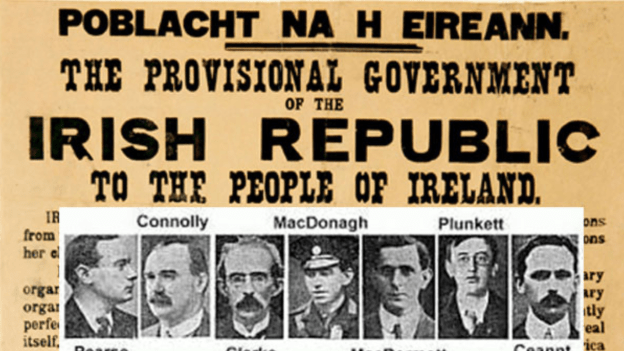
While this was going on in Glasgow, other more significant events were taking place in Dublin. St Stephen’s Green and the GPO were seized by Sinn Feiners of the Citizen Army and the Republican Brotherhood. Oddly enough, (well, maybe not, given wartime censorship) these events were not mentioned in the Scottish Press on the Tuesday morning. Tuesday’s Courier and Glasgow Herald contain mentions of Roger Casement’s arrest for gun running, but nothing about the actual rebellion. That had to wait until Wednesday! Clearly, the British Government had been hoping that it would all go away. But “go away” it didn’t, and the “terrible beauty” was born.

Most Celtic supporters probably didn’t realise the significance of the Easter rebellion until years later. They were convinced however that their team in 1916 was virtually unbeatable!

DAVID POTTER


CSC FOCUS Thompson & Fallon set for Port Lairge Emerald CSC Big Bash

CSC FOCUS

Port Lairge Emerald CSC

 A brief history.

When the great Big Jock Stein rolled into Dublin on October 21st 1970 to take on Waterford in the European Cup, it was a showcase of the huge interest in the Famous Glasgow Celtic from the Waterford City area. Trains and buses were wedged with supporters taking the opportunity to see a mixture of the Lisbon Lions and the Quality Street Gang take on a Waterford team with household names like Brennan, Hale and Mathews.

Some of the older club members talk about this day as the day that injected Green and White into their veins.

It wasn’t until the legitimate operation stop the 10 in 1997/98 was underway that the club was born. A group of like minded supporters, who regularly met for games in The Olde Stand Bar on Michael Street, decided that forming an Official CSC was the way forward. Founding committee members included Ken Slattery, Paddy Cooke, John Gaule, and Paul McSherry ran the club with approx. 40 members.

Brief spells in De La Salle Centre on Stephens St, and Rice House Bar on Barracks st, saw the clubs numbers soar to over 100. Around the turn of the Century, they found a new home in The Showboat Bar in The Glen. They were based there for 14 Years until its closure. The Showboat will fondly be remembered for where most experienced the highs and lows of being a Celtic Supporter. Martin O Neill`s Treble Season, the Road to Seville, Strachan`s Last 16 campaign and of course the death of our rivals were all highlights during their time there.

Issue 107 Print Copy

A new Chapter for the club was a move to the Grattan Bar on the Quay is fondly known as HQ.

Like other supporters clubs, their club was hit hard during the recession with numbers dropping dramatically but thankfully the efforts of some diehards kept the club on track. They now boast a very healthy 45 genuinely passionate Tims as members, with a second generation of fans starting to join our ranks.

They invite all Celtic Supporters from near and far to join them for games in the Grattan Bar where they meet for all Live games.


Celebrating 21st Anniversary

https://www.rhuglennhotel.com

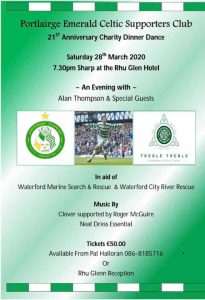
The CSC are celebrating their 21st Anniversary by hosting a charity dinner dance in aid of two local charities on Saturday 28th March. Special guests on the evening are the original holy goalie, John Fallon and Alan Thompson at the RhuGlen Hotel.


The Charities

Waterford City Search And Rescue

The W.M.S.A.R. service was set up in January 2010 by Declan and Darryl Barry to provide Waterford city and county with a 24 hour; 365 days-a-year search, rescue and recovery service. Since January 2010 the service has grown to 50 volunteers. They are also part of the Community Rescue Boats of Ireland (CRBI ). The WMSAR is a ISA – Irish Sailing Association Power Boat Training Centre.

They have 3 Boats ready to be launched. This includes a 6.3 Meter RIB as our primary rescue boat, two 4 meter Steady 400’s for search and recovery. They  also have a flood rescue boat and a 3 meter inflatable for small lakes and rivers.

Celtic Soul T-Shirt | Black


Their Volunteers have rescued 28 people alive from the waters of the River Suir. Prevented 119 people from entering the river with the intention of taking their life. Clocked up over 1400 hours annually on suicide prevention patrols. Saving 147 lives since 2010.

Waterford City River Rescue

WCRR is a non-profit organisation which operates a voluntary Search and Rescue Service on the River Suir from Mount Congrieve to Checkpoint. Their volunteers provide this essential service on a 24 hour basis, 365 days a year. They are a member of the Community Rescue Boats of Ireland (CRBI) and affiliated to the Irish Coast Guard, having successfully completed their stringent assessments and examinations of crew and equipment

An Evening With Chris Sutton Gen. Admission